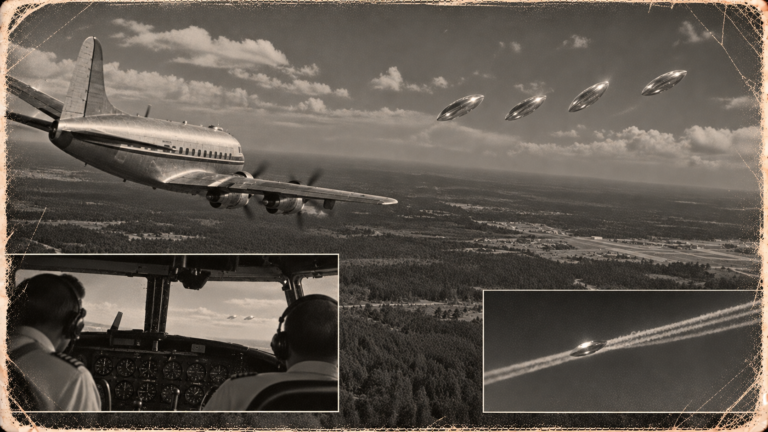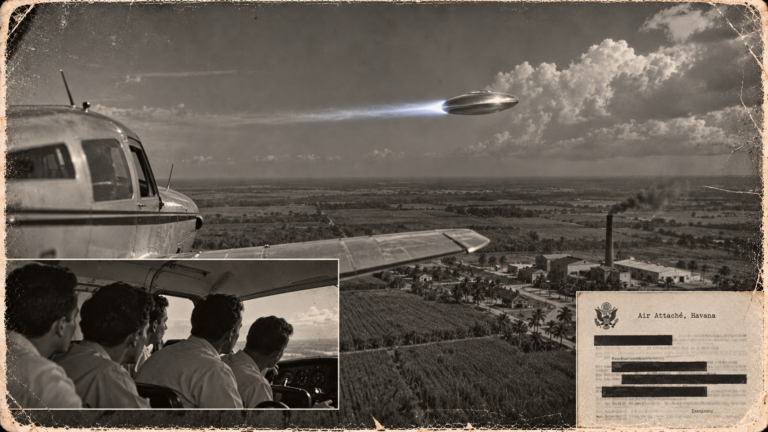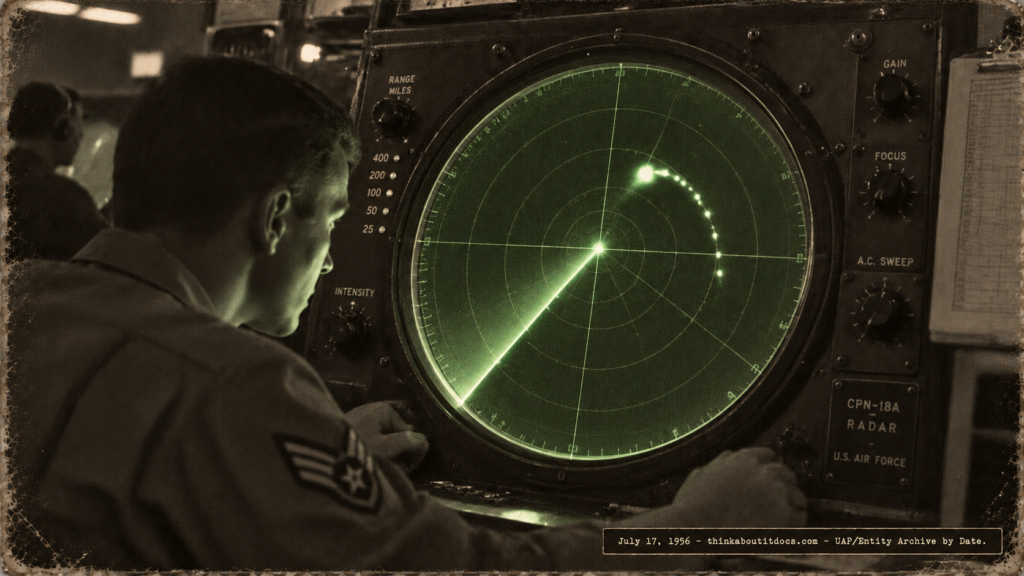
Westover AFB, Massachusetts, July 17, 1956, 9:30 p.m.: the CPN-18A scope tracked a larger-than-normal target making a 180-degree turn in under 6 seconds at 2,400 mph.
THINK ABOUTIT UFO|UAP SIGHTINGS REPORT
1956: Westover AFB, Massachusetts: The Target That Made a 180 in Six Seconds
At 9:30 p.m. on July 17, 1956, a radar target appeared on the CPN-18A radar set at Westover Air Force Base, Massachusetts. It was larger than an ordinary radar return. Over the next four minutes, operators watched it reach speeds as high as 2,400 mph, execute a 180-degree turn in fewer than six seconds, and then accelerate and decelerate repeatedly — each change happening in a matter of seconds. No known aircraft of 1956 could approach any of those numbers, let alone combine them.
The case is documented in the Blue Book files by researcher Dan Wilson and is listed as a Blue Book unknown. It is a separate event from the much-discussed March 26, 1956 Westover AFB intercept account in Donald Keyhoe’s writing — that case rests on a single secondary source and has no confirmed Blue Book file. This one does. The same night at the same base produced a second report: an USAF jet fighter pilot at Otis AFB in the same corridor saw a white-yellow circular object reverse course at 11:42 p.m. Westover July 17 is a radar-only case without a visual component, but the performance data it records — 2,400 mph with a sub-six-second 180-degree reversal — places it among the most extreme radar observations in the Blue Book files.
Date: July 17, 1956
Sighting Time: 9:30 p.m. (EST)
Day/Night: Night
Location: Westover Air Force Base, Chicopee, Massachusetts
Urban or Rural: Military air base
No. of Entity(‘s): Not Applicable
Entity Type: Not Applicable
Entity Description: Not Applicable
Hynek Classification: Radar-only (no visual component confirmed for this specific contact)
Duration: Approximately 4 minutes
No. of Object(s): 1
Description of the Object(s): A radar return only; described as a “regular but larger than ordinary radar target” on the CPN-18A scope
Shape/Size/Color of Object(s): Unknown (radar only); larger than a standard aircraft return
Distance to Object(s): Not specified; within CPN-18A radar coverage of Westover AFB
Height & Speed: Altitude not recorded. Speed reached as high as 2,400 mph. The target made a 180-degree turn in fewer than 6 seconds and repeatedly increased and decreased speed within seconds.
Number of Witnesses: Westover AFB radar operators (names not given in available summaries)
Special Features/Characteristics: The 180-degree turn in fewer than 6 seconds at speeds up to 2,400 mph implies a lateral acceleration of many thousands of G-forces — far beyond any known aircraft or missile of the period, and beyond any biological tolerance. The target also repeatedly changed speed in a matter of seconds. Total observation time was about 4 minutes.
Case Status: Unexplained (Project Blue Book unknown)
Source: Dan Wilson; Project Blue Book files (BBU)
Summary/Description: Westover AFB CPN-18A radar tracked a larger-than-normal target for 4 minutes. It reached 2,400 mph, made a 180-degree turn in under 6 seconds, and repeatedly changed speed within seconds. Blue Book unknown. Distinct from the March 26, 1956 Westover case in Donald Keyhoe’s writing.
Related Cases: 1956: July UFO|UAP & Entity Sightings Archive; 1956: Wurtsmith AFB F-89D Radar Lock (January 11, 1956); 1956: Spokane F-86D Radar Unknown (March 3, 1956)
Detailed Report
Westover Air Force Base in Chicopee, Massachusetts, was in 1956 one of the largest Strategic Air Command installations in the northeastern United States, housing heavy bombers and supporting the air defense network of the region. Its radar infrastructure was a standard part of that network.
At 9:30 p.m. on July 17, 1956, a radar target appeared on the base’s CPN-18A radar set. The operators noted immediately that it was larger than an ordinary aircraft return. Over the next four minutes they watched it perform maneuvers that had no conventional explanation: speeds reaching 2,400 mph, a 180-degree direction reversal completed in fewer than six seconds, and repeated rapid changes in speed — each acceleration and deceleration happening within seconds rather than over any sustained interval. The total observation lasted four minutes before the target left the scope.
The same night, and at the same base complex, a USAF jet fighter pilot at nearby Otis AFB — also in the Westover area — reported seeing a white-yellow circular object that reversed course at 11:42 p.m., more than two hours after the radar contact. Whether these are related observations of the same object is not established in the available record.
Project Blue Book listed the July 17 CPN-18A radar case as unknown. The underlying file was identified by researcher Dan Wilson in the Blue Book microfilm archive.
RESEARCHER’S NOTES
What 2,400 mph and a Six-Second 180 Actually Mean
- The physics of the maneuver: A vehicle traveling at 2,400 mph (about Mach 3.1 at sea level) and completing a 180-degree turn in 6 seconds would need to follow a turn radius of roughly 3 miles while sustaining a lateral acceleration of approximately 100 G. The human body blacks out above 8–9 G in sustained turns. No 1956 aircraft came close to Mach 3.1, and no aircraft of any era can sustain 100 G. If the radar data is accurate, it describes a vehicle operating under physical principles not available to 1956 aerospace engineering.
- Radar-only limitations: Without a simultaneous visual contact or a second independent radar system confirming the return, a single radar-only observation carries more ambiguity than a radar-visual case. False targets can be generated by equipment anomalies, unusual atmospheric conditions, or electronic interference. The Blue Book file would contain the radar operators’ technical assessment of whether any such factors were present.
- The “larger than ordinary” return: The operators specifically noted the target was larger than a normal aircraft return. This works against the anomalous propagation hypothesis (which typically produces weak or variable returns) and is more consistent with a solid, reflective object.
- Two Westover cases — keep them separate: The March 26, 1956 Westover AFB intercept — in which a pilot identified only as Captain E______ illuminated a disc with landing lights before it climbed to 30,000 feet — comes from Donald Keyhoe’s Flying Saucers: Top Secret (1960). That case is a single-source secondary account with an unnamed pilot and no confirmed Blue Book file. This July 17 case is confirmed in the Blue Book files by Dan Wilson. They are not the same event and should not be conflated.
- July 17, 1956 as a date: July 17 was also the day of the Mastic Airport Long Island green teardrop sighting, the Otis AFB course-reversal object, the Drakensberg photographs in South Africa and the Van Nuys California “Venusian” contact cluster. The concentration of reports on a single date across a wide geographic range is unusual, though not inexplicable given the general 1956 summer sighting wave.
The Westover AFB July 17 radar case is the 1956 record’s most extreme single radar performance data point: 2,400 mph with a sub-six-second reversal. Without the full Blue Book file showing the operators’ equipment checks and atmospheric assessments, the case rests entirely on the summary. What that summary describes, if accurate, has no conventional explanation in 1956 or in any subsequent aerospace capability known to the public.
The target made a 180-degree turn in fewer than 6 seconds at speeds as high as 2,400 mph.
Blue Book file summary, Westover AFB CPN-18A radar, July 17, 1956 (Dan Wilson; BBU Files)