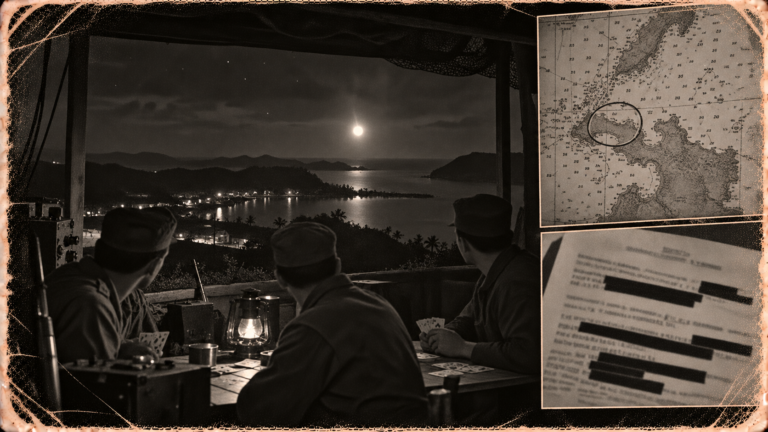
Northeastern United States, December 6, 1950: about 40 unidentified radar targets triggered a national alert.
THINK ABOUTIT UFO|UAP SIGHTINGS REPORT
1950: Northeastern United States
Forty Radar Targets, a White House Call and a National Alert
At 10:30 on the morning of December 6, 1950, air defense radar in the Northeast picked up about 40 unidentified aircraft flying south-southwest at 32,000 feet. The controller saw no reason to believe they were friendly. Within a minute the White House was told, and President Truman, in the middle of a meeting with British Prime Minister Clement Attlee, discussed the reports. For about half an hour the United States prepared for what looked like a Soviet attack on the Northeast.
Then the blips vanished. Fighters that had been scrambled intercepted an American flight from Otis Air Force Base, and only a C-47 was left on the scope. No explanation was recorded. Was it a radar malfunction, a flock of real aircraft that were misidentified, or something else? This radar-inspired national alert is a key December 1950 case, remembered as one of the Cold War’s most tense mornings.
Date: December 6, 1950
Sighting Time: 10:30 a.m. Eastern Time; radar contact lasted until about 11:04 a.m.
Day/Night: Day
Location: Northeastern United States; radar contact northeast of Limestone, Maine
Urban or Rural: Rural, detected by early-warning radar
No. of Entity’s: Not Applicable
Entity Type: Not Applicable
Entity Description: Not Applicable
Hynek Classification: Radar only (outside Hynek’s NL/DD/RV categories)
Duration: About 34 minutes of radar contact; NICAP says the military was under a national emergency condition for an hour
No. of Object(s): About 40
Description of the Object(s): Radar returns interpreted as aircraft flying in a group at 32,000 feet
Shape/Size/Color of Object(s): Not applicable; radar only
Distance to Object(s): Northeast of Limestone, Maine
Height & Speed: 32,000 feet on a course of about 200 degrees; speed not given in the sources reviewed
Number of Witnesses: Radar operators and air defense controllers, number not given
Special Features/Characteristics: Notification of the White House within a minute; discussed by Truman during his meeting with Attlee; targets vanished after about 35 minutes; fighters intercepted an American flight from Otis AFB; a C-47 was the only aircraft left on the scope
Case Status: Unexplained in the sources reviewed; the sources raise a radar malfunction as a question without answering it.
Source: Declassified USAF air defense alert document (The Black Vault); Brad Sparks, Blue Books Unknowns Catalogue, case 423, p. 103; Jerome Clark, The UFO Encyclopedia; NICAP, “Radar-Inspired National Alert”; Bruce Maccabee, “Immediate Saucer Alert! The Mystery of December 6, 1950,” July 1999
Summary/Description: About 40 unidentified radar targets at 32,000 feet triggered a brief national alert on December 6, 1950, and vanished without explanation.
Related Cases: Same day: the Del Rio, Texas crash claim, Westover/West Springfield and Fort Myers, in the December 1950 archive.
Detailed Report
The documented core of the event is short. At 10:30 a.m. Eastern Time on December 6, 1950, radar northeast of Limestone, Maine, showed about 40 aircraft at 32,000 feet on a course of about 200 degrees, and according to the declassified Air Force record the controller determined there was no reason to believe they were friendly. The air defense controller notified USAF headquarters. The White House was told at 10:31, and the account the Black Vault posted says that within the next 20 minutes the CIA, the Joint Chiefs of Staff and many others were also notified. President Truman is said to have discussed the reports during his meeting with Prime Minister Attlee, at a time when the war in Korea had just turned badly for United Nations forces.
About 35 minutes into the alert the radar blips disappeared. Only one C-47 remained on the scope, and fighters that were scrambled intercepted an American flight from Otis AFB. The sources do not say what the 40 targets were. They raise a question rather than an answer: “Were the blips simply the product of the radar malfunctioning and seeing objects that weren’t really there? Or was this something else?”
NICAP adds that for an hour the military was under a condition of national emergency and that two days later the FBI was told the Army Counter Intelligence Corps had been placed on immediate high alert for information about flying saucers. This archive repeats that claim as NICAP states it; I did not see the underlying document. Brad Sparks catalogues the event as Blue Book unknown case 423, and Bruce Maccabee wrote an extended study of it in 1999.
RESEARCHER’S NOTES
A Radar Alert Without a Cause
- Classification issues: There is no visual sighting and no object description, only radar returns, so no Hynek class applies. The case belongs to the family of radar-inspired alerts, whose cause is almost always identified as weather, birds, aircraft or equipment, though here the sources give no cause.
- Source chain assessment: The core facts come from a declassified Air Force air defense document, posted by the Black Vault, and are repeated by Sparks, Clark, Maccabee and NICAP. The one-hour emergency and the CIC alert come from NICAP and Fran Ridge, not from the document I could read, so they are labeled secondary.
- The malfunction question: The Air Force document itself asks whether the radar was producing false returns. Forty targets at one altitude on one heading that disappear together is the sort of pattern a radar fault or anomalous propagation can produce, and also the pattern a real formation would show; the sources do not choose.
- What followed: Fighters intercepted an American flight from Otis AFB, which suggests that at least some of the aircraft the controller was worried about were friendly. The sources do not say whether that flight accounted for any of the 40 targets.
- Why it matters: The event shows how the early Cold War air defense system worked: a few minutes from a radar scope in Maine to the White House, during a week when Washington was worried about a wider war.
- The Del Rio link: Some regional accounts of the Del Rio, Texas crash say a formation of about 40 objects approached from the north that day. This archive notes the resemblance to the alert, but no document links the two.
The December 6, 1950 alert is a documented case of a national-level response to radar returns that were never explained. It is preserved here as unexplained, with the radar-malfunction question left open exactly as the Air Force record leaves it.
“Were the blips simply the product of the radar malfunctioning and seeing objects that weren’t really there? Or was this something else?”
— Account of the December 6, 1950 air defense alert, based on declassified USAF documents