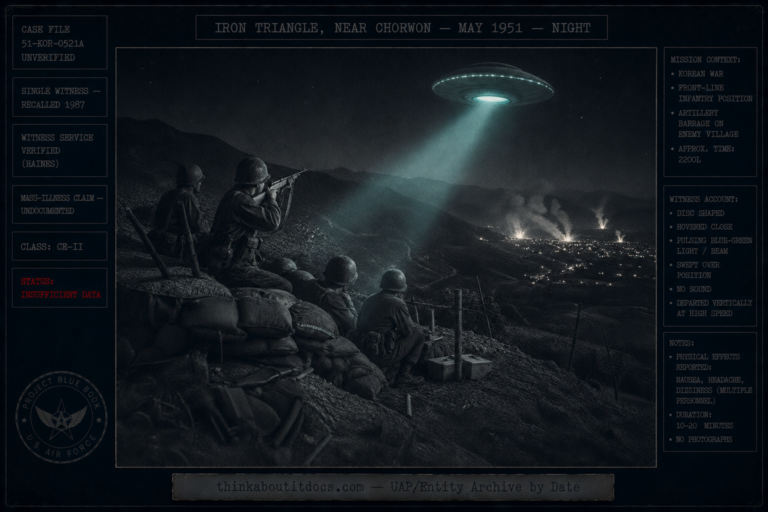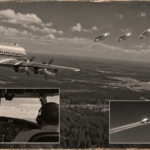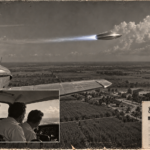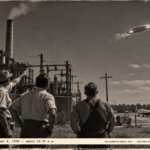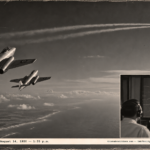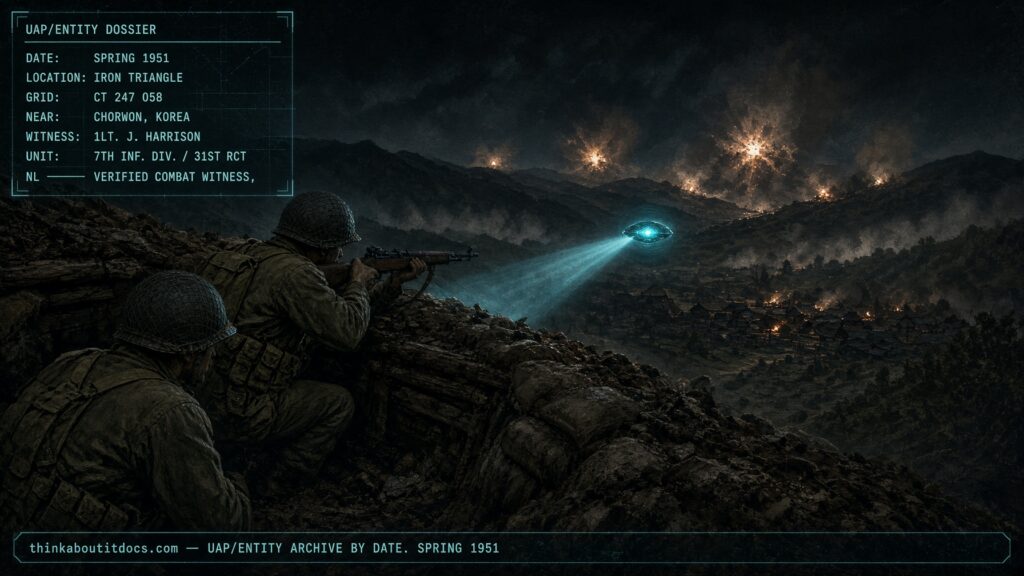
PFC Francis Wall's Spring 1951 encounter near Chorwon, Korea, where his unit was swept by a beam of light before an unexplained mass evacuation three days later.
THINK ABOUTIT UFO|UAP SIGHTINGS REPORT
1951: The Korean War Battlefield Encounter — Chorwon, Korea
On a night in the early spring of 1951, in the mountains of the Iron Triangle near Chorwon, an American infantryman shot at what he took for a strange light drifting through his unit’s own artillery barrage — and, by his account, hit it. What followed was not a distant, ambiguous sighting but a direct, close-range confrontation: a pulsing beam of light sweeping the position, a burning, tingling sensation reported across the men sheltering in their bunkers, and, three days later, an entire company evacuated by ambulance, too weak to walk, suffering from dysentery and an unexplained, doctor-noted spike in white blood cell count. PFC Francis P. Wall carried the physical and psychological aftermath of that night for the rest of his life, and did not tell his story publicly for more than three decades.
Date: Spring 1951 (exact date not recorded; Wall dates it to “the early Spring of 1951”)
Sighting Time: Night
Day/Night: Night
Location: The Iron Triangle, near Chorwon, Korea, on a mountain slope above a Korean village under artillery bombardment
Urban or Rural: Rural, active combat zone
No. of Entity(‘s): Not applicable — no occupants seen
Entity Type: Not applicable
Hynek Classification: NL (Nocturnal Light), though the case’s close-range physical interaction (rifle fire striking a metallic-sounding target, a directed beam causing physiological effects) gives it characteristics closer to a Close Encounter than a typical distant nocturnal light
Duration: Approximately 45 minutes to an hour in total, by Wall’s estimate
No. of Object(s): 1
Description of the Object(s): Initially described as resembling a “jack-o-lantern” drifting down across the mountain with an orange glow, later changing to a pulsating blue-green brilliant light as it approached the unit’s position; Wall’s own drawing, requested by researcher Richard F. Haines, depicts a conventional flying-saucer shape
Shape of Object(s): Disc/saucer-shaped, per Wall’s drawing
Size of Object(s): Not established — Wall stated there was no way to judge its size given the lack of any comparison object
Color of Object(s): Orange initially, changing to a pulsating blue-green as it neared the unit
Distance to Object(s): Close enough for Wall to fire on it directly with an M-1 rifle and hear the round strike a metallic-sounding surface; it later hovered directly over the unit’s bunker position
Height & Speed: The object was agile enough to fly directly into the blast radius of exploding artillery airbursts and emerge unharmed; after being struck by rifle fire it moved erratically from side to side “as though it might crash,” then departed by shooting off at a 45-degree angle almost instantaneously
Number of Witnesses: An unspecified but substantial number — Wall’s entire company (“Easy” Company, 2nd Battalion, 27th Regiment, 25th Infantry Division), later evacuated as a unit
Special Features/Characteristics: Appeared able to withstand direct artillery airburst detonations without damage; produced a diesel-locomotive-like revving sound only after being struck by rifle fire; emitted a sweeping, pulsed beam of light that caused a burning, tingling sensation described as feeling like something “penetrating” the body wherever it passed over a person; three days after the encounter, the entire company required ambulance evacuation, suffering from dysentery and, per examining doctors, an unexplained elevated white blood cell count. Wall himself reported lasting effects afterward — periods of disorientation, memory loss, and an unexplained, permanent inability to regain the roughly 42 pounds he lost following the incident.
Case Status: Unexplained
Source: Francis P. Wall, interviewed by John Timmerman, J. Allen Hynek Center for UFO Studies (CUFOS), January 1987; Richard F. Haines (verified Wall’s military unit and combat presence against service records); NICAP; CNI News
Summary/Description: In the early spring of 1951, PFC Francis P. Wall was serving with “Easy” Company, 2nd Battalion, 27th Regiment, 25th Infantry Division, positioned on a mountain slope in Korea’s Iron Triangle near Chorwon, above a village his unit was actively shelling after having warned civilians to evacuate. During the bombardment, Wall and his fellow soldiers noticed an orange, glowing object drifting down across the mountain, which repeatedly flew into the blast radius of exploding artillery airbursts without apparent harm. After roughly 45 minutes to an hour, the object approached the unit’s position directly, now pulsating a brilliant blue-green light. With his company commander’s permission, Wall fired on it with an M-1 rifle using armor-piercing rounds, and reported hearing the round strike a metallic surface. The object then began behaving erratically, flickering and moving side to side as though damaged, and emitted a sound resembling revving diesel locomotives — a sound not present before the rifle shot. The unit was then swept by a pulsing beam of light, which Wall described as causing a burning, tingling sensation wherever it passed over a person’s body. The company commander, Lt. Evans, ordered the men into their bunkers; from inside, Wall watched the object hover over the position, illuminating the area, before it departed abruptly at a 45-degree angle. Three days later, the entire company had to be evacuated by ambulance, too weak to walk, suffering from dysentery; examining doctors also noted an unexplained, elevated white blood cell count. Wall and his fellow soldiers made a deliberate decision not to include the incident in their official daily report, fearing they would be judged unfit for duty. Wall did not share his account publicly until a 1987 interview with the J. Allen Hynek Center for UFO Studies, describing lasting effects including periods of disorientation, memory loss, and a permanent, unexplained inability to regain the roughly 42 pounds of body weight he lost following the incident.
Related Cases: 1950-1951: The Oak Ridge/Knoxville Flap, Tennessee (comparable era, radar/visual military pattern) | The Wonsan-Sunchon UFO Incident, January 1952 (a later Korean War-theater sighting involving USAF B-29 crews)
Detailed Report
Few cases in this archive combine the sheer number of independently verifiable elements that the Chorwon encounter does. Richard F. Haines, a professional researcher, took the unusual step of checking military service records and confirmed that Wall was indeed a documented combatant in the specific infantry unit he named — a basic but important piece of due diligence that is often missing from decades-old contactee-style accounts, and one that meaningfully raises this case’s baseline credibility above a simple unverifiable anecdote.
The account’s physical progression is also worth examining on its own internal logic. An object that can absorb direct artillery airburst detonations without damage, yet audibly registers a hit from a single rifle round and subsequently behaves as though damaged, describes a specific and, on its face, physically puzzling asymmetry — conventional military ordnance of far greater destructive power failing where a standard infantry rifle apparently succeeded. This is not a detail that obviously serves to make the story more impressive or more believable; if anything, it is the kind of detail a fabricated account might be expected to avoid, precisely because it invites the skeptical question above. Its presence in Wall’s account, rather than being smoothed over, is one of the stranger and more analytically interesting elements of the case.
The physiological aftermath is the case’s most serious and most difficult element to assess. Dysentery among a combat unit in Korea in 1951 was not itself unusual — sanitation and disease were a constant hazard of the campaign, and this archive cannot rule out a mundane, unit-wide illness coinciding with, rather than being caused by, the reported encounter. What is more difficult to dismiss as routine is the doctors’ own reported inability to account for an elevated white blood cell count, a specific clinical finding rather than a vague or general claim, and Wall’s account of lasting, permanent physical and cognitive effects continuing for the remainder of his life, including a formal disability. Absent surviving contemporary medical records — which this archive has not been able to independently verify — the physiological claims here should be weighed as serious testimony from a single, service-record-verified witness rather than as documented medical fact.
The decision by Wall and his unit not to report the incident through official channels, out of fear of being institutionally judged unfit, is itself a historically plausible and well-attested pattern among combat veterans of this era, and it offers a coherent explanation for why an encounter involving an entire company left no contemporary paper trail. That same absence of a paper trail, however, is also precisely why this case cannot be corroborated beyond Wall’s own testimony, given decades after the fact.
RESEARCHER’S NOTES
The Korean War Battlefield Encounter — Chorwon 1951 and the Weight of a Verified Witness
- Classification issues: NL is applied for the object’s initial character as a nocturnal light, but the case’s close-range physical interaction — rifle fire, a directed beam, reported physiological effects — pushes it well beyond a typical NL case in substance, even though no occupants were seen and no landing occurred.
- Source chain assessment: The account rests on a single primary witness, interviewed 36 years after the event, but that witness’s military service and specific unit assignment were independently verified against records by a professional researcher (Richard F. Haines) — a substantially stronger evidentiary foundation than most single-witness accounts of this vintage, even though the underlying claims themselves remain uncorroborated by any second witness on record.
- Pattern context: This case belongs to a small but recurring category of Korean War-theater UFO reports involving American military personnel, alongside the January 1952 Wonsan-Sunchon incident; taken together, they suggest a genuine, if under-examined, pattern of anomalous aerial activity reported by combat forces during the conflict, separate from and in addition to the era’s more numerous stateside sightings.
- Physical evidence and evidentiary weight: No photograph, film, or surviving contemporary medical record exists. The case’s evidentiary weight rests almost entirely on the specificity and internal consistency of Wall’s account, the independent verification of his unit and combat presence, and the reported clinical finding (unexplained elevated white blood cell count) — a detail with more evidentiary texture than a vague illness claim, though still unverifiable at this remove.
- Geographic and historical context: The Iron Triangle was one of the most heavily contested and fought-over regions of the entire Korean War, meaning the witness’s account emerges from a specific, well-documented combat environment rather than a vague or unverifiable “somewhere in Korea” setting, which further supports the plausibility of the unit’s exact positioning and activity that night.
The Chorwon encounter stands among the most serious battlefield UFO accounts on record — not because it can be independently proven, but because its central witness was verified as a real combatant in the exact unit and place he claimed, and because the physical and physiological details he described were neither smoothed over for effect nor easily explained away as ordinary wartime hardship. Absent surviving official records from 1951, corroboration will likely never be possible. It is catalogued here as Unexplained: a decades-suppressed account from a verified witness, carrying real and apparently lasting personal cost.
“This event that I am about to relate to you is the truth, so help me God.”
— PFC Francis P. Wall, on the Spring 1951 encounter near Chorwon, Korea