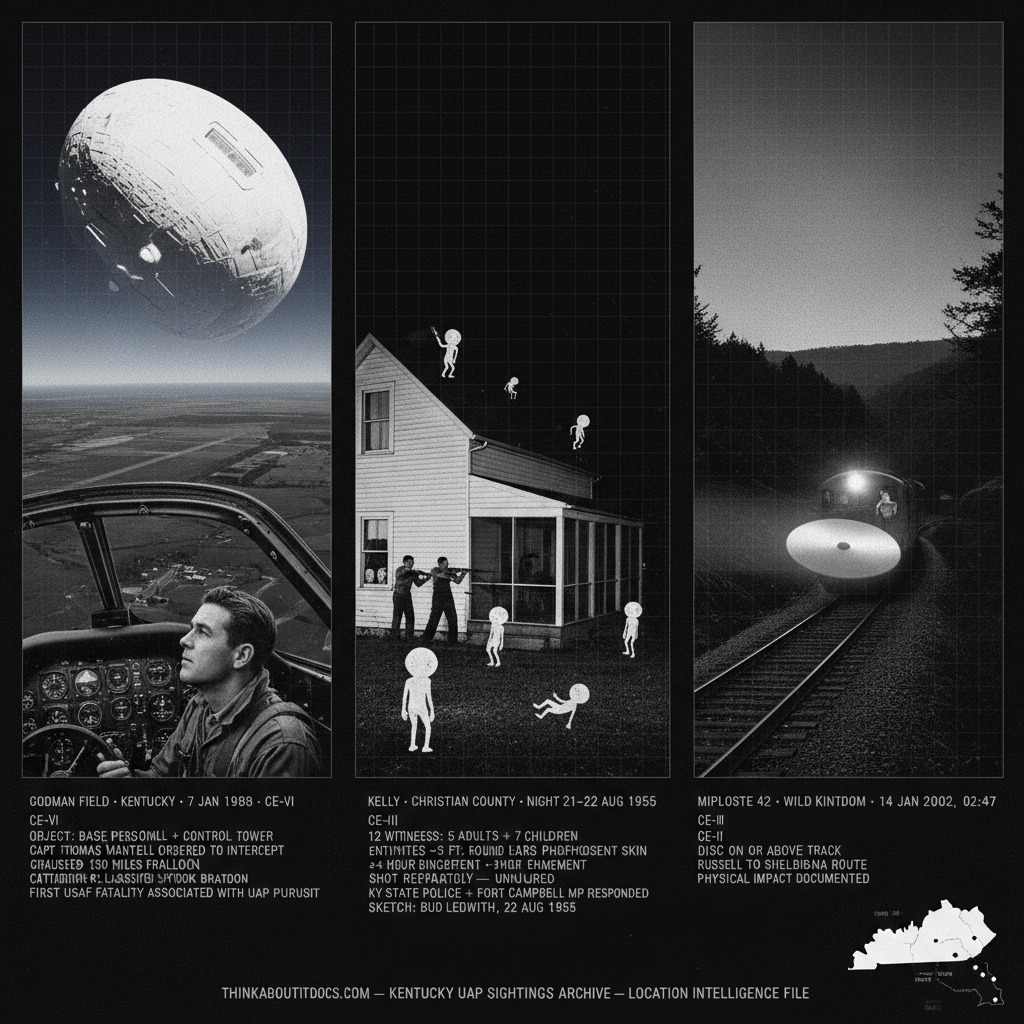
Kentucky UAP archive: Thomas Mantell Godman AFB January 1948 military fatality during UAP pursuit (first USAF fatality associated with UAP, official Skyhook balloon attribution), Kelly-Hopkinsville August 1955 four-hour entity siege with 12 witnesses and Bud Ledwith sketch, and eastern Kentucky Wild Kingdom train collision with disc January 2002. 16 documented cases 1948–2005.
Kentucky UFO|UAP & Alien Sightings Archive
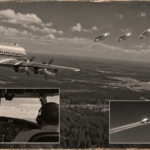
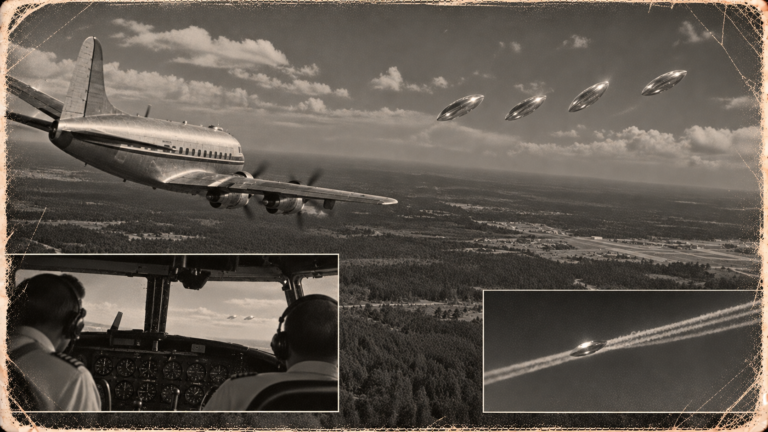
Kentucky’s UAP record opens with a death. On January 7, 1948, Kentucky Air National Guard Captain Thomas Mantell, 25 years old and a decorated World War II veteran, was ordered to investigate a large unidentified object hovering near Godman Field Army Air Force Base. He climbed to 25,000 feet in a P-51 Mustang without oxygen equipment, reportedly closing on the object before radio contact ceased. His aircraft crashed approximately 130 miles from Godman Field. The official attribution — oxygen deprivation while chasing a classified Skyhook balloon — remains the institutional position. The Skyhook explanation was classified at the time, which means Mantell could not have known what he was chasing, and the object was observed by multiple senior officers and control tower personnel at the base before Mantell was sent after it. Whatever he was pursuing, a decorated combat pilot died pursuing it, and the Air Force classified the balloon program specifically to avoid disclosing the connection. The Mantell case is one of the handful of UAP-associated fatalities in the American record with formal military documentation on both sides of the incident.
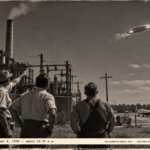
Seven years later, on the night of August 21–22, 1955, the Sutton family farm near Kelly in Christian County provided the venue for the most sustained and overtly aggressive entity encounter in the American civilian record. Five adults and seven children held off a siege of small silvery creatures — round-headed, large-eared, glowing with a faint phosphorescence — for nearly four hours, firing repeatedly at the entities with shotguns and rifles. The creatures were hit but apparently uninjured, floating away rather than falling. The family eventually fled to Hopkinsville police at approximately 11 PM. Local police, state police, and military police from Fort Campbell all responded and searched the property. The investigating officers found physical evidence of the entities’ presence on the property consistent with the family’s description. The case was investigated by Bud Ledwith who drew the entity sketch from witness descriptions the following afternoon, producing one of the most recognized entity illustrations in the American UAP record. No satisfactory explanation has been offered. The 2002 Kentucky train collision — a disc-shaped object appearing in front of a freight train at 2:47 AM near the Wild Kingdom bend — adds a third rail encounter to Kentucky’s record, paralleling Indiana’s Monon case.
- 400 million year old Found
- 1948: The Thomas Mantell Incident (aircraft crashes after chasing UFO)
- 1955: The Kelly-Hopkinsville Alien Invasion: A Kentucky Farm Family’s Night-Long Siege by Small Entities,
- 1964 or 1965: Grand Bend Kansas UFO Sighting
- 1969: Light Seen, Structure Disappears in Kentucky
- 1976: Boys out camping sight UFO
- 1976: The Kentucky Abductions
- 1977: Abduction by machine-like beings
- 1993: Two police officers have dogfight with UFO
- 1999: Northern Kentucky/Cincinnati Sightings
- 2002: Kentucky Train Collision with Disk UFO
- 2002: Triangle UFO in Ewing, Kentucky
- 2003: Kentucky Screaming Sounds Linked to UFO Sighting
- 2003: Owensboro, Kentucky Sighting
- 2005: Black Triangle over Kentucky
- 2005: Triangular-shaped, object seen in Kentucky
- 1866: Bracken County, Kentucky — The Blue Fire Monster
- 1950: The Al Hixenbaugh Film — Louisville, Kentucky
Executive Summary
The Fatality and the Farmhouse — Kentucky’s High-Stakes Record
Kentucky’s UAP archive is the most overtly high-stakes in the southeastern United States by two specific measures: one case produced a documented military fatality, and one case produced a documented sustained hostile engagement lasting nearly four hours. The Mantell case is not evidence of a hostile UAP — it is evidence of a military pilot who exceeded safe altitude in pursuit of an unidentified object and died when his aircraft crashed. The circumstances — a classified balloon program, an unidentifiable base-observed object, a scrambled fighter, and a dead pilot — constitute the kind of institutional tangle that generates UAP research interest regardless of the ultimate explanation. The Hopkinsville case is evidence of something else: eleven witnesses of varying ages sustaining a four-hour siege event they could not explain and that left physical evidence on the property. The entity description — small, round-headed, large-eared, faintly phosphorescent — was consistent across all adult witnesses and produced an immediately recognizable illustration. The responding officers found nothing to explain the family’s description as a fabrication or a misidentification, and the family’s flight to police at 11 PM on a rural Kentucky night in 1955 is not the behavior of people staging an event. Kentucky’s sixteen cases span from 1948 to 2005, with its two most historically significant entries in the state’s first seven years of the modern era.