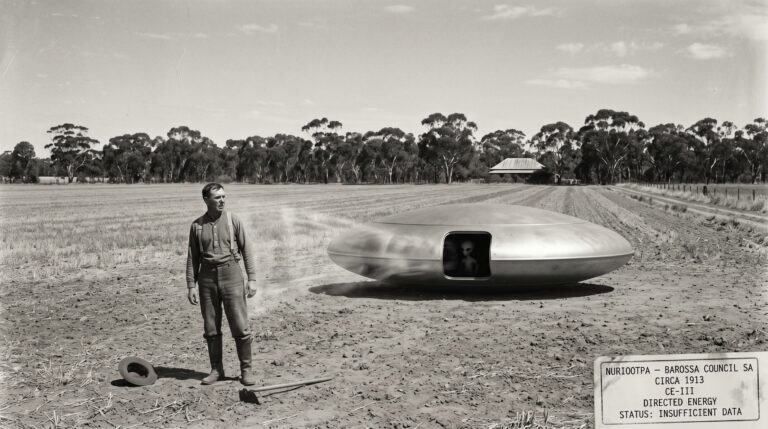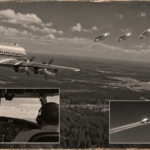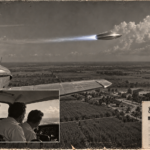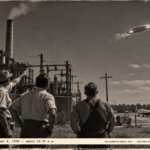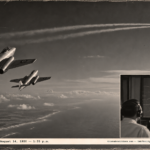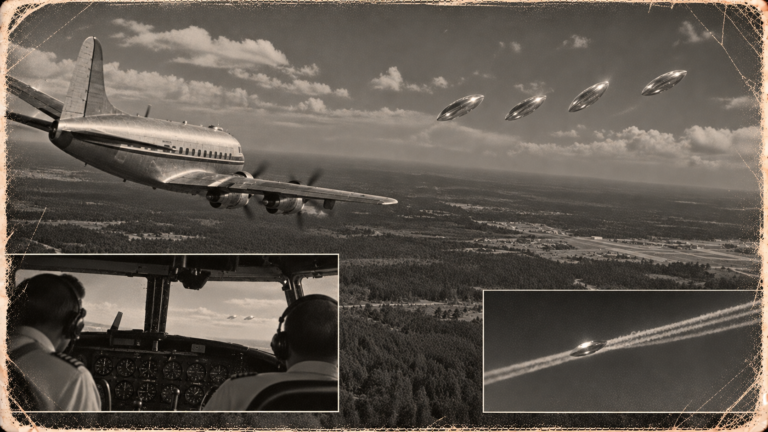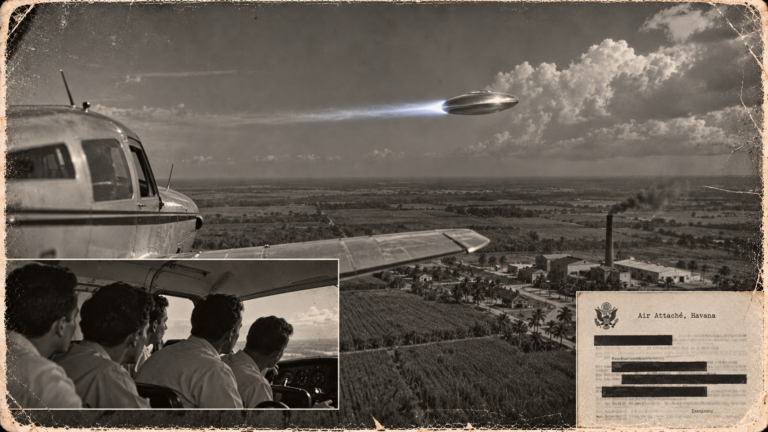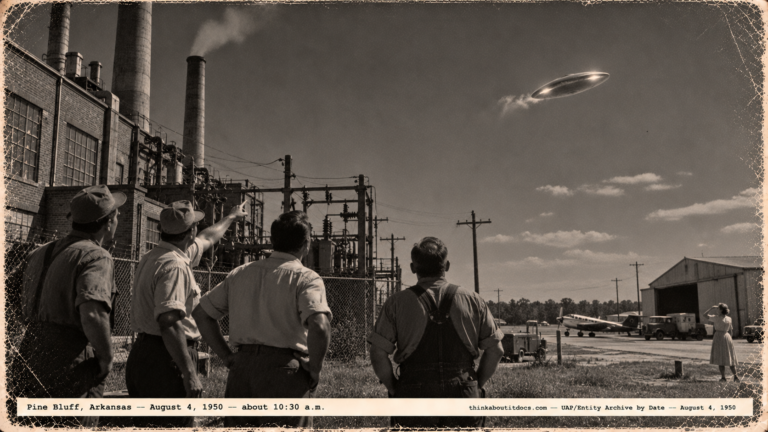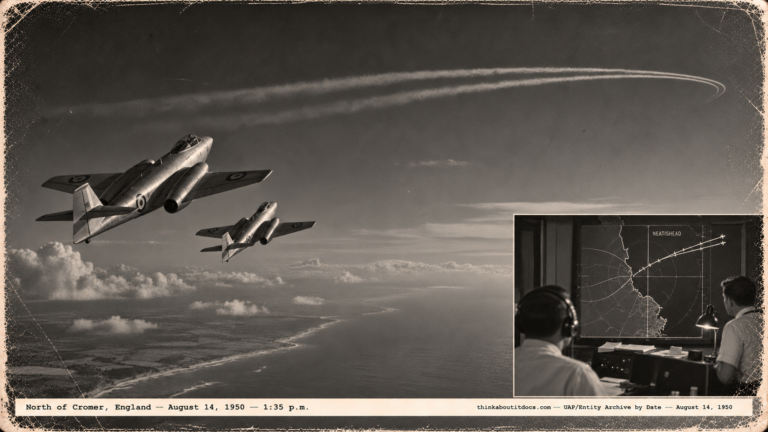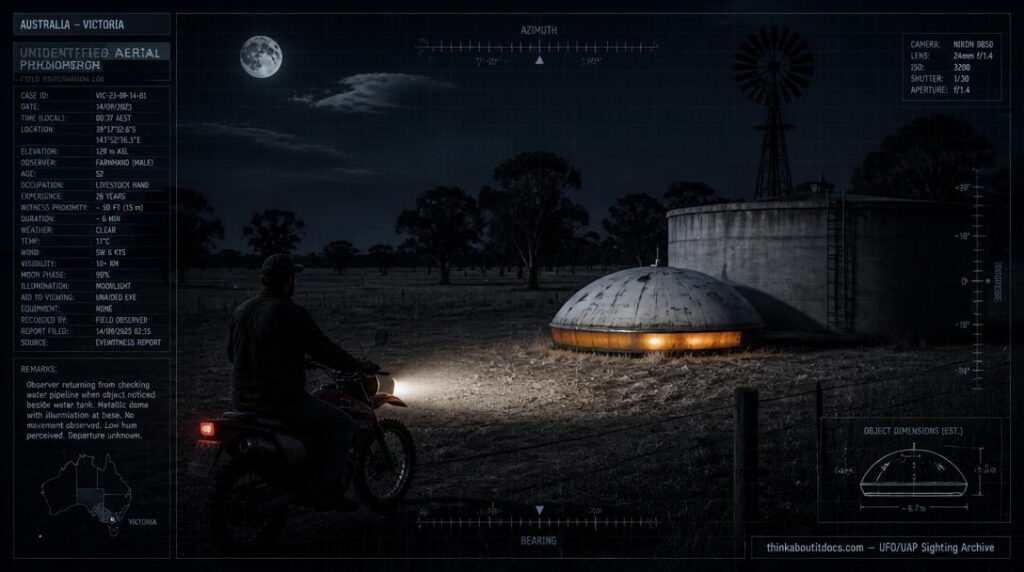
A farmhand at the White-Acres property near Rosedale, Victoria encountered a landed, domed disc-shaped object beside a water tank later found completely emptied, September 30, 1980.
THINK ABOUTIT UFO ENCOUNTER REPORT
The 1980 Rosedale, Victoria UFO Encounter: Water Tank, Ring, and Physical Effects
In the early hours of September 30, 1980, a 54-year-old farmhand at the “White-Acres” property near Rosedale, Victoria woke to a screeching whistle and panicked livestock, and stepped outside to find a domed, disc-shaped object hovering low over his paddock. What followed — a close approach by motorbike, an “awful scream” and a blast of air as the object departed, a 28-foot ring of blackened grass with the flowers stripped out of it, a 10,000-gallon water tank completely emptied with its mud pulled into a two-foot cone, and more than a week of unexplained headaches and illness — became, in the words of the researchers who investigated it, one of the most extraordinary physical-trace cases in Australian ufology.
Date: September 30, 1980
Sighting Time: 0100 hours (1:00 a.m.), daylight saving time
Day/Night: Night
Location: “White-Acres” property, approximately 8 km from Rosedale and 19 km west of Sale, Victoria, Australia
Urban or Rural: Rural — working farm property
No. of Entity(‘s): None documented
Entity Type: None documented
Entity Description: None documented
Hynek Classification: CE-II (Close Encounter II) — extensive physical trace and physiological effects were documented, consistent with this classification as given in the source material
Duration: The core observation, from first sighting to the object’s departure, spanned approximately 5–6 minutes at close range, following an initial 2-minute period watching the object approach and land, and a preceding several-minute gap while the witness dressed and rode out to the site
No. of Object(s): 1
Description of the Object(s): A domed object with a white top and a larger orange section beneath it, with what appeared to be circular windows or lights around the lower section; produced a screeching whistle while moving and an “awful scream” immediately before departure, accompanied by a black tube-like structure that inflated around its base, a loud bang, and a blast of air and heat; six evenly spaced “spokes” or V-shaped features were visible around the rim of its base
Shape of Object(s): Disc, domed
Size of Object(s): Approximately 26 feet in diameter, with an estimated height of about 15 feet
Color of Object(s): White dome on top; orange section beneath, with orange and blue lights on its surface
Distance to Object(s): Initially observed at a distance while airborne; the witness later approached to within approximately 50 feet on his motorbike
Height & Speed: Estimated altitude of 8–10 feet above the ground while moving; slowed to hover over a water tank for about a minute before landing
Number of Witnesses: Primarily 1 direct witness — the property’s 54-year-old caretaker. A secondary, correlating account came from an unnamed truck driver who separately reported being followed by an object between Traralgon and Rosedale at approximately the same time that same morning — a related but distinct sighting, not a joint observation of the same object at White-Acres
Special Features/Characteristics: Cattle and a horse reacted with evident panic before and during the sighting; the witness experienced an unusual bodily sensation, described as feeling “like a jelly on a plate,” as he approached the object; his motorbike showed no mechanical or electrical effects at any point; his Timex wristwatch stopped at the moment of the object’s departure and continued intermittently stopping and restarting for three days afterward; a 28-foot-diameter ring of flattened, blackened grass was found at the landing site, with yellow flowers entirely removed from within the ring while only green grass remained, and six evenly spaced “spokes” of undamaged grass within the ring’s perimeter; a 10,000-gallon concrete water tank was found completely emptied with no evidence of spillage, its muddy floor residue pulled into a two-foot-high cone shape at the center, away from the tank’s side-mounted outlet; the witness suffered recurring headaches at the same hours each day, along with sleep disturbance and gastrointestinal symptoms, for 7 to 8 days following the event, without seeking medical attention; VUFORS investigators, including vice-president Paul Norman, and a separate team of Bill Chalker, Gary Little, and Keith Basterfield conducted detailed, in-person investigations, including a six-hour interview, site inspection three months after the event, and soil/rock sampling, though sample analysis proved indeterminate; further UFO reports, ground traces, and unexplained water losses were reported in the wider Gippsland region in the months that followed
Case Status: Unexplained — investigated in depth by multiple named Australian UFO researchers over an extended period, with physical trace evidence (the grass ring, the water tank anomaly) that has never been conventionally explained, and soil analysis that proved indeterminate rather than conclusively mundane
Source: Keith Basterfield & Bill Chalker / UFO Research Australia, excerpted with permission from “UFO Research in Australia and New Zealand,” compiled by Vladimir and Pony Godic (1989)
Summary/Description: A farmhand at the White-Acres property near Rosedale, Victoria witnessed a domed, disc-shaped object land in a paddock in the early hours of September 30, 1980, approached it on his motorbike, and watched it depart amid a loud bang and blast of air. The site showed a 28-foot ring of blackened grass with flowers stripped from within it, and a nearby 10,000-gallon water tank was found completely and inexplicably emptied. The witness also experienced a stopped watch and more than a week of unexplained physical symptoms. The case remains one of the most thoroughly investigated physical-trace UFO reports in Australian history.
Related Cases: None documented on this site — occurred amid a broader cluster of additional ground traces, UFO reports, and water losses in the Gippsland region over the following months, including a similar ring later found at nearby Bundalaguah
Detailed Report
The event as related. The witness, a 54-year-old farmhand and caretaker of the White-Acres property, went to bed at 10:30 p.m. on September 29, 1980, and slept without difficulty. At 1:00 a.m. on September 30 — daylight saving time — he woke to a screeching whistle unlike any sound from the nearby Princes Highway, along with cattle bellowing and a horse running in apparent panic. He checked his bedside clock, switched on the light, and went outside in his night clothes, standing on a wooden rail beside the back door for a clearer view obstructed by nearby structures.
He immediately noticed an object moving right to left at an estimated 8 to 10 feet above the ground, passing between a shed and a hedge roughly 500 feet away, then between a silo and a tree. Initially taking it for an aircraft in distress, he realized as it came into clearer view that it had no wings or tail — a domed object with a white top, orange and blue lights, and an estimated 26-foot diameter. It passed over a paddock, hovered for about a minute above an open, concrete 10,000-gallon water tank, then settled to the ground beside the tank. From first sighting to landing took about 2 minutes, and the witness noted the object did not appear to illuminate the ground beneath it, though it gave off light at its own altitude.
The approach. Given recent reports of cattle rustling in the district and his visibly disturbed stock, the witness dressed, and within about 5 minutes rode out on his red Suzuki 100 motorbike toward the object, still audible as a whistling sound. Along the way he found a distressed, mouth-frothing cow that fled to hide beneath a shed. Continuing through a second gate into the paddock where the object sat, he approached to within about 50 feet, at which point he experienced an unusual bodily sensation — feeling, in his words, “like a jelly on a plate,” with a general trembling sensation. He stopped there, engine and headlight still running, feet on the ground, unable to approach closer due to the intensity of the sound, at one point covering his ears while seated on the bike. This portion of the observation lasted about 3 minutes.
The object, he could now see, consisted of two sections: a white dome above a larger orange section with what appeared to be circular windows or lights. Then the noise escalated to what he described as an “awful scream.” A black, tube-like structure appeared to inflate around the object’s base, followed by a tremendous bang and a blast of air and heat that nearly knocked him from his bike. The object lifted and rolled away to the east. His headlight, illuminating the departing object’s underside, showed the black tube appearing to deflate back toward the center of the base, and six evenly spaced spoke- or V-shaped features around the rim.
About 30 feet from where it had sat, still at 8 to 10 feet altitude, the object fell silent, at which point debris — stones, cape weed, and cow manure — fell away from its underside. The witness rode to the vacated spot and watched the object recede eastward until it disappeared from sight. Under the clear, calm, moonlit sky, he could make out a roughly 30-foot ring of blackened grass marking where it had rested.
Back home. Still shaken, he returned to the house at 1:50 a.m. by his bedroom clock and made coffee, at which point he noticed his Timex wristwatch — six or seven years old, previously reliable — had stopped at 1:10 a.m. Removed and placed on the table, it restarted after a few minutes, then stopped again within 10 minutes of being worn. This pattern repeated intermittently over the following three days before the watch returned permanently to normal function. Investigators later asked specifically whether the witness had noticed any change in the brightness of the watch’s luminescent hands, a possible indicator of radiation exposure; he reported no difference before or after the event. Unable to sleep properly and with shaky legs, he lay down without undressing.
At around 5 a.m., he returned to the paddock in daylight and found a clearly defined ring at the exact site: grass flattened in an anticlockwise direction to an 18-inch width, colored near-black or brown, with the yellow flowers that blanketed the rest of the paddock entirely absent from inside the ring — only green grass remained. The full trace measured 28 feet across, with six evenly spaced “spokes” of relatively undamaged grass within its perimeter. Debris matching what he’d seen falling from the object marked a path leading east from the site. While inspecting the mark, a truck driver who had stopped on the main road approached him and reported having been followed by an object between Traralgon and Rosedale at around 1:00 a.m. that same morning.
Later that morning. At about 9 a.m., the property owner arrived and, startled by the witness’s pale appearance, was shown the mark. The owner reported the incident to the local press, and it made the front page of the Gippsland Times on October 1, 1980.
The tank. The witness confirmed the 12-foot-high, 8-foot-wide concrete water tank — normally filled by a wind pump via a 1.5-inch pipe and used as a summer reservoir — had been full the previous day. On inspection, the entire roughly 10,000 gallons were gone, with no evidence of spillage. The muddy residue at the tank’s bottom had been piled into a cone shape roughly two feet high at the center — notable because the tank’s outlet was mounted on the side, not the center — and algae that had floated on the water’s surface was found stuck to the walls near the top, hanging upward. Investigators estimated normal pipe drainage would have taken roughly 72 hours to empty the tank by comparison.
Additional effects. By lunchtime the same day, a chain-wide strip of grass beneath the object’s flight path — from a tree to a hayrick, and from the paddock gate to the tank — was visibly noticeable. Beginning around 11 a.m., the witness developed a sharp, constant headache across his forehead and at the crown of his head, unusual for him, persisting until about 3 p.m. and resistant to aspirin. This pattern recurred at the same hours daily for 7 to 8 days, accompanied by poor sleep, night sweats, and morning-meal vomiting and diarrhea that did not occur with evening meals; he did not seek medical treatment throughout. On the seventh or eighth night, he had a vivid dream of seeing the object again while holding an old-fashioned shotgun, waking with a start, after which his health returned to normal.
The stock. Cattle remained visibly disturbed for up to a week following the event, continuing to be rounded up from one end of the property, and the witness reported the animals would not approach the marked site.
Investigation. The site was inspected by numerous people in the weeks following, including VUFORS vice-president and Victorian MUFON representative Paul Norman and associate Pat Gildea roughly two weeks after the event. Researchers Bill Chalker, Keith Basterfield, and Gary Little conducted a joint on-site investigation in December 1980, including a six-hour interview walking through the event in detail. By that three-month mark, the site showed a vaguely defined 28-foot bare patch with new clover regrowth appearing only in one corner. Soil and rock samples were collected but yielded indeterminate results. Investigators also sought a GTV 9 television news film of the mark taken within days of the event, attempted to trace the truck driver, and gathered weather data and local press coverage.
Researcher’s Notes
The Rosedale/White-Acres Encounter — 1980 and a Genuinely Multi-Modal Physical Trace Case
- Few Australian cases combine this many independent lines of physical evidence. A ground ring with selectively removed flowers, an emptied water tank with a physically anomalous mud formation, a stopped and intermittently malfunctioning watch, documented livestock reactions, and a specific, undiagnosed pattern of recurring physical symptoms in the witness together form an unusually broad evidentiary base for a single-witness case.
- The water tank detail is the hardest to explain by mundane means. The tank’s outlet was on the side, not the center, yet the residual mud was found piled centrally into a distinct cone — a formation investigators noted didn’t match how the tank would drain through its own plumbing, and normal drainage was estimated to take roughly 72 hours, far longer than the encounter itself.
- The investigators were careful not to oversell ambiguous details. Asking specifically about the watch’s luminescent paint brightness — and reporting the witness’s honest answer that he noticed no difference — reflects a responsible attempt to test a radiation-exposure hypothesis rather than simply assuming it. Similarly, the soil and rock sample results are reported as indeterminate, not as confirming anything.
- The witness count in the source’s own field data understates a subtlety worth preserving. Only one person directly witnessed the object at White-Acres; the truck driver’s account is a separate, correlating sighting from the same morning and general area, not a joint observation of the same event. Both are worth noting, but they shouldn’t be conflated as two witnesses to one sighting.
- This is a genuinely well-investigated case, not a single-pass report. Two separate teams of named, credentialed Australian UFO researchers conducted in-person, on-site investigations — one within weeks, one three months later — including a six-hour interview and physical sampling. That level of sustained investigative effort is uncommon for a single-witness case and lends real weight to the account, even where physical sample analysis couldn’t conclusively resolve what happened.
The Rosedale/White-Acres encounter stands as one of the most thoroughly documented physical-trace UFO cases in Australian history — not because a scientific explanation was ever ruled out or confirmed, but because so many independent, checkable details (the ring, the tank, the watch, the livestock, the witness’s own health) were investigated in person by multiple credentialed researchers and none of them, individually or together, was ever conventionally resolved.
“He commented that he had an unusual body sensation, feeling ‘like a jelly on a plate.'”
— as recorded by investigators Bill Chalker, Gary Little, and Keith Basterfield, 1980