Goose Bay, Labrador, December 15–16, 1952: the clearance-list case
THINK ABOUTIT UFO|UAP SIGHTINGS REPORT
1952: Goose Bay, Labrador, an Official Clearance-List Radar and Visual Case
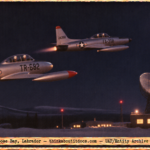
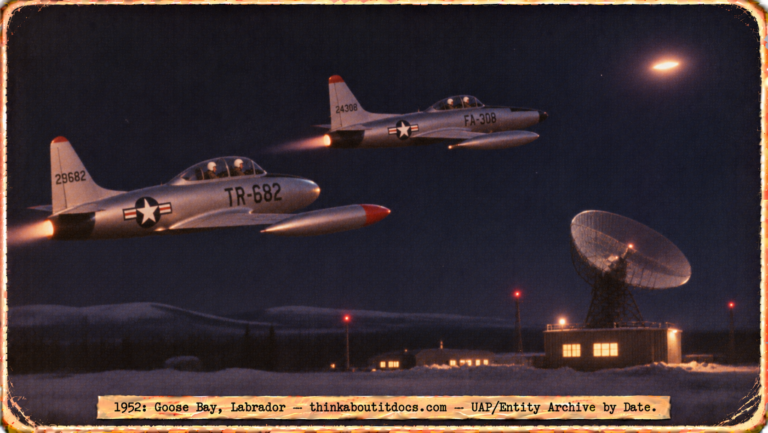
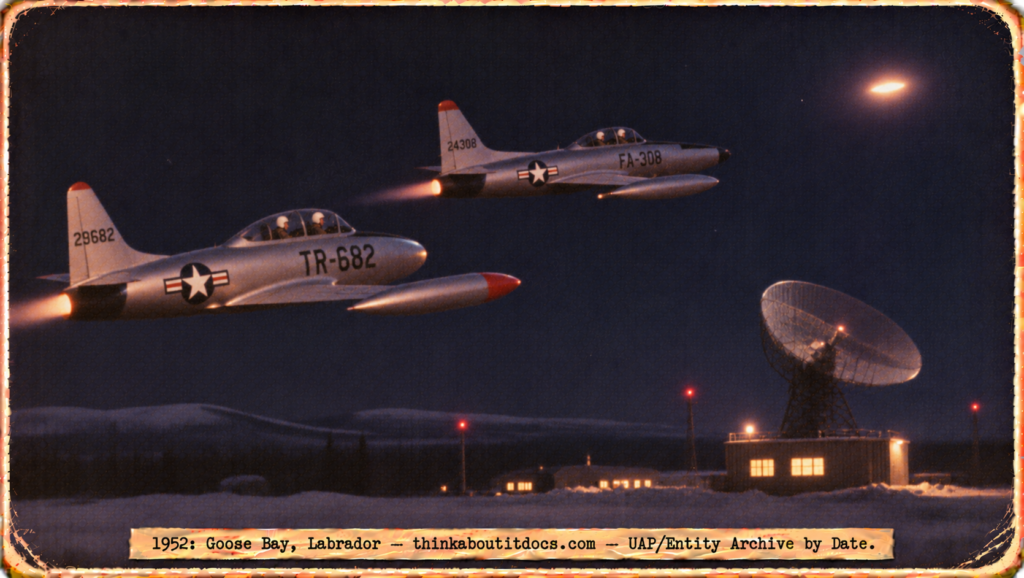
On the night of December 15–16, 1952, Ground Control Approach at Goose Bay, Labrador vectored two separate Air Force crews — a T-33 and an F-94 — onto an unidentified target. Both aircraft made visual contact, and radar held a momentary lock. One of the pilots recognized the object: he had seen something just like it three weeks earlier, on November 26. The case was released publicly as Item #7 on the Air Force’s own official clearance list.
Date: December 15–16, 1952
Sighting Time: 7:15 p.m. (Chop Clearance List Item #7)
Day/Night: Night
Location: Goose Bay, Labrador, Canada
Urban or Rural: Not applicable — airborne, near an air base
No. of Entity(‘s): None
Entity Type: Not applicable
Entity Description: Not applicable
Hynek Classification: RV (Radar-Visual) — momentary radar lock paired with two-aircraft visual confirmation
Duration: Not recorded precisely; a momentary radar lock with a longer visual observation by two aircraft
No. of Object(s): 1
Description of the Object(s): Not described beyond visual contact by two intercepting aircraft; one pilot identified it as resembling an object he had personally observed three weeks earlier
Shape of Object(s): Not recorded in the source material reviewed
Size of Object(s): Not recorded
Color of Object(s): Not recorded
Distance to Object(s): Not recorded; both aircraft were vectored onto the target by Ground Control Approach and achieved visual contact
Height & Speed: Not recorded in detail; the target was tracked briefly enough on radar that the lock is described as momentary
Number of Witnesses: The crews of two Air Force aircraft, a T-33 and an F-94, plus Ground Control Approach radar personnel
Special Features/Characteristics: Two separate aircraft independently vectored onto and visually confirming the same target by Ground Control Approach; a brief but real radar lock in addition to the visual sightings; one of the pilots recognized the object as similar to one he had personally seen on November 26, 1952, suggesting a recurring presence in the same general area; the case’s release as an official numbered item on the Air Force’s own clearance list to the public
Case Status: Unexplained
Source: Fran Ridge, citing the USAF Intelligence Report; Air Force Press Desk Chop Clearance List, Item #7, released to Maj. Donald Keyhoe
Summary/Description: On the night of December 15–16, 1952, at about 7:15 p.m., two Air Force crews — a T-33 and an F-94 — were vectored by Ground Control Approach at Goose Bay, Labrador, onto an unidentified target. Both aircraft achieved visual contact, and radar held a momentary lock. One of the pilots reported having seen a similar object three weeks earlier, on November 26, 1952. The case was released publicly as Item #7 on the official Air Force clearance list given to Maj. Donald Keyhoe by press officer Al Chop, and remains unexplained.
Related Cases: December 1952 archive, 1st–15th | the Laredo, Texas near-collision, December 4, 1952 (Chop Clearance List Item #1)
DETAILED REPORT
At around 7:15 p.m. on the night of December 15 into 16, 1952, Ground Control Approach personnel at the air base at Goose Bay, Labrador, Canada, detected an unidentified target and vectored two separate aircraft onto it: a T-33 jet trainer and an F-94 interceptor. Both crews, operating independently, achieved visual contact with the object, and the ground radar itself held a momentary lock on the target in addition to its role directing the two aircraft toward it.
What makes this case stand out beyond the bare fact of a two-aircraft intercept is a detail from one of the pilots involved: he recognized the object, or something closely resembling it, from a sighting of his own just three weeks earlier, on November 26, 1952. That earlier sighting is recorded separately in this archive’s November record. A single pilot reporting what he took to be the same or a similar phenomenon on two separate occasions, weeks apart, in roughly the same general area, suggests either a recurring natural or technical cause specific to that locale, or a genuinely persistent unidentified presence — the source material does not resolve which.
The case entered the public record through an unusual and well-documented channel: it was released as Item #7 on an official list of Air Force sightings that press desk officer Albert M. Chop provided to Maj. Donald Keyhoe, the retired Marine officer and prominent UFO investigator and author of the period. This places the case’s disclosure on the same institutional footing as several other December 1952 reports released through the same channel, including the Laredo, Texas near-collision from earlier in the month.
Researcher Fran Ridge’s citation of the underlying USAF Intelligence Report is the source for the case as presented here. No further resolution of the object’s identity, nor any proposed conventional explanation, is recorded in the material reviewed.
RESEARCHER’S NOTES
A Two-Aircraft Intercept With a Pilot’s Own Repeat Sighting
- Classification rationale: RV is appropriate given both the momentary ground radar lock and the independent visual confirmation by two separate aircrews. The radar component here is explicitly described as brief, which is worth stating plainly rather than overselling the instrumentation beyond what the source material supports.
- The recurring-witness detail is unusually strong: Most 1952 radar-visual cases involve witnesses seeing something unfamiliar for the first and only time. Here, one pilot explicitly connected this sighting to his own earlier observation less than a month prior, which either points to a specific recurring phenomenon tied to the Goose Bay area or strengthens the credibility of both reports by giving them an internal cross-reference independent of any outside investigator.
- Official clearance-list provenance: As with the Laredo, Texas case from the same month, this sighting’s release as a numbered item on Chop’s official list to Keyhoe places it in a documented institutional chain distinct from an anonymous tip or an unverified press clipping — it was a case the Air Force itself selected for public release.
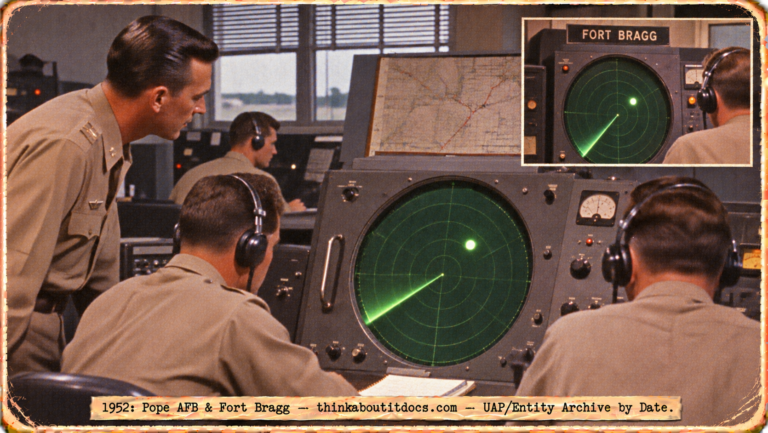
- Momentary radar lock, not sustained tracking: Unlike the Pope AFB/Fort Bragg case from five days earlier, which held a target for nearly eight hours, this encounter’s radar component is described only as momentary. The two cases should not be conflated; the strength of this case rests more on the dual-aircraft visual confirmation and the pilot’s repeat sighting than on sustained instrumentation.
Two Air Force aircrews, independently vectored by ground control, both achieved visual contact with the same unidentified target over Goose Bay, Labrador — and one of the pilots recognized it from a sighting of his own three weeks earlier. Released officially as Item #7 on the Air Force’s own clearance list, the case remains Unexplained.
“One of the pilots reported having seen a similar object before, on November 26, 1952.”
— Fran Ridge, citing the USAF Intelligence Report, Goose Bay, Labrador, December 15–16, 1952