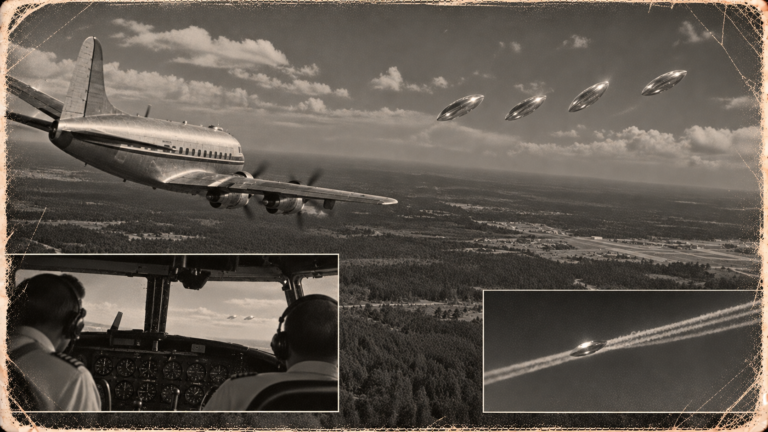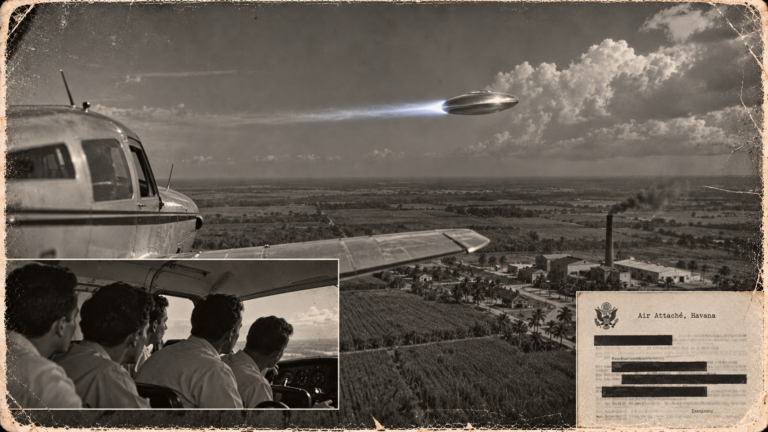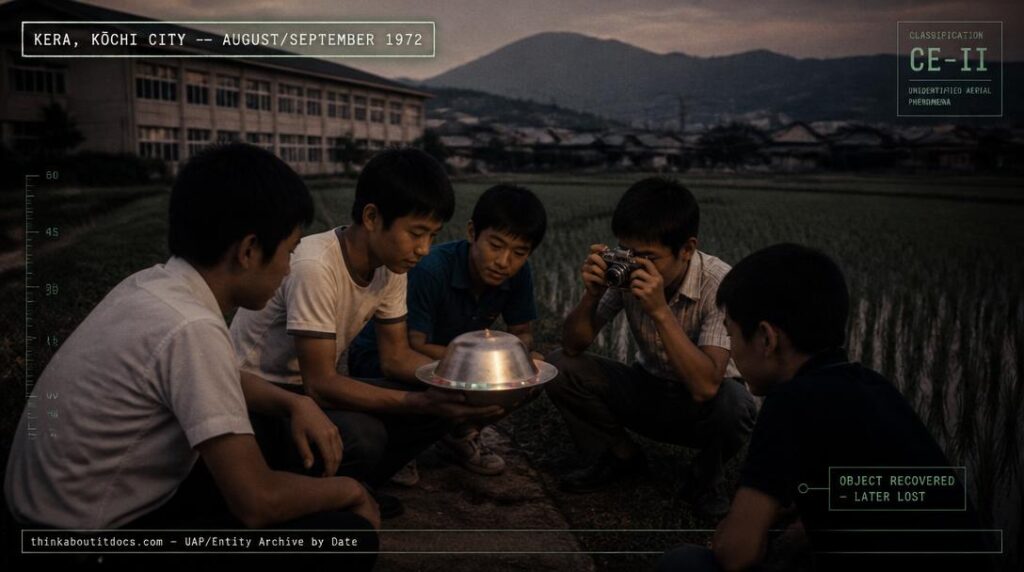
Dossier reconstruction of the miniature UFO reportedly captured by five boys in Kera, Kōchi City, Japan, 1972, and the related 1976 encounter near Agawa.
THINK ABOUTIT UFO|UAPY ENCOUNTER REPORT
1972: Kera UFO Incident, Japan | Captured Miniature Saucer Case Archive
On August 25, 1972, 13-year-old Michio Seo was walking home from school through the rice fields of Kera, a district of Kōchi City on Japan’s Shikoku Island, when he saw a small, dull-silver, hat-shaped object darting over the paddy like “a bat making hairpin turns in pursuit of its insect prey.” What followed, over the next four weeks, is one of the strangest documented UFO cases anywhere: Seo and four friends — Hiroshi Mori, Yasuo Fujimoto, Katsuoka Kojima, and a boy known only as Yuji — chased, photographed, physically captured, measured, hammered, doused with water, and repeatedly lost and re-found the same small object, which reportedly hummed, glowed, sparked, and vanished from sealed containers under circumstances none of them could explain.
The source used for this page frames the case as nearly forgotten and only reopened in 2007, “35 years after the events.” That’s not quite right, and worth correcting up front: Japanese researchers investigated and published on this case within a year of it happening, in 1973. This entry restores that earlier documentation, corrects the date range to match the source’s own fuller narrative, and includes a second image for the related 1976 case discovered during the later re-investigation.
Date: August 25 – September 22, 1972 — corrected from “August 25th – September 6th, 1972” to match the full sequence of events described in the source’s own narrative. See Researcher’s Notes.
Sighting Time: Various — encounters occurred in the afternoon, evening, and night across the reporting period
Day/Night: Both — encounters occurred at various times, including afternoon, dusk, and night
Location: Kera district (Kera Ōtsu), Kōchi City, Kōchi Prefecture, Shikoku Island, Japan — rice fields near the Yokohori residential complex, adjacent to Kera Middle School
Urban or Rural: Rural — rice paddies on the edge of a residential district; Kera itself had been a separate village until being incorporated into Kōchi City just months before the sighting, in February 1972
No. of Entity(‘s): 0 — no entity or occupant was ever directly seen; one witness reported feeling “something moving” inside the object when he lifted it
Entity Type: Not applicable
Entity Description: Not applicable
Hynek Classification: CE-II (Close Encounter II) — appropriately applied; this case includes not just close observation but the alleged physical recovery, handling, and examination of the object itself, an unusually strong physical-evidence profile for this archive
Duration: Spanned approximately four weeks (August 25 – September 22, 1972); individual encounters ranged from brief sightings of seconds to extended periods of direct physical handling
No. of Object(s): 1 — believed by the witnesses to be the same object throughout, a belief they attempted to confirm by marking it with paint partway through the encounters
Height & Speed: Reported hovering at heights ranging from about 3 feet to well above the ground; described moving erratically at high speed, compared by one witness to a bat pursuing insects
Size of Object(s): Approximately 8 inches wide and 4 inches high; weighed approximately 3 pounds when inert
Distance to Object(s): Initially observed hovering approximately 60 feet away; later encounters involved direct physical contact and handling
Shape of Object(s): A dull silver hat shape, with a flat bottom and narrow lip; the curved dome atop the lip was steep and level at its apex
Color/Description of Object(s): Metallic, dull silver; emitted a pulsating multicolored light, later described as glowing blue with an accompanying loud “pop,” and, in a separate instance, emitting light brighter than a camera flash
Number of Witnesses: 5 primary witnesses — Michio Seo (13), Hiroshi Mori (14), Yasuo Fujimoto, Katsuoka Kojima, and a boy known only as Yuji — plus Yasuo’s father Mutsuo Fujimoto, director of Kōchi’s Center for Science Education, who briefly examined the object, and Katsuoka’s mother Aiko, who intervened to stop the boys from testing it in an oven
Special Features/Characteristics: Object reportedly shot a blinding beam at the first witness on initial approach; later encounters included the object emitting a deafening cicada-like buzz and internal glow when water was poured into its perforations; the object showed concentric curves, 31 small holes, and three distinct etched designs on its base (interpreted by the boys as waves/clouds, a bird or flying object, and a budding flower); it withstood hammer blows without damage; it reportedly disappeared repeatedly from sealed and monitored locations, including once from a knotted, water-filled plastic bag tied by string to a boy’s wrist, with the knots found untouched; Mutsuo Fujimoto’s own brief examination found what he described as components “similar to a radio” inside a top section that “was impossible to open”
Case Status: Insufficient Data — see Researcher’s Notes for rationale
Source: mysteriousuniverse.org; cross-referenced with contemporaneous Japanese-language sources, including Tsutomu Seki’s 1973 magazine account, the Japan Space Phenomena Society’s (JSPS) April 1973 special report by Shinichiro Namiki and field investigator Kazuo Hayashi, a 1974 Nippon Television special, and a 1976 essay attributed to author Shusaku Endo
Summary/Description: Beginning August 25, 1972, five junior high school boys in Kera, Kōchi City, Japan, reported repeated encounters with a small, hat-shaped, metallic object that hovered, glowed, and maneuvered erratically over local rice fields. The boys eventually captured the object physically on more than one occasion, measuring, photographing, and examining it before it repeatedly disappeared from secured containers under circumstances they could not explain, vanishing for good on September 22, 1972. The witnesses maintained the consistency of their account when re-interviewed 35 years later, in 2007.
Related Cases: A separate but similar 1976 case from nearby Agawa (now Niyodogawa-cho), involving 9-year-old witness Sachiko Oyama and a comparable small, hat-shaped object, was identified during JSPS’s 2007 re-investigation. See Detailed Report and second image below; not separately indexed in this archive.
Detailed Report
On the afternoon of August 25, 1972, 13-year-old Michio Seo was walking home from Kera Middle School, in the Kera district on the edge of Kōchi City, when he spotted a small, dull-silver, hat-shaped object darting erratically over a nearby rice paddy — flat-bottomed, with a narrow lip and a steep, level dome, moving, in his own later description, like a bat chasing insects. When his curiosity got the better of him and he began approaching, the object reportedly fired a blinding beam in his direction, sending him running.
Seo gathered four friends — Hiroshi Mori, Yasuo Fujimoto, Katsuoka Kojima, and a boy remembered only as Yuji — and the group staked out the field that evening. Around 7 PM the object reappeared, hovering some 60 feet away, and as dusk settled it began pulsing with multicolored light. When one of the boys approached, it let out a sharp pop and shimmered blue, scattering the group. A second close encounter followed on September 4, with the object hovering just a few feet off the ground before rushing at the boys and forcing another retreat.
Determined to photograph it, the boys began nightly stakeouts, and on September 6 found the object resting motionless in the field. A camera flash sent it spinning back into the air; a second photo caught its ascent, followed — by the boys’ account — by a flash of light brighter than the camera’s own, after which the object plummeted back down, still spinning, seeming almost to bury itself before going still. Fourteen-year-old Hiroshi Mori worked up the nerve to lift it with his bare hands, reporting he felt something moving inside, and a photo was taken of him holding it. Wrapped in a plastic bag, it went home in Mori’s backpack, where the group measured it at roughly 8 inches wide and 4 inches tall, weighing about 3 pounds, its base etched with concentric curves, 31 small holes, and three distinct designs the boys interpreted as waves, a bird, and a flower. They found no visible means of propulsion.
The boys brought their find to Yasuo Fujimoto’s father, Mutsuo, then director of Kōchi’s Center for Science Education. He gave it a brief look, unimpressed at the time — a decision he later said he regretted. In his own words: “The frequent nights out of the boys began to worry parents, I told my son if it was true what he said, to bring the object. He did: it was something like an ashtray, cast iron, but too light for this metal. It had a top down it was impossible to open and inside were pieces similar to a radio. I did not give more importance, but now I regret not having studied more closely.”
The object went missing from Mori’s backpack the very next day — the first of what would become a recurring pattern. Over the following two weeks, the boys reported at least six further sightings of what they took to be the same object (Fujimoto alone saw it three more times), noticing it never seemed to appear on rainy days, which they took as evidence it “feared” water. Acting on this theory, they returned to the rice field on September 19 with a bucket of water and rags, found the object motionless on the ground, doused it, and poured water into its perforations — provoking a deafening, cicada-like buzz and an internal glow, at which point the frightened boys backed off and began throwing stones, though the object never took flight again that night and was recovered.
Back at Katsuoka Kojima’s house, peering through the object’s holes, the boys reported seeing miniature mechanisms, levers, and unusual markings, and attempted to pry it open with a length of wire. Hanging it upside down by that wire, gravity reportedly pulled the dome section slightly apart from the base, revealing what they described as “complicated electronic equipment” and an unidentified viscous substance inside. Undeterred by having accidentally shown their prize couldn’t easily be opened this way, the boys tested the shell’s durability with a hammer, finding it unmarked even under repeated blows — and were only stopped from testing its heat and cold tolerance in the family oven and refrigerator by Kojima’s mother, Aiko.
Deciding the object was likely some kind of remotely controlled surveillance device, the boys planned to reveal it to classmates the following week, wrapping it in rags overnight — reasoning, incorrectly but earnestly, that this might contain any “atomic radiation” — and leaving it with Seo and Mori for the night. When the others returned to check on it later, it had vanished again from beneath the rags. Hours afterward, chasing a stray ball, Katsuoka Kojima found it, undamaged, in Mori’s yard.
Wary of losing it again, the boys marked it with paint to confirm they were tracking the same object, and on September 22 set out together by bicycle into Kōchi City, sealing the object in a water-filled plastic bag, knotted and tied by string to the wrist of whoever carried it. Passing near a bicycle repair shop, the final rider felt a sudden, forceful wrench at his wrist. The group stopped immediately and opened the bag — the knots undisturbed — and found it empty. The object was never seen again.
The case drew little attention outside Japan for decades, though it was documented close to the events themselves: a 1973 magazine account by Tsutomu Seki, a formal JSPS field investigation and special report by Shinichiro Namiki and Kazuo Hayashi (also April 1973), and a nationally broadcast Nippon Television special in October 1974. A 1976 essay collection reportedly included a piece on the case by novelist Shusaku Endo. The case resurfaced for a new audience in 2004, when UFO Comics published an illustrated retelling, and in 2007, JSPS’s Namiki and Hayashi returned to the case, interviewing the by-then-adult witnesses, who maintained the consistency of their original accounts.  During that same investigation, Hayashi came across a separate, similar 1976 case: nine-year-old Sachiko Oyama, of the nearby village of Agawa (now Niyodogawa-cho), reported a small, yellow, luminous object that descended into a wooded grove, struck a tree, and landed hissing near her feet — a silver or black, hat-shaped object about 7 inches across, coated in a “slimy substance,” which she touched before it glowed yellow again, spun counter-clockwise three times, and shot skyward. Oyama, then 40, also maintained her account when interviewed in 2007. Hayashi went on to propose that both objects might be “interdimensional vehicles” that had temporarily lost their way — his own hypothesis, offered without further substantiation.
RESEARCHER’S NOTES
The Kera Object — Japan 1972 and a Case Better Documented Than Its Own Retelling Suggests
- Date Range Correction: The structured date field lists “August 25 – September 6, 1972,” but the source’s own full narrative describes encounters continuing through September 22, 1972, when the object vanished for the last time during the boys’ bicycle ride. This entry corrects the date range to August 25 – September 22, 1972.
- Earlier Investigation Than Reported: The source states the case was “reopened” in 2007, “a full 35 years after the events.” However, primary Japanese-language bibliographic records show that Namiki and field investigator Kazuo Hayashi already published a formal JSPS special report on this case in April 1973, within a year of the events themselves. The 2007 effort was a re-investigation of a case JSPS had already studied decades earlier, not a first investigation conducted “35 years” removed from the events.
- A Well-Documented Case, Contrary to Its Own Framing: The source states there is “inexplicably little information” about this case “in the western world.” Independent research confirms substantial contemporaneous Japanese coverage: a 1973 magazine account, JSPS’s own 1973 special report, a nationally broadcast 1974 television special, and a 1976 essay reportedly by novelist Shusaku Endo — this entry could not independently confirm the Endo attribution with full certainty, but the bibliographic citation is specific enough to note here.
- The Object’s Behavior, Taken at Face Value: If taken as reported, the object’s most striking characteristic is not its flight but its repeated, physically inexplicable disappearances — from a sealed plastic bag tied to a boy’s wrist by unbroken knots, from watched rooms, and from backyards — despite reportedly surviving direct handling, hammer blows, and water immersion undamaged. These specific details, more than the initial sighting, are what strain conventional physical explanation, and are presented here exactly as reported rather than smoothed over.
- No Surviving Physical Evidence: Despite extensive handling, measurement, and a brief examination by a science-education professional, the object was never retained, independently photographed under controlled conditions, or subjected to lasting scientific analysis. Only the witnesses’ own photographs and consistent, decades-later testimony survive — the basis for this entry’s Insufficient Data status.
- A Related but Separate 1976 Case: During his re-investigation, Hayashi identified a separate 1976 account from Sachiko Oyama in nearby Agawa, involving a similar small, hat-shaped object. This is presented here as a related but distinct case, not the same incident, and Hayashi’s own “interdimensional vehicle” hypothesis for both cases is attributed to him specifically, not adopted as this archive’s conclusion.
Few cases combine this much sustained physical handling with this little surviving physical evidence — photographs and consistent decades-later testimony, but no object, no independent lab study, and a string of escapes that defy ordinary explanation on their own terms. Corrected for its actual documentation history and its full date range, the Kera case remains filed as Insufficient Data: thoroughly witnessed, thoroughly handled, and, in the end, thoroughly unresolved.
“I regret not having studied more closely.”