Three high-speed radar contacts over occupied Japan, summer 1947 — one supersonic — recorded in a SECRET Army Air Forces memo that concluded they were "not natural phenomena."
THINK ABOUTIT UFO | UAP SIGHTING REPORT
1947: Radar Pick-ups of High Speed Targets in the Far East.
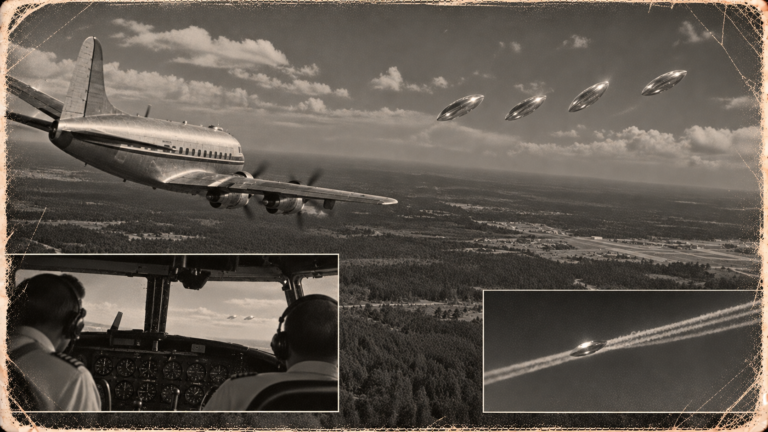
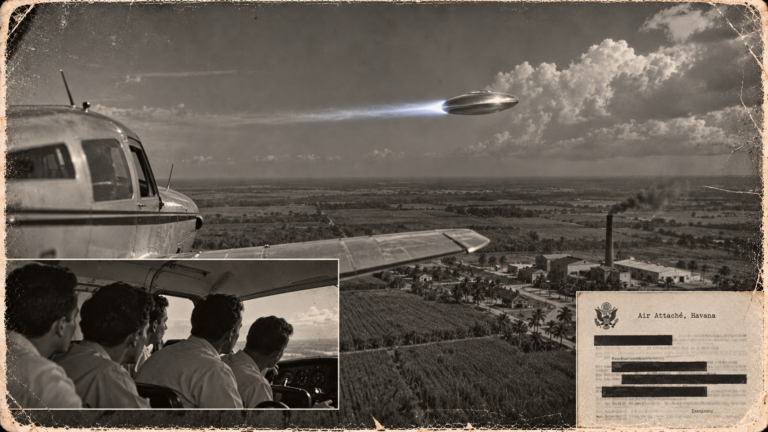
On the first of July, 1947, a ground-controlled-approach radar crew at Chitose Army Air Base on Hokkaido picked up a target sixteen miles north of the field — and the instant they radioed the tower to ask whether any aircraft were operating there, the target reversed course, as if it had heard them. Over the following weeks two more high-speed contacts were tracked off Fukuoka, one climbing out through weather that would have forced any pilot onto instruments, the last clocked at 840 to 900 miles per hour — supersonic, with no U.S. aircraft anywhere near. The Air Intelligence Division in Washington weighed the data and reached a careful, hedged, and striking conclusion: whatever these were, they were not natural phenomena. The document recording it is stamped SECRET and signed by a colonel. It is, by the standards of this archive, about as solid as the early record gets.
Date: July 1, 1947 to September 16, 1947 (three discrete radar incidents)
Sighting Time: Unknown (times not specified in the memorandum as held)
Day/Night: Unknown (radar tracking; not stated)
Location: Chitose Army Air Base, Hokkaido, Japan (July 1 incident); MEW radar station, Fukuoka, Japan (August 28 and September 16 incidents)
Urban or Rural: Military radar installations, occupied Japan
No. of Entity(‘s): None — radar-only detections, no occupants or entities
Entity Type: Not applicable
Entity Description: Not applicable
Hynek Classification: RV (Radar / Visual) per the live page; more precisely a radar-only (instrumented, non-visual) case, as no visual observation is recorded. Best logged as RV (radar) with a note that the visual component is absent.
Duration: Each contact tracked for minutes across tens of nautical miles before fading; full window spans July 1 – September 16, 1947
No. of Object(s): At least 3 separate targets across the three incidents; the July 1 target briefly split into two radar responses, then merged again
Description of the Object(s): No visual description — radar returns only. The July 1 return was comparable in size to the response from four P-51-type aircraft, and momentarily separated into two responses before re-merging. No shape, color, or structure observable.
Shape of Object(s): Not observable (radar return)
Size of Object(s): July 1 return comparable to four P-51-type aircraft; others not characterized
Color of Object(s): Not applicable
Distance to Object(s): Tracked across ranges from ~6 to ~89 nautical miles from the respective stations
Height & Speed: July 1 — in excess of 500 mph (≈435 knots), altitude 9,000 ft or higher, with multiple sharp course reversals (180°/360°/240°/060°); August 28 — 390–415 knots, altitude ~1,500 ft, climbing out on instruments-only weather; September 16 — 840–900 mph (730–780 knots), altitude 10,000–20,000 ft, i.e. supersonic
Number of Witnesses: Multiple military radar operators and controllers across two stations; the reporting agency stressed the high proficiency of the crews
Special Features/Characteristics: Multiple independent radar stations; abrupt high-rate course reversals (notably the July 1 target reversing at the moment of the tower radio call); a target splitting into two returns and re-merging; a climb-out conducted in weather requiring instruments; a supersonic track in September 1947 (months before the first crewed supersonic flight was publicly known); official Air Intelligence assessment that the contacts were “not natural phenomena”; no U.S. aircraft operating in the areas
Case Status: Unexplained (per the document’s own evaluation: not natural phenomena; not definitively identified as aircraft or missiles)
Source: Declassified U.S. Army Air Forces memorandum, Headquarters Army Air Forces, Washington — “Radar Pick-ups of High Speed Targets in the Far East,” Air Intelligence Division, AC/S-2, signed James F. Olive, Colonel, G.S.C., Chief, Air Intelligence Division (originally classified SECRET)
Summary/Description: A SECRET Army Air Forces Air Intelligence Division memorandum recapitulates three radar pickups of high-speed targets over occupied Japan between July 1 and September 16, 1947. On July 1, a GCA crew at Chitose AAB, Hokkaido tracked a maneuvering target (≥500 mph, ≥9,000 ft) that reversed course precisely as the crew radioed the tower, split into two returns and re-merged, and executed several sharp reversals before fading. On August 28, the MEW station at Fukuoka tracked a target (390–415 knots, ~1,500 ft) climbing out on an instruments-only-weather course. On September 16, Fukuoka tracked a target at 840–900 mph (supersonic), 10,000–20,000 ft. The division noted no U.S. aircraft were operating in those areas, stressed the radar crews’ proficiency, judged the August 28 contact probably a jet, found the September 16 speed unreasonable for piloted aircraft, and concluded that while the objects could not be definitively classed as aircraft or missiles, they were not natural phenomena.
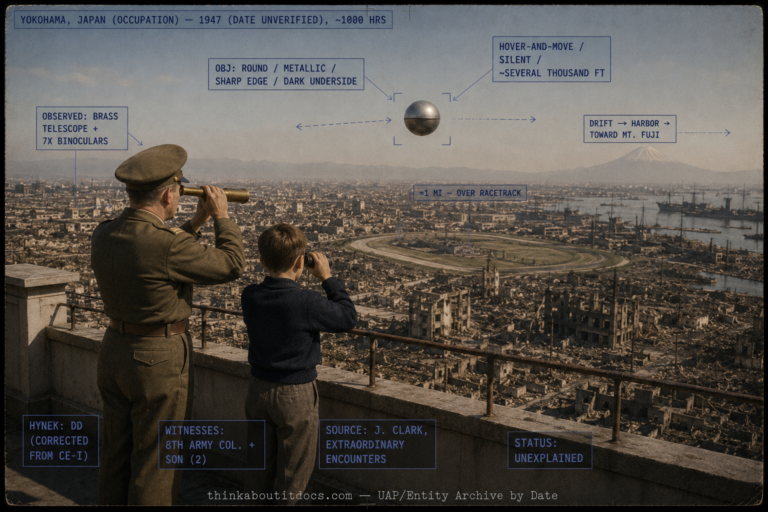
Related Cases: 1947 Yokohama, Japan Sighting | 1955 Radar-Visual Sightings (June 1–8) | broader 1947 wave | early Cold War radar-intelligence assessments of Soviet activity over the Far East
DETAILED REPORT
This case is unusual for the early archive in that its source is not testimony but a declassified U.S. government intelligence document: a memorandum from Headquarters, Army Air Forces, Washington, prepared by the Air Intelligence Division (AC/S-2) and signed by Colonel James F. Olive, originally classified SECRET. It recapitulates three radar pickups of high-speed targets over occupied Japan between July 1 and September 16, 1947, with an attached (not reproduced here) map plotting the tracks, and offers an intelligence evaluation of each.
The first incident, July 1, 1947, came from the ground-controlled-approach unit at Chitose AAB on Hokkaido. A target was picked up sixteen miles north of the base on a heading of 180°; at the moment the GCA crew radioed the tower to ask whether any aircraft were operating to the north, the target reversed to 360° and was tracked out to twenty-eight miles, then turned to 240° for six miles, reversed again to 060° back to the twenty-eight-mile point, and finally turned to 360° and faded. Its speed exceeded 500 mph at 9,000 feet or higher. The division’s analysis noted the return was comparable in size to that of four P-51-type aircraft and that it briefly split into two responses before re-merging, suggesting the track — if aircraft — could indicate a photographic reconnaissance mission; the nearest known Soviet base, Otomari on southern Sakhalin, lay 234 nautical miles north.
The second incident, August 28, came from the Microwave Early Warning (MEW) radar station at Fukuoka: a target in orbit at 26–30 nautical miles, which then took a heading of 023° and was tracked out to fifty-four miles while climbing, in weather that would have required the climb to be flown on instruments; speed 390–415 knots at about 1,500 feet. The division judged this one probably a Soviet jet aircraft. The third, September 16, also from Fukuoka, was tracked inbound from eighty-nine miles to nineteen miles before fading, at 840–900 mph (730–780 knots) and 10,000–20,000 feet. This was the standout: the division flatly called the speed “unreasonable for piloted aircraft,” noting it was well into the supersonic range, that a jet would need an extreme fuel load to sustain it, and that a rocket would struggle to operate long enough to return to base. A separate U.S. XXIV Corps report of a “new type aircraft” emitting black smoke on takeoff from Haeju, North Korea — “not identified as jet propelled” — was noted in the regional context.
The memorandum’s conclusions are notably disciplined. It stressed that the reporting agency emphasized the high proficiency of the radar operators and controllers, and argued that a competent operator could readily distinguish a genuine target from weather (which shows depth on the scope) or a meteor (too brief to distinguish from static) — therefore the incidents were “not due to natural phenomena.” It assessed the August 28 contact as probably a jet, found the September 16 speed unreasonable for any piloted aircraft, and stated that present information did not permit a definite evaluation that all the objects were either aircraft or airborne missiles, while supporting the conclusion that they were not natural phenomena. In short: a contemporaneous, official, multi-station radar record with a hedged but explicit “not natural” finding — and an open question as to what the fastest of the three actually was.
RESEARCHER’S NOTES
Not Natural Phenomena — The Far East Radar Memo of 1947 and the Document That Outranks Testimony
- Classification Assessment: The live page’s RV (Radar/Visual) is acceptable as a category label but should be qualified: there is no visual component in the memorandum as held — these are radar-only, instrumented detections by trained military crews. The cleanest log is “RV (radar) — instrumented, non-visual,” which preserves the radar character while flagging the absence of an eyewitness visual. No entity or Close Encounter category applies. Case Status should be Unexplained, and uniquely here that status rests not on the archive’s judgment but on the issuing agency’s own contemporaneous evaluation that the contacts were not natural phenomena and could not be definitively identified.
- Source Chain Assessment (Primary Strength): This is the highest-tier source in the current run and one of the stronger in the early archive. It is a contemporaneous, official U.S. government intelligence memorandum, originally classified SECRET, attributed to a named senior officer (Col. James F. Olive, Chief, Air Intelligence Division, AC/S-2) and to named installations (Chitose AAB; MEW Fukuoka). It sits at the top of the primary tier. The live page’s Source field is blank and must be populated with the full document citation. One verification task remains: confirming the document’s provenance and declassification trail (it is consistent with material that surfaced through Project Blue Book / early USAF intelligence releases), which would let the entry cite an archival locator rather than an unattributed transcription.
- Pattern Context and the Cold War Frame: The memorandum’s own working hypothesis is espionage, not the exotic — it repeatedly measures the tracks against known Soviet bases (Otomari/Sakhalin, Genzan and Haeju in Korea) and reads the July 1 maneuvering as a possible photo-reconnaissance profile. That is the responsible default for 1947 over occupied Japan, and it likely accounts for the August 28 contact (assessed as probably a Soviet jet). The case’s enduring interest lies in what the conventional frame could not absorb: the September 16 supersonic track. Level supersonic flight was at the very frontier in 1947 (Chuck Yeager’s first crewed supersonic flight was that October, and was itself secret), making a sustained 840–900 mph contact difficult to attribute to any known 1947 Soviet — or American — aircraft. The “reversed course the instant we keyed the radio” detail from July 1 is the kind of apparent responsiveness that recurs in later radar cases, though coincidence cannot be excluded.
- Physical Evidence and Evidentiary Weight: The evidence here is instrumented and documentary rather than testimonial — radar tracks recorded by trained crews at two stations, evaluated by an intelligence division, and preserved in a signed classified memorandum. That is a categorically stronger evidentiary base than the single-witness anecdotes common to 1947. The limitations are specific rather than general: no visual confirmation, no reproduced map enclosure, times of day not stated, and the raw scope data unavailable for re-analysis. None of that undercuts the core fact that a contemporaneous official body recorded these contacts and concluded they were not natural phenomena. On weight of evidence this is the run’s strongest case, and Unexplained is fully warranted — most defensibly for the September 16 supersonic track, with the August 28 contact reasonably attributable to a jet and the July 1 maneuvering target genuinely ambiguous.
The Far East radar memorandum is the kind of entry the archive exists to preserve: not a story but a document — contemporaneous, official, classified SECRET, signed by the chief of an Air Intelligence Division, recording three high-speed radar contacts over occupied Japan that trained crews tracked and that Washington could not fully explain. The agency’s own measured verdict was that the objects were not natural phenomena and could not be definitively classed as aircraft or missiles, with the September 16 supersonic track standing out as the genuinely anomalous element in an era when sustained supersonic flight barely existed. The archive logs it as RV (radar, non-visual), fills in the document source, and assigns Case Status: Unexplained on the strength of the issuing agency’s contemporaneous evaluation. It is the high-water mark of the run for provenance — a reminder that the most solid early UFO records are sometimes the ones written by the military itself.
Full Report
SECRET HEADQUARTERS, ARMY AIR FORCES
Source: GGA Unit, CHITOSE AAB, HOKKAIDO, JAPAN.
c. 16 September 1947
AC/S-2