THINK ABOUTIT CLOSE ENCOUNTER REPORT
1608: Genoa, Italy’s USO Battle
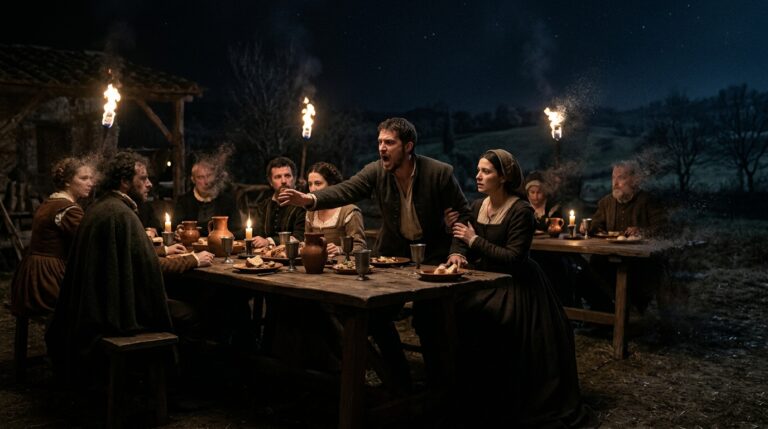
On August 22, 1608, the harbor and fortress of Genoa, Italy became the site of the most sustained and militarily engaged USO encounter in the pre-modern European record. The events began with a single creature emerging from the sea off the Genoese coast — human-shaped, covered in scales, with what appeared to be snakes or tubes protruding from its hands. Soldiers of the local garrison fired cannons at it. The cannon fire had no apparent effect. Shortly afterward, three reddish vessels were observed moving at high speed above the city before descending toward the fortress and entering the water, causing the sea to boil and emit dense ochre-red vapor. Two more entities emerged from the vessels — humanoid, with large heads and luminous eyes, dressed in red scaly combination outfits, each connected to their vessel by a long tube. They conducted several hours of work in and around the vessels in full view of the garrison. Soldiers in the fortress fired cannon at them repeatedly. No apparent effect. The same day, 100 miles up the Mediterranean coast at Nice, France, three long reddish vessels appeared over the bay, descended into the harbor, caused the water to boil and emit ochre vapor — and witnesses there observed a blood-like substance drop from one of the objects before it entered the sea. The 1608 Genoa event is one of the most thoroughly military-confronted USO cases in the pre-modern archive — and the cannon fire achieved nothing.
Date: August 22, 1608
Sighting Time: Not recorded — extended duration, several hours
Day/Night: Not recorded — daytime implied by cannon fire and visual detail
Location: Genoa harbor and fortress, Liguria, Italy
Urban or Rural: Urban coastal — harbor of a major Mediterranean city; military fortress present
No. of Entity(s): 3 minimum — one solitary creature from the sea; two humanoid entities from the three vessels
Entity Type: Multiple — one scale-covered serpentine creature; two humanoid beings in red scaly combination suits
Entity Description: First entity: a human-shaped figure covered in scales with what appeared to be snakes or tubes protruding from its hands — emerged from the sea alone. Second and third entities: two humanoid beings with large heads and large luminous eyes, dressed in red scaly combination outfits, each physically connected to their vessels by long tubes. Conducted several hours of work in and around the three vessels.
Hynek Classification: CE-III — Close Encounter of the Third Kind; direct observation of multiple animate non-human beings associated with three USO craft; military engagement attempted; entities immune to cannon fire
Duration: Several hours — from initial creature emergence through vessel descent, entity emergence, work operations, and departure
No. of Object(s): 3 — three reddish vessels moving at high speed above the city, descending to the harbor near the fortress
Description of Object(s): Three vessels described as reddish in color, moving at high speed above the city, capable of descending into and emerging from the sea; their entry caused boiling of the sea surface and emission of dense ochre-red vapor
Shape of Object(s): Vessel — elongated; reddish
Size of Object(s): Large enough to accommodate humanoid entities and long tube connections
Color of Object(s): Reddish
Distance to Object(s): Harbor and fortress level — at water surface and close to the fortress walls; entities emerged in direct proximity to the garrison
Height & Speed: Aerial at high speed before descent; water surface level during entity operations
Number of Witnesses: Multiple — local citizens, garrison soldiers, fortress personnel
Special Features / Characteristics: Military engagement with zero effect — cannon fire directed at both the solitary creature and the two suited entities from the fortress achieved no apparent effect whatsoever; boiling sea surface caused by vessel entry — physical environmental effect confirmed by multiple witnesses; ochre-red vapor emission during and after vessel entry; tube connections between entities and vessels; blood-like substance observed dropping from one vessel at Nice 100 miles away on the same day; coordinated Mediterranean coast presence — same day events at Nice and Genoa arguing for organized operational deployment; the solitary initial creature with apparent snake or tube hand-protrusions may represent a different entity type from the two suited humanoids; documented by CUN Genoa and Jean-Pierre Petit
Case Status: Unexplained
Source: CUN Genoa; Jean-Pierre Petit, France; Discours au Vray des terribles et espouvantables signes… (Troyes: Odard Aulmont, 1608)
Summary/Description: On August 22, 1608, a scale-covered human-shaped creature emerged from the sea at Genoa followed by three reddish high-speed vessels that descended to the harbor near the fortress causing the sea to boil and emit ochre-red vapor. Two red-scaly-suited humanoids with large heads and luminous eyes emerged from the vessels connected by tubes and worked around them for several hours. Cannon fire from the fortress garrison had no effect on any of the entities. The same day, parallel events involving reddish vessels and boiling sea with ochre vapor were reported at Nice, 100 miles up the Mediterranean coast.
Related Cases: August 5, 1608 CE Baie des Anges Nice France USO Three Oval Craft | August 1, 1608 CE Genoa Italy Two Entities Fighting Over Sea | 1608 CE Marseilles France Sightings | Mediterranean USO Archive 1608
DETAILED REPORT:
August 22, 1608. Genoa is one of the most important maritime cities in the Mediterranean world — a major port, a financial center, the home of the Banco di San Giorgio, and a city whose people have lived with the sea for centuries. They know what emerges from it under normal circumstances.
The first event is a single creature from the water.
It emerges from the sea off the Genoese coast — human-shaped, covered in scales, with what appeared to be snakes or tube-like protrusions extending from its hands. The description is specific enough to have reached the historical record in that form: scale-covered, human in general shape, with something extending from the hands that the witnesses could only describe as snakes or snake-like appendages. Whether these were biological features or equipment — tubes, conduits, appendages of some kind — the witnesses could not determine.
The garrison responds with cannon fire.
The cannon balls have no apparent effect on the scale-covered creature. The garrison fires repeatedly. Nothing. The entity absorbs the impact of 17th century artillery without visible damage and without response.
Then the three vessels appear.
They are reddish. They are moving at high speed above the city — a speed the witnesses found remarkable, beyond anything they had reference for. They approach the local fortress and descend toward the harbor. As they enter the water the sea begins to boil beneath them. A dense ochre-red vapor rises from the surface. The combination — boiling water, colored vapor — is the same physical signature documented six days earlier at Nice and earlier the same month in the same Mediterranean cluster.
The garrison fires cannon at the descending vessels. No effect.
From the vessels emerge two humanoid beings.
Large heads. Large luminous eyes. Red clothing covering their entire bodies — described as a combination outfit, a single garment covering the entire person in a material that appeared scaly in texture. Each being is connected to its vessel by a long tube. The tubes are physical connections — not decorative, not incidental — each entity attached to the vessel above it by its own tube in the same manner as the Nice entities had been attached to their craft.
They work.
For several hours they conduct operations in and around the three vessels in the water near the Genoese fortress. What the operations were the witnesses could not determine — the same absence of information about the purpose of the work that the Nice witnesses reported. The entities were busy. They did not acknowledge the garrison. They did not acknowledge the cannon fire. They conducted their work and when it was complete they returned to the vessels.
The garrison kept firing throughout the entire operation. Approximately 800 cannon shots were directed at the entities and vessels over the course of several hours. Not one of them appeared to have any effect.
The same day — August 22, 1608 — the Nice events were unfolding 100 miles to the northwest. Three long vessels over the Bay of Angels. A blood-like substance dropping from one object before it entered the sea. The water boiling. Ochre vapor rising. The two operations — Genoa and Nice — occurring simultaneously on the same day, involving the same class of craft and the same class of entity with the same physical environmental effects, argues for a coordinated presence along the northwestern Mediterranean coast rather than independent anomalous events.
The 1608 Genoa event was documented in a contemporary Paris pamphlet — Discours au Vray des terribles et espouvantables signes — published the same year at Troyes by Odard Aulmont. Jean-Pierre Petit, the French scientist and UAP researcher, examined the case extensively. CUN Genoa documented it in the Italian research record. The case is one of the most thoroughly documented military-confronted USO encounters in the pre-modern archive.
RESEARCHER’S NOTES:
The 1608 Genoa USO Battle — Cannon Immunity, Trans-Medium Operation, and the Mediterranean Cluster
- Cannon Immunity as Physical Evidence of Non-Human Technology: The complete ineffectiveness of approximately 800 cannon shots fired at the Genoa entities and vessels over several hours is the most analytically significant military detail in the case. In 1608, cannon fire was the most powerful available human weapon system. It was effective against stone fortifications, wooden ships, and armored knights. The entities and vessels at Genoa absorbed sustained cannon fire from a fortress garrison for hours without any apparent physical damage or behavioral response. This immunity argues for a structural integrity or defensive capability far beyond anything available in the 17th century and consistent with modern reports of military aircraft and weapons systems having no effect on UAP craft.
- The Tube Connection as Environmental Suit Indicator: The long tubes physically connecting each of the two red-suited entities to their vessels are the most technically specific element of the Genoa entity description. Combined with the scaly red combination outfits, large helmet-like heads, and luminous eyes, the tube connections complete the picture of entities operating in an environmental suit with an external supply or power connection to their craft — exactly the architecture of a deep-sea diving suit or a pressurized environmental suit with an umbilical connection. The 17th century witnesses described the function accurately in terms available to them — tubes connecting people to their vessels — without having any framework for understanding what that function actually was.
- The Mediterranean Cluster as Operational Pattern: The simultaneous occurrence of similar events at Genoa and Nice on August 22, 1608 — both involving reddish vessels, boiling water, ochre vapor, and entity operations — combined with earlier events at Nice on August 5 and Marseilles at other points in the same period, argues strongly for a coordinated operational deployment along a specific stretch of Mediterranean coastline. The events at multiple locations are not independent — they share too many specific physical characteristics to have been independently generated. Whatever was operating the northwestern Mediterranean coast in August 1608 was doing it systematically, at multiple sites, simultaneously.
- The Solitary Creature vs. Suited Entities: The initial solitary creature — scale-covered, human-shaped, with snake/tube hand protrusions — may represent a different entity type from the two suited humanoids who emerged from the three vessels. The solitary creature appeared before the vessels and appeared to absorb cannon fire directly. The suited humanoids were tube-connected and worked around their craft. Whether these are two different biological types, one biological and one suited, or the same type in different operational configurations, the account preserves both without conflating them.
On August 22, 1608, the garrison of Genoa fired approximately 800 cannon shots at scale-covered beings and reddish vessels in their harbor over the course of several hours. Nothing happened. The entities worked around their craft, completed whatever they had come to do, and left. The same day, the same class of craft was operating at Nice 100 miles away. The contemporary pamphlet was published at Troyes in the same year. Jean-Pierre Petit examined it. CUN Genoa documented it. The archive holds it. Whatever operated the northwestern Mediterranean coast in August 1608 was immune to the most powerful weapons 17th century Europe could deploy against it, connected to its vessels by tubes that the witnesses described as accurately as their vocabulary allowed, and working to an operational schedule that no garrison or government of the period could interrupt or explain. Four centuries later the cannon fire still achieved nothing and the questions it raised are still open.