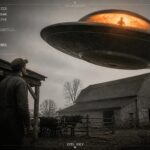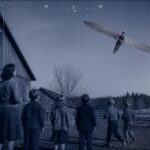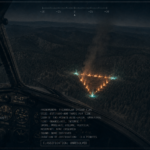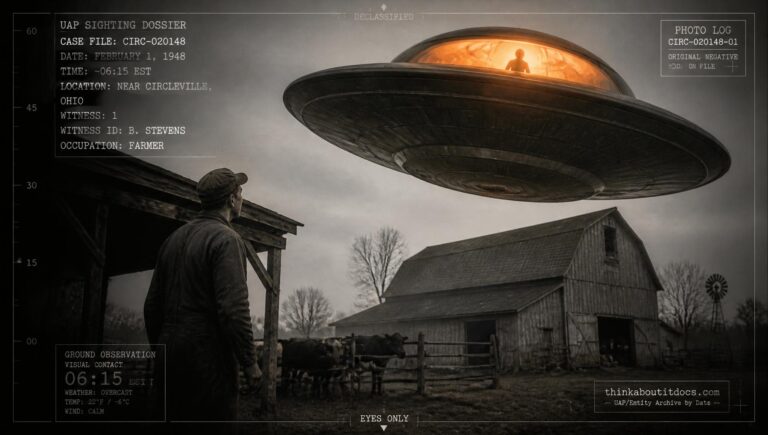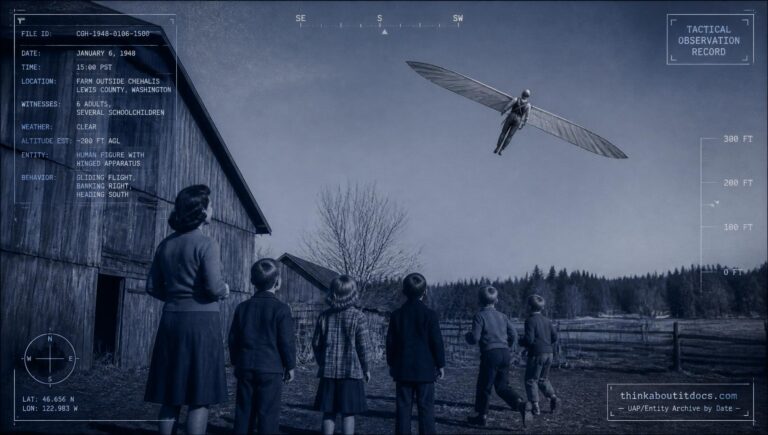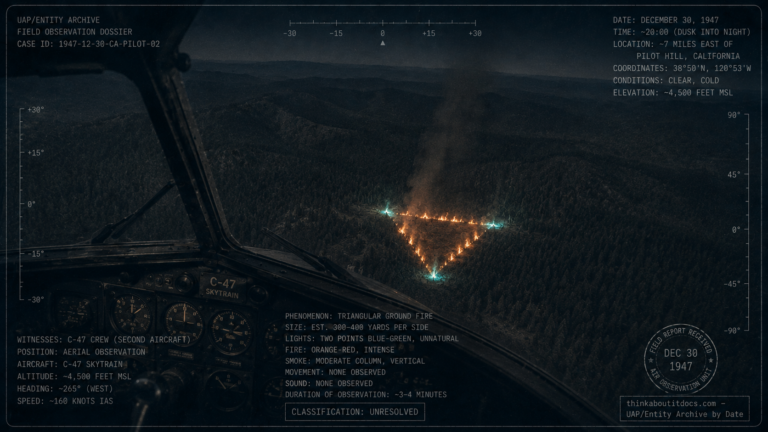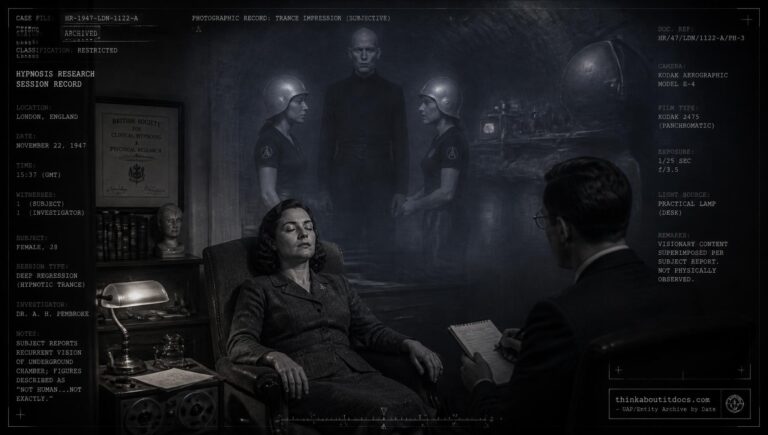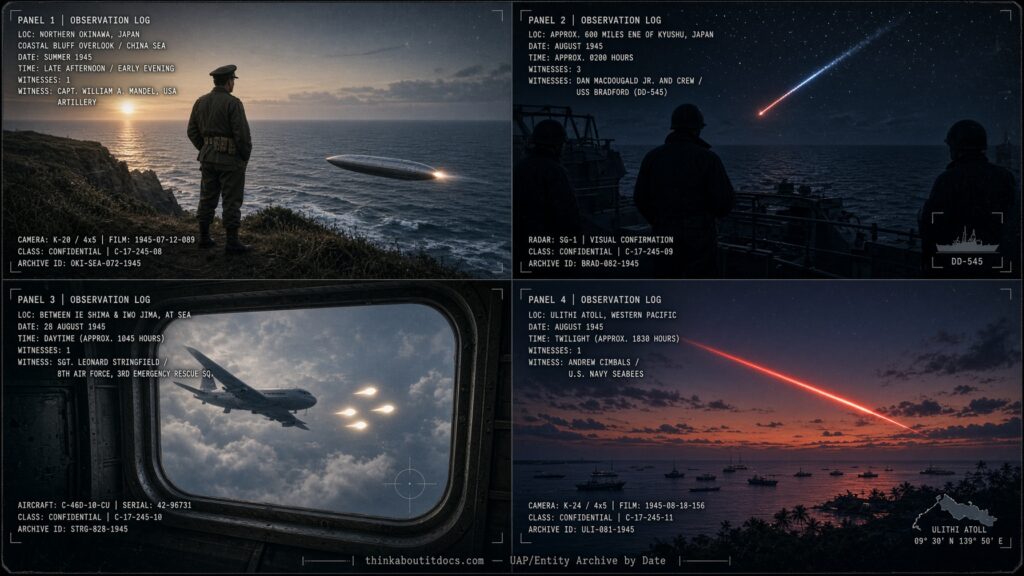
August 1945 — Four anchor cases as the war ends: William Mandel's cigar-shaped Okinawa craft, USS Bradford's radar-defeating object, Leonard Stringfield's Iwo Jima teardrops, and Andrew Cimbals's Ulithi red streak. thinkaboutitdocs.com.
1945: August UFO & Entity Sightings Archive
August 1945 closes out the war with a month bracketing the atomic bombings on both sides: a red streak “like a hot bar of steel” crossing the sky toward Japan at Ulithi, a cigar-shaped craft paced along the Okinawa coastline by an artillery captain who wouldn’t go public until a 1952 magazine article gave him the nerve, and — three weeks after Japan’s surrender broadcast — three brilliant teardrop objects that paced a struggling C-46 near Iwo Jima while its cockpit compass needles spun wild. In between, a Navy officer’s deck report of an object that outran three radars and a range finder set to infinity went curiously quiet the moment an admiral asked who, exactly, had seen it.
Date: Aug. 1945
Location: Ulithi
Time: Twilight
Summary: Andrew Cimbals reported a red streak “like a hot bar of steel,” not a flame, in the eastern sky, traveling overhead toward Japan. Duration approximately 40 seconds.
Source: Harold Wilkins, Flying Saucers Uncensored; Farish & Clark
Date: Summer 1945 (between approximately July 2 and August 6, per the witness’s own account)
Location: Northern Okinawa, Japan
Time: Late afternoon/early evening
Case Status: Unexplained
Summary: William A. Mandel, an artillery captain with the U.S. military government stationed on a bluff overlooking the China Sea in northern Okinawa, watched a cigar-shaped, metallic, marking-free object approach along the coastline at roughly 200-300 mph and an altitude of under 400 feet, passing within a few hundred yards of his position at eye level. He estimated its length at 35-50 feet and its diameter at 6-8 feet; it emitted light only from its tail end and made no sound. It followed the coastline until disappearing from view. Mandel, an experienced artillery/anti-aircraft observer trained to identify both friendly and enemy aircraft, did not go public until years later, after the 1952 Life magazine “flying saucer” article prompted him to write to Civilian Saucer Investigations and later to correspond directly with astronomer J. Allen Hynek. [Full Report]
Source: William A. Mandel, letter to Civilian Saucer Investigations of Los Angeles, 1952, and subsequent correspondence with Dr. J. Allen Hynek Source Status: VERIFIED — named, credentialed witness (trained artillery/AA observer), extensively documented in his own words across two separate written accounts to two different investigators.
Editorial note: Previously listed on this archive without a named witness. The description (“cigar-shaped, metallic, without markings or visible openings, 35 to 50 feet in length”) matches William Mandel’s own account nearly verbatim; the witness is identified here for the first time on this page.
Date: Aug. 1945 (possibly after the Hiroshima bombing, approximately 2:00 AM)
Location: Approximately 600 miles ENE of Kyushu, Japan
Time: Approximately 2:00 AM
Summary: Dan MacDougald, Jr., Officer of the Deck aboard USS Bradford, along with the ship’s Quartermaster and a sailor named Troina — noted by MacDougald as unusually skilled in both radar and optical range-finding — observed a star-like object traveling horizontally along the horizon. Three separate radars showed no indication of it. The optical range finder, set to infinity, indicated the object was at a range exceeding 40,000 yards. The object crossed the ship’s bow, apparently increasing its distance, colored white with a reddish tinge. After reaching roughly 10 degrees off the port bow, it turned to its right, increased both speed and altitude, and disappeared on an upward flight path, its color shifting to white with a bluish tinge. The Task Force commander’s voice came over the TBS radio circuit requesting reports of the object; other ships responded, but MacDougald did not answer when the admiral specifically asked who had observed it.
Source: Dan MacDougald, Jr., letter to Congressman L. Mendel Rivers, Chairman of the House Armed Services Committee; letter to NICAP Source Status: VERIFIED — named, identified officer, with corroborating detail (fleet-wide radio inquiry, multiple ship responses) suggesting the sighting was witnessed beyond MacDougald’s own vessel.
Date: Aug. 28, 1945
Location: Between Ie Shima and Iwo Jima, Japan, at sea
Time: Daytime
Summary: Sgt. Leonard Stringfield, flying at 10,000 feet aboard a C-46 between Ie Shima and Iwo Jima, experienced left-engine trouble — the plane dipped, the engine sputtered oil, and the aircraft lost 25-50 feet of altitude. Looking out the starboard-side window, Stringfield was startled to see three teardrop-shaped objects, each appearing “about the size of a dime held at arm’s length,” brilliant white “like burning magnesium.” Flying in tight formation, they traveled in a straight line through drifts of cloud, parallel to the C-46 and matching its speed, appearing intelligently controlled. The aircraft’s magnetic navigation instrument needles went wild during the encounter.
Source: Leonard Stringfield, as documented by Keith Chester, Strange Company (2007) Source Status: VERIFIED — named witness (Stringfield later became a prominent independent UFO researcher in his own right), account preserved and researched by a credentialed military UFO historian.
Editorial note: Previously listed twice on this archive as separate entries (one detailed, one brief summary of the same event). Consolidated here into a single entry.
EXECUTIVE SUMMARY
August 1945 — The War Ends, and the Reports Don’t Stop
The strongest entry this month is the Okinawa cigar-shaped craft — this revision names the witness for the first time as William A. Mandel, a trained artillery observer whose 1952 letter to Civilian Saucer Investigations and subsequent correspondence with astronomer J. Allen Hynek preserve one of the most detailed civilian accounts in this archive’s 1945 record: a 35-50 foot metallic cigar, silent except for its tail, passing within a few hundred yards at eye level along the Okinawa coast. Mandel’s own account is notable for its candor about his own hesitation — he told no one for years, worried about credibility, until a national magazine article made the subject safe to discuss.
The month also closes with a striking bookend: three weeks after Japan’s surrender was announced, Leonard Stringfield — who would go on to become one of American ufology’s more prominent independent researchers — watched three brilliant teardrop objects pace his struggling C-46 near Iwo Jima while his cockpit instruments spun wild. And a Navy deck officer’s detailed account of an object that defeated three radars and a range finder went conspicuously silent at the one moment an admiral asked for his name. This revision consolidates a duplicated Stringfield entry and names Mandel for the first time, but otherwise leaves this short, thinly-sourced month largely as found.
“The UFO whose flight I witnessed so long ago was cigar-shaped, metallic and without markings or visible openings of any kind except at the after end.”
William A. Mandel, describing his Okinawa sighting in correspondence with Dr. J. Allen Hynek.