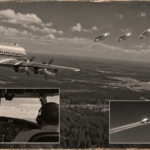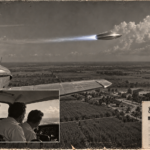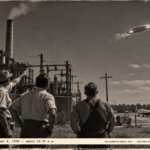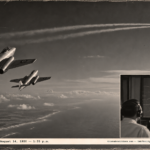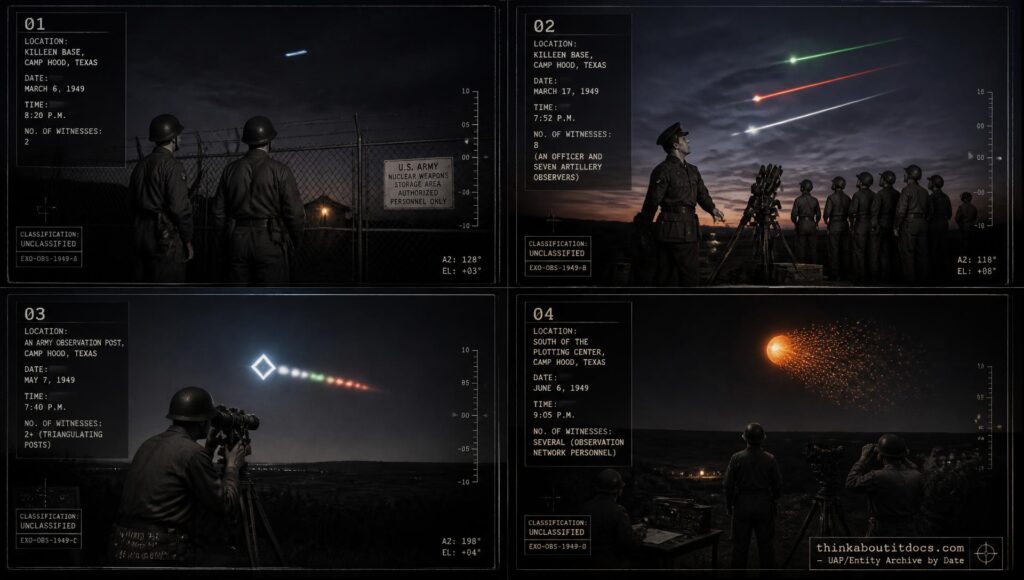
March-June 1949 — the Fort Hood, Texas UFO wave, tracked by a purpose-built Army triangulation network at a nuclear weapons storage site.
THINK ABOUTIT UFO|UAP SIGHTINGS REPORT
1949: Fort Hood, Texas UFO Wave
Over four months in 1949, Army patrols guarding a nuclear weapons storage site in central Texas didn’t just see lights in the sky — they built a real-time triangulation network to track them. What started as a single blue-white object on a March patrol grew into eleven documented sightings, culminating in an object that hovered, then exploded into a shower of particles while three separate observation posts watched it happen together.
Overview
Location: Killeen Base, Camp Hood (now Fort Hood), Central Texas — primarily the AFSWP (Armed Forces Special Weapons Project) nuclear weapons storage site and its surrounding perimeter
Date Range: March 6 – June 6, 1949
Case Status: Unexplained (all eleven incidents)
Hynek Classification: Primarily NL (Nocturnal Lights); several incidents (April 27, May 7, May 8, June 6) involve close-range or triangulated tracking that approaches DD/RV-adjacent detail without a daylight or radar component confirmed in the source record
Special Features/Characteristics: Nuclear Weapons Storage Site Proximity, Purpose-Built Real-Time Triangulation Network, Multiple Independent Trained Military Observers, Radio/Telephone Interference (Two Incidents), Object Explosion Witnessed in Progress, Attempted Debunking Effort That Instead Produced a Sighting (March 17)
Source: FOIA; FUFOR Index; Jan Aldrich; NICAP (nicap.org/waves/1949fullrep.htm)
Related Cases: Not directly connected in any source consulted to this archive’s concurrent 1949 Los Alamos/Sandia green fireball wave, though both were unfolding over the same months at other New Mexico and Texas nuclear-related sites
Incident 1 — March 6, 1949
Time: 8:20 p.m. (AFOSI 29 & 30)
Witnesses: Army Sgt. Hubert Vickery and PFC John Ransom, on patrol at the AFSWP nuclear weapons storage site
Summary: A blue-white, oblong object about 2 ft by 1 ft traveled south, moving from 286° to 279° azimuth at 5°45′ elevation. Additional sightings by other Army patrols continued from 8:30 p.m. to 2 a.m. the same night.
Incident 2 — March 7, 1949
Time: 1:30 a.m. (AFOSI 32-34)
Witnesses: PFC Max Eugene Manlove, 1st Provost Squadron, plus two other sets of military witnesses at separate locations
Summary: Manlove observed a teardrop-shaped, orange object drop vertically in front of him, visible for about two seconds. Two other groups of military witnesses independently reported similarly brief (roughly two-second) sightings the same night.
Incident 3 — March 8, 1949
Time: 2:00 a.m. (AFOSI Case 39)
Witnesses: Army infantrymen Payne and Cpl. Luke Sims, in separate locations half a mile apart
Summary: Payne saw a white light; Sims, independently, saw a yellowish-red light in level flight crossing 60° of sky. Duration approximately five seconds.
Incident 4 — March 17, 1949 (BBU 319)
Time: 7:52 p.m.
Witnesses: Capt. Horace McCulloch, Assistant G-2 of the 2nd Armored Division, and seven trained artillery observers at separate locations
Summary: McCulloch was preparing a test firing of flares specifically intended to demonstrate that recent sightings had been mistaken flares — when he and his men saw the real phenomenon instead. Seven separate, independently located artillery observers enabled rapid triangulation of large, green, red, and white flare-like objects flying in generally straight lines, watched for about an hour.
Incident 5 — March 31, 1949
Time: 11:50 p.m. (AFOSI Case 46)
Witnesses: Army Lt. Frederick Davis, on patrol east of Killeen Base
Summary: Davis saw a reddish-white ball of fire pass horizontally over the base airstrip, visible for 10-15 seconds. He noted interference on the field telephone when he called in the report afterward.
Incident 6 — April 27, 1949
Time: 9:20-9:39 p.m.
Witnesses: Two Army soldiers (given as Pillett and Belislandro, spellings uncertain in the source) at one location; four Army men about two miles away at a second location
Summary: At 9:20, two soldiers saw a blinking violet object, about 1.5 inches in diameter as seen from 10-12 ft, moving through tree branches 6-7 ft above ground before disappearing. At 9:25, two miles away, four soldiers saw a 4-inch bright light with a 2-4-inch metallic cone trailing behind it, approaching silently from the northeast at 60-70 mph, 6-7 ft above ground, then disappearing suddenly to the southwest. At 9:37, the same four witnesses saw a 2-inch white light appear to the north-northeast, flying a zigzag path about 6 ft above ground before vanishing. At 9:39, the same witnesses saw a third light to the west-southwest.
Incident 7 — April 28, 1949
Time: 8:30-10:00 p.m.
Witnesses: Several Army security patrols, southeast of Killeen Base
Summary: Multiple patrols independently sighted a variety of strange lights, mostly slow-moving and changing color between white, red, and green; one showed a red blinking light, and another trailed a “cone-shaped affair” similar to the object seen the previous evening.
Incident 8 — May 6, 1949
Time: Not specified
Witnesses: The Army’s newly established artillery-observer UFO observation network (associated with Lt. Mardell Ward)
Summary: The observation network, established just two days earlier specifically in response to the ongoing sightings, tracked its first object using real-time triangulation between posts.
Incident 9 — May 7, 1949
Time: 7:40 p.m.
Witnesses: Lt. Mardell Ward at the Army’s UFO observation post, plus a second observation site (real-time triangulation, two or more posts)
Summary: A brilliant white, diamond-shaped object was triangulated at 15,000 ft distance and 1,000 ft altitude, heading northwest. It was tracked for 57 seconds as it traveled about 20 miles (implying roughly 1,300 mph), changing color from white to reddish to greenish as it dropped altitude, dimming before it disappeared. No sound was noted. One published source (Loren Gross’s Jan-Jun 1949 supplement) erroneously places this sighting at Los Alamos rather than Camp Hood.
Incident 10 — May 8, 1949
Time: 10:08-10:17 p.m.
Witnesses: Lt. Mardell Ward and two other observation posts (real-time triangulation, three posts)
Summary: A brilliant, diamond-shaped object was sighted to the west, moving northwest or northeast at 1,600 ft altitude and slowly dropping, tracked for about nine minutes. Severe radio interference occurred during the sighting but stopped immediately afterward. The same Loren Gross supplement again erroneously places this sighting at Los Alamos.
Incident 11 — June 6, 1949
Time: 9:05-9:08 p.m.
Witnesses: Williams, Jones, and other personnel of the UFO observation and triangulation network
Summary: The network tracked a hovering, orange object about 30-70 ft in diameter (2 mils angular size), roughly 1 mile above ground and 3 miles south of the observation post (4.5 miles south of the Plotting Center). The object suddenly began moving in level flight, then exploded in a shower of particles while under direct observation.
Detailed Report
What sets the Fort Hood wave apart from most 1949 sighting clusters in this archive is the Army’s own response to it: rather than treating each report as an isolated curiosity, personnel at Camp Hood built a purpose-made observation and triangulation network, staffed by trained artillery observers already skilled at range-finding and position-fixing, specifically to track whatever was being seen. That network went operational by early May, only two days before it recorded its first tracked object, and by June it was producing real-time, multi-post triangulated data on an object’s altitude, distance, and behavior as the event unfolded — a level of methodological rigor uncommon in this archive’s 1949 record.
The March 17 incident is the wave’s most quietly remarkable moment: Capt. Horace McCulloch had arranged a test firing of flares for the specific purpose of demonstrating that earlier sightings were nothing more than misidentified flares — and instead, he and his men witnessed the same kind of phenomenon they had set out to debunk, this time triangulated by seven independently positioned observers. An attempted debunking effort that instead reproduced the very observation it was meant to explain away is a distinctive twist within the broader 1949 record.
Two incidents (March 31 and May 8) involve reported interference with communications equipment — a field telephone in the first case, radio in the second — coincident with the sighting and resolving immediately afterward. The wave’s final recorded incident, June 6, is also its most dramatic: a hovering object, observed and triangulated by name, that began moving and then visibly exploded into a shower of particles while multiple trained observers watched.
RESEARCHER’S NOTES
The Fort Hood Wave — Texas 1949 and the Value of Building Your Own Instrument
- Classification issues/corrections: Most incidents are filed as NL, though several (April 27, May 7-8, June 6) involve close-range or systematically triangulated tracking that pushes toward the edge of what NL captures; this archive does not force these into a DD or RV tier absent a confirmed daylight or radar component, and instead notes the ambiguity directly. Two published sources (Loren Gross’s supplement) misattribute the May 7 and May 8 incidents to Los Alamos rather than Camp Hood — corrected here.
- Source chain assessment: The wave is documented through FOIA-released records, the FUFOR Index, Jan Aldrich’s archival research, and NICAP’s own compiled case report — a multi-source chain with reasonable cross-verification, though the underlying witness testimony was recorded by the Army at the time rather than by an independent civilian investigator.
- Pattern context/comparative cases: The purpose-built observer network at Fort Hood has no close parallel elsewhere in this archive’s 1949 record; most sightings that year were incidentally witnessed rather than actively tracked by an instrument built for the purpose. The closest comparison in spirit, though not in method, is the New Mexico AFOSI/La Paz green fireball catalog, which also involved dedicated official investigation of a recurring phenomenon at sensitive military sites.
- Physical evidence/evidentiary weight: No photograph or recovered physical material is documented for any of the eleven incidents. The wave’s evidentiary weight instead rests on the number and training of its witnesses and the deliberate triangulation methodology used in its later incidents — a strong witness-and-method case without physical corroboration.
- Geographic/historical context: Camp Hood’s AFSWP nuclear weapons storage site places this wave within the same broader 1949 pattern of unusual aerial activity clustering around U.S. nuclear-related installations, alongside the concurrent Los Alamos/Sandia green fireball wave in New Mexico — though no source consulted for this report connects the two directly.
Few 1949 UFO cases show an institution responding to a phenomenon with this much method: not dismissal, not a single flare test, but a standing network of trained observers who kept watching for months and ultimately triangulated an object at the moment it broke apart. Whatever caused eleven months of sightings at Camp Hood, the Army’s own response to it remains one of the most methodologically serious efforts in this archive’s 1949 record.
“The object suddenly started moving in level flight then exploded in a shower of particles.”
FOIA record of the June 6, 1949 Camp Hood, Texas sighting, the wave’s final documented incident.