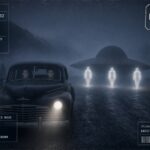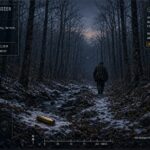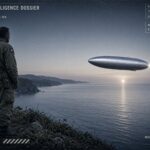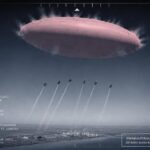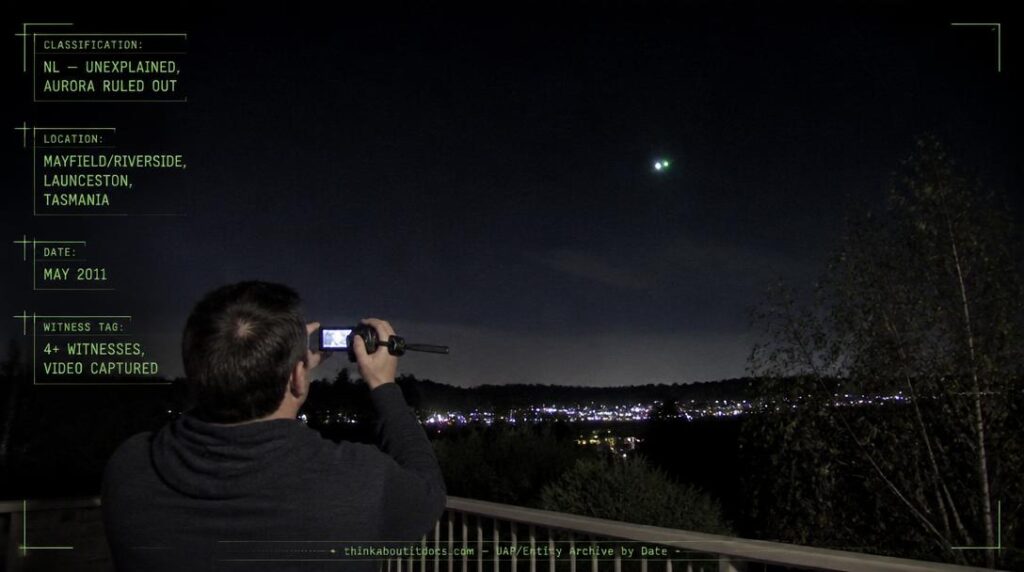
Recreation of the May 2011 Launceston, Tasmania sighting, in which witness Brendon Hill watched an unexplained white and green flashing light above the treeline near Mayfield on two separate nights, capturing the second on video.
THINK ABOUTIT UFO|UAP SIGHTINGS REPORT
2011: The Mayfield Flasher, Launceston, Tasmania
Over two nights in late May 2011, Launceston, Tasmania resident Brendon Hill watched a white-and-green flashing light hang high above the treeline near Mayfield — first with three baffled friends he dragged outside to confirm it, then again two nights later, this time catching it on his video camera — and neither the Bureau of Meteorology, air traffic control, nor the Australian Defence Department could offer an explanation.
Date: Circa May 26 and 28, 2011 (a Thursday night and the following Saturday night), based on the article’s relative day references; this site’s original filing listed May 29, 2011, which does not precisely align with “Saturday night” as described in the source reporting.
Sighting Time: Approximately 9:00 PM for the second (Saturday) sighting, which was captured on video; time undocumented for the first (Thursday) sighting
Day/Night: Night
Location: Launceston, Tasmania — viewed from the witness’s backyard balcony in the suburb of Riverside, looking toward the lights’ apparent location above Mayfield
Urban or Rural: Urban — Riverside and Mayfield are both suburbs of Launceston. Filled in from the original blank field.
No. of Entity(‘s): Undocumented
Entity Type: Not Applicable — no entity described
Entity Description: Not Applicable
Hynek Classification: NL (Nocturnal Light) — point or extended luminous source observed at night. This fits: no solid shape was ever resolved, only a flashing light.
Duration: Several minutes on each of the two nights observed. Filled in from the original blank field.
No. of Object(s): 1
Height & Speed: Undocumented precisely — described only as positioned high above the treeline, with no altitude or movement/speed detail given beyond the light switching off after several minutes
Size of Object(s): Undocumented
Distance to Object(s): Undocumented — the witness examined the apparent source location the following day with binoculars and found no structure (building, tower, or similar) capable of producing comparable light
Shape of Object(s): No distinct shape — described only as a flashing light
Color of Object(s): Flashed white and green
Number of Witnesses: At least 4 on the first night (the witness and three friends he brought outside to confirm what he was seeing); witness count for the second, filmed night is not specified beyond the primary witness. Filled in from the original blank field.
Special Features/Characteristics: The witness examined the apparent source area in daylight with binoculars and found no buildings, towers, or other structures capable of producing comparable pulsing light. He contacted no authorities himself, but the reporting newspaper did: the Bureau of Meteorology’s Launceston office confirmed no matching reports had come in, and while acknowledging concurrent reports of the Aurora Australis (southern lights) that week, its spokesman specifically stated the aurora’s typical swirling, wave-like appearance across the whole sky did not match the witness’s description of a single, localized flashing point. Launceston Air Traffic Control had no corresponding reports, and the Australian Defence Department declined to comment. The second sighting was captured on the witness’s video camera.
Case Status: Insufficient Data — a named witness with corroborating friends and video footage from a second night, and a newspaper that made a genuine effort to check with relevant authorities, none of whom could offer a matching explanation; the aurora explanation offered was specifically and directly disputed by the meteorological spokesman’s own description of how auroras actually appear
Source: Sydney Morning Herald, May 30, 2011, drawing on an original interview by the Launceston Examiner; also aggregated via naturalplane.blogspot.com
Summary/Description: A Tasmanian man described as “spooky” an unexplained flashing object he saw in the night sky above Launceston. The lights flashed white and green for several minutes before going out, high above the treeline. Brendon Hill first saw the flashing lights above Mayfield on a Thursday night from his backyard balcony at Riverside, and again on the following Saturday night, this time catching them on video. Neither the Bureau of Meteorology, air traffic control, nor the Australian Defence Department could account for what he saw.
Related Cases: Undocumented — no confirmed related case identified in the archive at this time
Detailed Report
Brendon Hill first noticed the flashing white and green light from his backyard balcony in Riverside, a Launceston suburb, one Thursday night, positioned high above the treeline toward nearby Mayfield. Unsure what he was seeing, he brought three friends outside to look; none of them could identify it or offer an explanation either. The next day, curious whether some mundane structure might account for it, Hill examined the apparent source area through binoculars in daylight and found nothing — no building, tower, or other fixture capable of producing that kind of pulsing light, which he found notably strange given how visible the effect had been at night. Two nights later, on the Saturday, the lights reappeared around 9 PM, and this time Hill managed to capture them on his video camera. He described the experience as making the hair on his neck stand up, and found the light’s behavior unlike anything he’d seen before, “inhuman” in his words.
When the story reached the press, the Launceston Bureau of Meteorology confirmed no reports matching Hill’s description had come in through official channels, though the office noted concurrent sightings of the Aurora Australis, or southern lights, that same week. Notably, the Bureau’s own spokesman did not simply offer this as a likely explanation — he specifically distinguished it, describing the aurora’s typical appearance as a broad, swirling, wave-like effect across the entire sky, unlike the single, localized, flashing point Hill described. Launceston Air Traffic Control had no corresponding radar or visual reports, and the Australian Defence Department declined to comment on the record. Hill himself expressed no strong attachment to an exotic explanation, saying he would welcome a mundane answer if one existed, since not knowing was the more frustrating part of the experience for him.
RESEARCHER’S NOTES
The Mayfield Flasher — Launceston 2011 and an Aurora Explanation That Didn’t Quite Fit
- Classification Assessment: NL fits — no solid shape was ever resolved, only a flashing light. The classification itself is not in question here.
- Source Chain Assessment: This is a named, on-record witness interviewed by a real regional newspaper (the Launceston Examiner) and picked up by a major national outlet (the Sydney Morning Herald), with corroborating friends present for the first sighting and video footage from the second. The newspaper’s own outreach to the Bureau of Meteorology, air traffic control, and the Defence Department is a genuine, if modest, level of due diligence uncommon in most reports in this archive.
- Evidentiary Weight: Video footage exists from the second night, though no independent technical analysis of it is cited in the source material available here. The most notable evidentiary detail is negative but specific: the Bureau of Meteorology’s own spokesman actively distinguished the witness’s description from a known local phenomenon (Aurora Australis) on stated visual grounds, rather than simply offering the aurora as a catch-all explanation.
- Pattern and Comparative Context: An isolated, repeatedly observed flashing light with no identified ground source is a common report type, and the witness’s own methodical daylight check for a mundane source (towers, buildings) reflects the kind of self-directed skepticism seen favorably elsewhere in this archive.
- Geographic and Historical Context: Riverside and Mayfield are both residential suburbs of Launceston, Tasmania’s second-largest city. Tasmania’s relatively high southern latitude does make genuine aurora sightings a real and recurring regional phenomenon, which is precisely why the Bureau of Meteorology raised and then distinguished it from this specific case.
A named witness, corroborating friends, video footage, and a newspaper that actually asked the relevant authorities — none of whom had an answer, and the one plausible natural candidate offered (the aurora) was specifically ruled out on its own terms by the meteorologist who raised it. The case stands as Insufficient Data.
“It seems so inhuman, it doesn’t resemble anything I have seen before.”
Media