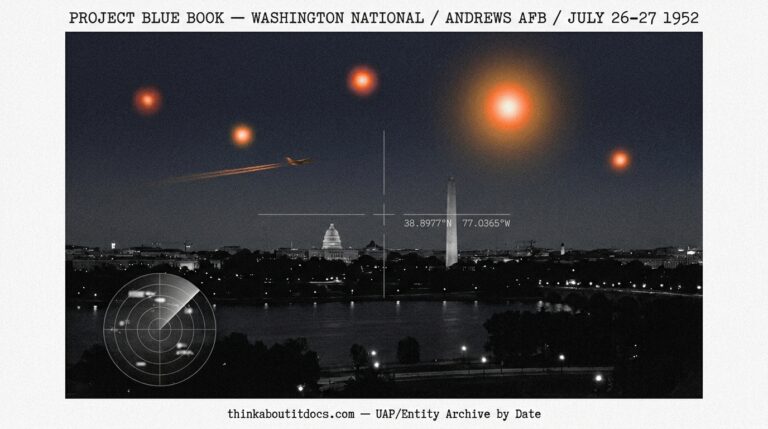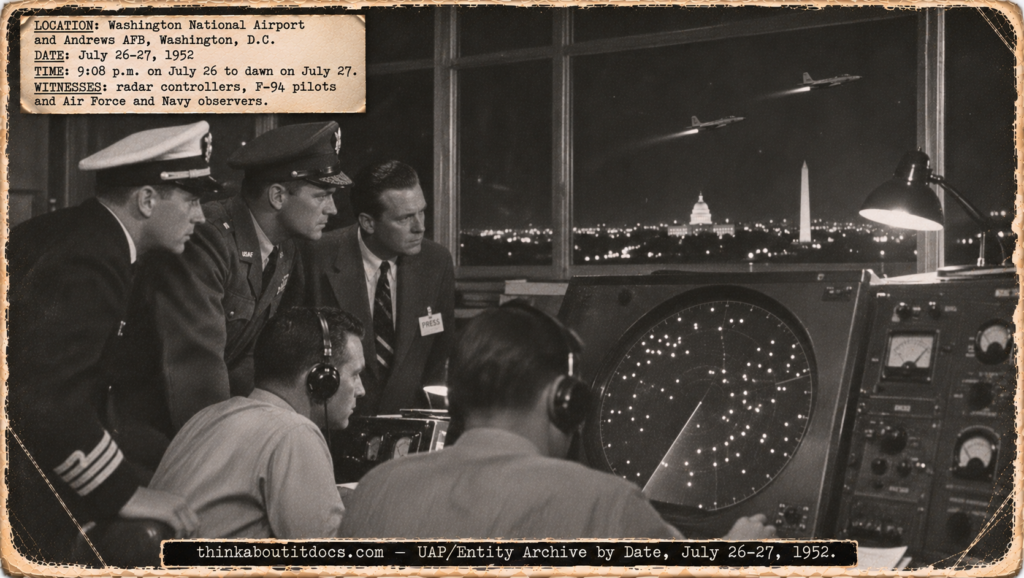
Washington, July 26-27, 1952: the targets returned.
THINK ABOUTIT UFO|UAP SIGHTINGS REPORT
Washington National Airport, Second Weekend:
A Week Later the Targets Returned, July 26-27, 1952
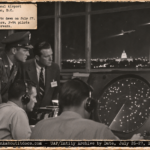
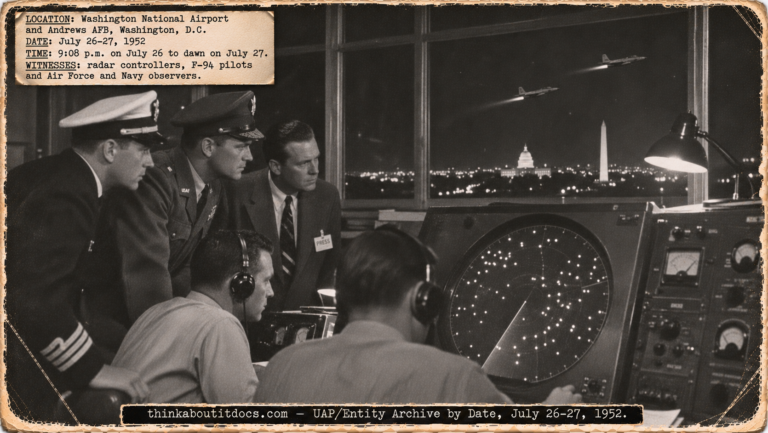
Seven days after the first radar weekend, the targets came back. At 9:08 p.m. on July 26, 1952, radar at the Civil Aeronautics Administration center at Washington National Airport began picking up unidentified returns again, and Andrews Air Force Base confirmed them. This time the Air Force was waiting. Project Blue Book’s Pentagon liaison, Maj. Dewey Fournet, and its press spokesman, Albert M. Chop, were at National Airport, along with a Navy radar specialist, Lt. John Holcomb.
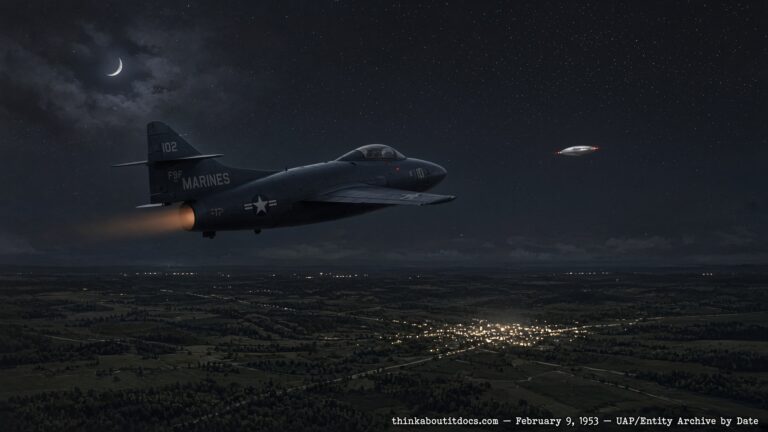
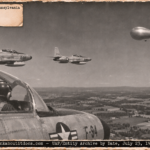
Two F-94s from New Castle chased lights they could not close on. Pilot Lt. William Patterson said later, “I was at my maximum speed, but even then I had no closing speed.” The Washington National Airport UFO sightings of July 26-27, 1952 ended at sunrise. Two days later the Air Force held its largest press conference since World War II.
Date: July 26-27, 1952
Sighting Time: About 8:15 p.m. on July 26 to dawn on July 27 (radar from 9:08 p.m.)
Day/Night: Night
Location: Washington National Airport and Andrews AFB, Washington, D.C., United States
Urban or Rural: Urban
No. of Entity(‘s): Not Applicable
Entity Type: Not Applicable
Entity Description: Not Applicable
Hynek Classification: Radar-Visual (RV)
Duration: More than 3 hours of radar tracking, with sightings from about 8:15 p.m. until sunrise
No. of Object(s): 4 to 12 targets on radar at a time per the Washington Post; as many as 18 unidentified targets on the scopes at one point per NICAP; 5 objects seen by one pilot
Description of the Object(s): Radar returns that hovered, reversed and accelerated; lights seen from aircraft ranging from a cigarette glow to a cluster of orange and red lights; a white light that went out when a jet approached
Shape/Size/Color of Object(s): Orange to white lights; glows; size not recorded
Distance to Object(s): Patterson chased a single light he estimated at about 10 miles away and lost it at about 2 miles
Height & Speed: Radar operators estimated 38 to 90 mph at about 1,700 feet (Washington Post); NICAP and Wikipedia cite calculated speeds up to 7,000 mph on some returns
Number of Witnesses: Controllers at two centers and Andrews; Lt. William Patterson and Capt. John McHugo (F-94 pilots); CAA flight inspector Bill Schreve; commercial pilots; a National Airlines crew; Master Sgt. Charles E. Cummings
Special Features/Characteristics: Returns were more erratic than the first weekend; Navy radar specialist Lt. Holcomb judged the temperature inversion too weak to explain them; targets vanished when jets arrived; the Air Force had observers on the scene
Case Status: Project Blue Book: Unknown (BBU 1661)
Source: Berliner; Project 1947; CNN (Randle interview, “Invasion Washington: UFOs Over the Capitol”); The Washington Post, July 28, 1952; NICAP (Washington National Sightings); Wikipedia (1952 Washington, D.C. UFO incident)
Summary/Description: Radar at National Airport and Andrews tracked unidentified returns for hours. F-94 pilots chased lights they could not close on. Air Force and Navy observers were in the radar room. Blue Book: Unknown.
Related Cases: The First Washington National Airport Weekend, July 19-20, 1952; the Samford press conference of July 29, 1952; Boston and Trenton F-94 chases of July 22-23, 1952
Detailed Report
At about 8:15 p.m. on July 26, 1952, a National Airlines pilot and stewardess saw lights above their plane. Within minutes radar at both National Airport centers and Andrews AFB was tracking more unidentified objects. The Washington Post, in its July 28, 1952 report, put the first radar returns at the CAA center at 9:08 p.m. Master Sgt. Charles E. Cummings at Andrews said the lights “traveled faster than any shooting star I have ever seen.”
At 9:30 p.m. Albert M. Chop, the Air Force press spokesman, arrived at National Airport. Radar detected unidentified objects in every sector. Some reversed direction at speeds calculated at up to 7,000 mph. By 12:30 a.m. four or five targets were tracked continuously and at one point 18 unidentified objects were on the scopes, according to NICAP. The Washington Post quoted operators who counted 4 to 12 objects and estimated speeds of 38 to 90 mph at about 1,700 feet. A traffic control spokesman told the paper the returns resembled aircraft and that the signals ruled out weather.
Two F-94s from New Castle AFB, Delaware, took off at about 11:25 p.m. and reached Washington around 11:30. Flight leader Capt. John McHugo saw nothing despite repeated vectors. His wingman, Lt. William Patterson, saw four white glows and chased them, but stopped because he saw no chance of overtaking them. Patterson later said, “I saw several bright lights. I was at my maximum speed, but even then I had no closing speed. Later I chased a single bright light which I estimated about 10 miles away. I lost visual contact with it about 2 miles.” CAA flight inspector Bill Schreve, flying NC-12 at 2,200 feet, saw five objects glowing orange to white at 10:46 p.m.
After midnight, Maj. Dewey Fournet and Navy Lt. John Holcomb arrived. Holcomb felt the weather service’s reported slight temperature inversion was not strong enough to explain the solid returns. Fournet said the controllers “were paying no attention” to weather targets. Controllers noted the returns behaved differently from July 19-20: more haphazard, “capable of dropping out of the pattern at will.” Two more F-94s were scrambled at about 1:40 a.m. One pilot saw nothing unusual; another saw a white light that vanished as he approached. At 3 a.m. an Eastern Airlines crew was told an object was nearby, but it disappeared when they turned. The sightings and returns ended at sunrise.
An unnamed Air Force spokesman told the Washington Post: “We have no evidence they are flying saucers; conversely we have no evidence they are not flying saucers.”
RESEARCHER’S NOTES
What Changed Between the Two Weekends
- The Air Force was present: Fournet, Chop and Holcomb were in the radar room. The first weekend was reconstructed from reports afterward; the second was observed by Blue Book’s liaison in real time.
- Weather versus returns: Holcomb disputed the inversion explanation on the spot. The Air Force press conference two days later nevertheless attributed the radar contacts to temperature inversion.
- Conflicting speed figures: The Washington Post quoted 38 to 90 mph at 1,700 feet. NICAP and Wikipedia cite up to 7,000 mph. They may describe different returns or different calculation methods. I report both.
- Jet times differ: The jets’ takeoff and arrival are given as 11:00 p.m. (your page), about 11:25 p.m. (Post) and 11:30 p.m. (Wikipedia). The standalone gives takeoff at about 11:25 and arrival around 11:30.
- A quiet end: Targets and sightings stopped at sunrise, which fits both a temperature inversion that dissipates in morning heat and a phenomenon that simply ended. The record does not decide between them.
The second weekend answered the question of whether the first was a fluke. It was not, and this time observers from the Air Force and Navy saw it. The Air Force position two days later stated that the radar returns were inversions, which a Navy radar specialist at the scene had argued against that night.
“I saw several bright lights. I was at my maximum speed, but even then I had no closing speed.”
— Lt. William Patterson, F-94 pilot, on the night of July 26-27, 1952