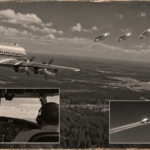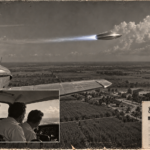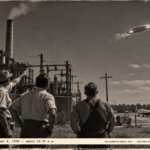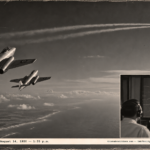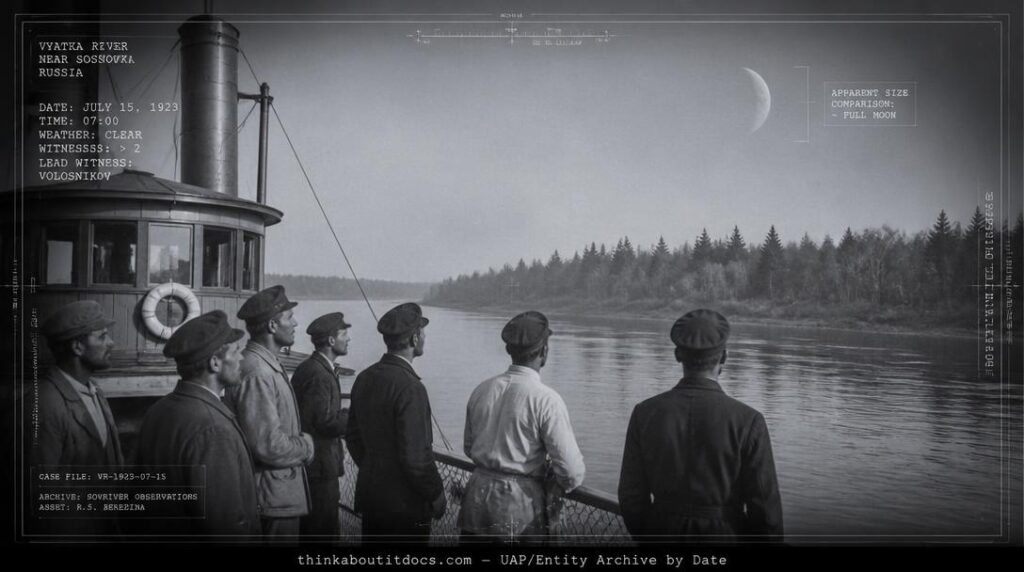
Vyatka River, near Sosnovka, Russia, July 15, 1923 — multiple experienced witnesses aboard a steamship observed a moon-sized crescent object for over three minutes.
THINK ABOUTIT UFO|UAP SIGHTINGS REPORT
1923: The Vyatka River Crescent UFO – Sosnovka Russia
At seven in the morning on July 15, 1923, aboard a steamship on the Vyatka River near Sosnovka, Russia, more than two experienced male witnesses watched a crescent-shaped object the size of the full moon hold steady in a clear summer sky for over three minutes — a morphology that would not become famous until Kenneth Arnold used nearly identical language to describe the objects that gave the world the term “flying saucer,” twenty-four years later and a hemisphere away.
Date: July 15, 1923
Sighting Time: 07:00
Day/Night: Day
Location: Sosnovka, Vyatka River, Russia
Urban or Rural: Rural — riverine, observed from a steamship
No. of Entity(‘s): 0 — no occupants reported
Entity Type: Not Applicable
Entity Description: Not Applicable
Hynek Classification: NL/DD (Nocturnal Light/Daylight Disc borderline — clear-weather daylight structured-object observation, no close approach or landing)
Duration: Over three minutes
No. of Object(s): 1
Description of the Object(s): A single crescent-shaped object, apparently stable in the sky, observed in clear conditions
Shape of Object(s): Crescent
Size of Object(s): The apparent size of the full moon
Color of Object(s): Undocumented
Distance to Object(s): Undocumented; visible from the deck of a steamship on the river
Height & Speed: Undocumented; object appears to have remained essentially stationary or slow-moving through the observation window
Number of Witnesses: More than two, all described as experienced male observers, with a named lead witness (Volosnikov)
Special Features/Characteristics: Clear-weather multi-witness observation with a named lead witness and a duration (over three minutes) unusually well-specified for a pre-1947 case; crescent morphology identical to the form later associated with the 1947 Kenneth Arnold sighting
Case Status: Unexplained.
Source: Felix Zigel, unpublished manuscript. Zigel was a professor at the Moscow Aviation Institute and the foremost Soviet pre-1947 UAP researcher, who compiled seventeen volumes of unpublished research and approximately 50,000 Soviet UFO reports before his death in 1988. His unpublished manuscript is a primary archival source for Soviet-territory pre-1947 cases.
Summary/Description: At 7:00 AM on July 15, 1923, more than two experienced male witnesses aboard a steamship on the Vyatka River near Sosnovka, Russia observed a crescent-shaped object the apparent size of the full moon, in clear weather, for over three minutes. The lead witness is named as Volosnikov. No further detail on the object’s behavior, altitude, or eventual departure is preserved in the available source.
Related Cases: 1923: UFO|UAP & Alien Sightings Archive
Detailed Report
The Sosnovka case is documented through the unpublished research manuscript of Felix Zigel, a professor at the Moscow Aviation Institute who became the Soviet Union’s most significant early advocate for systematic scientific investigation of anomalous aerial phenomena. Zigel’s decades-long compilation effort — seventeen volumes of unpublished research encompassing an estimated 50,000 Soviet-territory reports before his death in 1988 — makes him one of the only credible primary-source chains available to Western researchers for pre-1947 cases originating within the Soviet sphere, a region whose local press and official records were largely inaccessible to Western ufological cataloguing efforts for most of the 20th century. Zigel’s academic standing and his methodical approach to case compilation give this manuscript source a level of credibility that is difficult to establish for most non-Western pre-1947 material.
The case itself is notable for the specificity that survives in Zigel’s summary: a named lead witness (Volosnikov), a multi-witness count described as “experienced,” a precise duration exceeding three minutes, clear weather conditions, and a specific comparative size reference (the apparent size of the full moon). This level of detail — witness naming, duration estimate, size comparison — is unusual for a pre-1947 case from any region and argues for a genuinely investigated report rather than a secondhand folk retelling. What is not preserved is any account of the object’s ultimate departure or disappearance, nor any description of its surface texture, color, or luminosity beyond the crescent outline.
RESEARCHER’S NOTES
The Vyatka Crescent — 1923 and the Pre-Arnold Morphology Record
- Classification Rationale: NL/DD is used because this is a clear daylight structured-object observation without close approach, landing, or occupant — a well-witnessed distant sighting rather than a proximity encounter. The unusually specific duration and named-witness detail push it toward the stronger end of that tier.
- Source Chain Assessment: Zigel’s manuscript is unpublished, which means this archive cannot independently cross-check the case against a printed, publicly reviewable text. However, Zigel’s documented academic career and his methodical, decades-long compilation practice — rather than sensationalist or fringe-publication sourcing — place this citation well above the credibility floor this archive applies to comparably thin sources.
- Pattern Context: The crescent morphology observed here in 1923 is the same basic shape category Kenneth Arnold would describe near Mount Rainier in June 1947, in the sighting that produced the term “flying saucer” (itself a media simplification of Arnold’s actual crescent/boomerang description). A crescent-shaped craft report from Soviet Russia in 1923, decades before Arnold and with no plausible cultural transmission between the two accounts, is a genuinely independent data point for that morphology rather than a culturally derivative one.
- Evidentiary Weight: No photograph or physical trace survives, and the case rests entirely on Zigel’s summary of witness testimony gathered or compiled well after the fact. The multi-witness count, named lead witness, and specified duration are meaningful strengthening factors, but the report remains, at base, an unverified eyewitness account from a source this archive cannot independently audit against a published original.
The Sosnovka crescent stands as this archive’s strongest available Soviet-territory pre-1947 case, carried almost entirely on the strength of Felix Zigel’s documented credibility as a researcher rather than on independently verifiable primary sourcing. Its crescent morphology, appearing a quarter-century before that shape became culturally synonymous with the UFO phenomenon, is the case’s most analytically significant feature.
“One crescent-shaped object, the size of the moon, was observed in clear weather by more than two male experienced witnesses on a river for over three minutes.”
From Felix Zigel’s unpublished manuscript, describing the July 15, 1923 Sosnovka, Vyatka River, Russia sighting