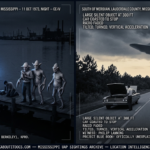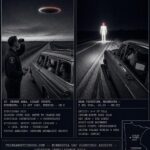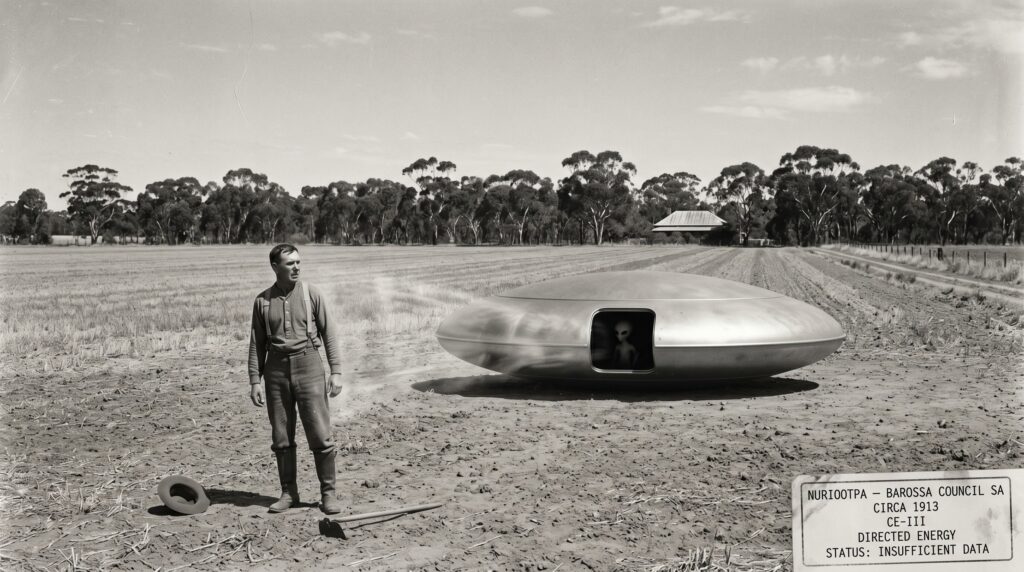
Nuriootpa, Barossa Council, South Australia, circa 1913 — a farmer discovered a metallic object landed in his field. A humanoid emerged and directed a discharge at him leaving a lasting paralysis. Source: Darryl Tiggeman, Adelaide, citing Colin Norris. Case status: Insufficient Data.
THINK ABOUTIT UFO | UAP | ENTITY ENCOUNTER REPORT
1913: Barossa Council, South Australia
On an unknown day in or around 1913, a farmer working a field in the Barossa Council district near Nuriootpa, South Australia, came across something metallic that had landed on his land. A humanoid figure emerged from it. The farmer was struck — zapped is the word recorded — and the paralysis that followed was not temporary. It lasted. A man went out to his field in the Barossa Valley in 1913 and came back permanently changed by something that came out of a metallic object on the ground. Darryl Tiggeman documented it via Colin Norris. The archive holds the record.
Date: Circa 1913 — exact date unknown
Sighting Time: Insufficient Data — not recorded in available source
Day/Night: Insufficient Data — not recorded in available source
Location: Nuriootpa, Barossa Council district, South Australia, Australia
Urban or Rural: Rural — farm field, Barossa Valley agricultural district
No. of Entity(‘s): 1
Entity Type: Humanoid — not further described in available source
Entity Description: Humanoid figure that emerged from within the landed metallic object; no physical description of height, build, clothing, or facial features recorded in available source; the entity directed a discharge — described as zapping — at the witness upon encounter; nature of the discharge not specified beyond its effect
Hynek Classification: CE-III (Close Encounter III) — close observation of an animate being associated with a landed craft; physical effect on witness produced by the entity directly; lasting physiological consequence documented
Duration: Insufficient Data — not recorded in available source; the paralysis effect was lasting, indicating the encounter was close enough and sustained enough to produce permanent physiological damage
No. of Object(s): 1
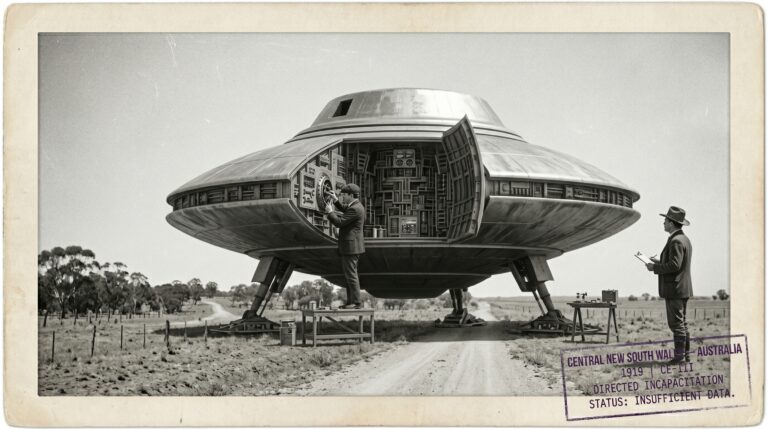
Description of the Object(s): Metallic object found landed on a farm field; no shape, size, or structural description recorded in available source beyond its metallic quality and the fact that it was landed on the ground and contained at least one humanoid occupant
Shape of Object(s): Insufficient Data
Size of Object(s): Insufficient Data
Color of Object(s): Metallic
Distance to Object(s): Close range — witness approached or came upon the landed object in his field; entity emerged and directed a discharge at the witness; distance not recorded but physical effect implies very close proximity
Height & Speed: Ground level at time of encounter — landed on field; departure not described in available source
Number of Witnesses: 1 — unnamed farmer, Nuriootpa district, Barossa Council, South Australia
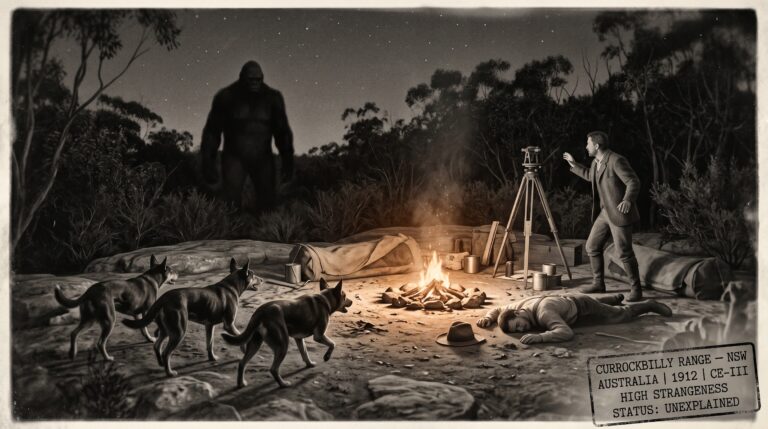
Special Features/Characteristics: The entity discharged something at the witness — described as being zapped — producing a lasting paralysis; the paralysis was not temporary shock or a transient effect but a permanent or long-duration physiological consequence; this places the Barossa case in the same category as CE-III cases involving directed energy or biological effect on witnesses including the 1912 Currockbilly Range case in which proximity alone produced hours of unconsciousness; the farmer discovered the object rather than witnessing its landing — suggesting the craft was already on the ground when he encountered it
Case Status: Insufficient Data — single unnamed witness, secondhand source chain via two researchers, no primary documentation; the lasting paralysis detail is specific and severe enough to distinguish this from casual fabrication but cannot be verified in available sources
Source: Darryl Tiggeman, Adelaide, Australia, citing Colin Norris
Summary/Description: Circa 1913, an unnamed farmer in the Nuriootpa district of the Barossa Council area, South Australia, discovered a metallic object landed on his field. A humanoid entity emerged from the object and discharged something at the farmer — described as zapping him — leaving a lasting paralysis. No physical description of the entity was recorded in the available source. The case was documented by Darryl Tiggeman of Adelaide citing researcher Colin Norris. Case status: Insufficient Data.
Related Cases: 1912: Australian Humanoid Sighting — Currockbilly Range, NSW | 1909: West Hobart, Tasmania | Australian Sightings Archive | Physical Effect CE-III Cases Archive
Detailed Report
The Farmer in the Field — Nuriootpa, Barossa Council, South Australia, circa 1913 Source: Darryl Tiggeman, Adelaide, Australia — citing Colin Norris
In or around 1913, on an unknown date and at an unknown time, a farmer in the Nuriootpa district of the Barossa Council area in South Australia discovered a metallic object that had landed on his field.
A humanoid figure appeared from within the object. The farmer was zapped by the entity — the nature of the discharge is not described in available source material — and was left with a lasting paralysis as a result of the encounter.
No further description of the entity, the object, or the encounter sequence is recorded in the source chain. The case was documented by South Australian researcher Darryl Tiggeman of Adelaide, citing the work of researcher Colin Norris.
RESEARCHER’S NOTES
The Farmer Who Was Zapped — Nuriootpa 1913 and the Directed Energy CE-III in the Early Australian Record
- Lasting Paralysis as the Evidentiary Anchor: The central fact of this case is not the landed metallic object and not the humanoid entity — both appear across multiple cases in the archive. The central fact is the lasting nature of the paralysis. Temporary paralysis or muscular freezing in the presence of an unknown entity is documented across dozens of CE-III cases globally and is consistent with a fear or shock response. Lasting paralysis — a permanent or long-duration physiological consequence — is a different category entirely. It implies a directed energy discharge of sufficient intensity to cause lasting neurological or muscular damage. A farmer in the Barossa Valley in 1913 was permanently injured by something that emerged from a metallic object on his field. That specific severity is the detail that keeps this case in the archive despite its thin source chain.
- Directed Energy as CE-III Subtype: The zapping description places this case in a specific CE-III subtype involving directed discharge from an entity toward a witness. This subtype appears in the broader UAP literature across multiple continents and time periods — the Barossa 1913 case is among the earliest documented Australian instances. The archive notes that the directed energy subtype consistently produces more severe and lasting physiological effects than proximity-only CE-III cases, and that the Barossa case’s lasting paralysis is consistent with the higher-severity end of the documented range for directed entity discharge encounters.
- Source Chain Assessment — Two Researchers, No Primary Document: The case rests on Darryl Tiggeman citing Colin Norris — a two-step secondary source chain with no primary newspaper account, official report, or witness statement reproduced in available material. Both Tiggeman and Norris are documented Australian UAP researchers working the historical record, which gives the source chain credibility within the research community. However, the unnamed witness, unspecified date, and absence of any primary documentation place this firmly at Insufficient Data status. The lasting paralysis detail is too specific and too severe to dismiss as casual embellishment — fabricators reaching for drama typically choose more dramatic effects than a paralysis that simply persisted — but it cannot be verified without locating the original Norris documentation.
- Barossa Valley Geographic Context — 1913: Nuriootpa in 1913 was the administrative center of the Barossa Council district — a German-heritage agricultural community in the South Australian wine-growing valley approximately fifty miles north of Adelaide. Farm fields in the Barossa in 1913 were flat, open, and isolated. A farmer working alone in such a field in 1913 who encountered a landed metallic object and was injured by its occupant had no institutional framework for reporting what had happened, no community context for being believed, and no terminology for what he had experienced. That he eventually told someone — and that the account reached Colin Norris and subsequently Darryl Tiggeman — is itself a small act of record-keeping that the archive honors by holding the case here.
A man found something in his field in the Barossa Valley around 1913 and something came out of it and he was never the same afterward. Two researchers preserved the account. The archive preserves it here. What discharged, and what it cost him, the record does not specify. That it cost him something lasting is the fact that does not go away.