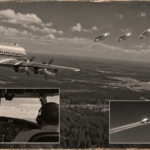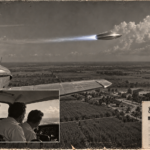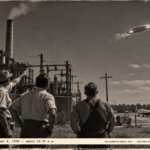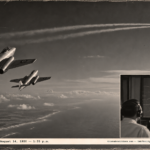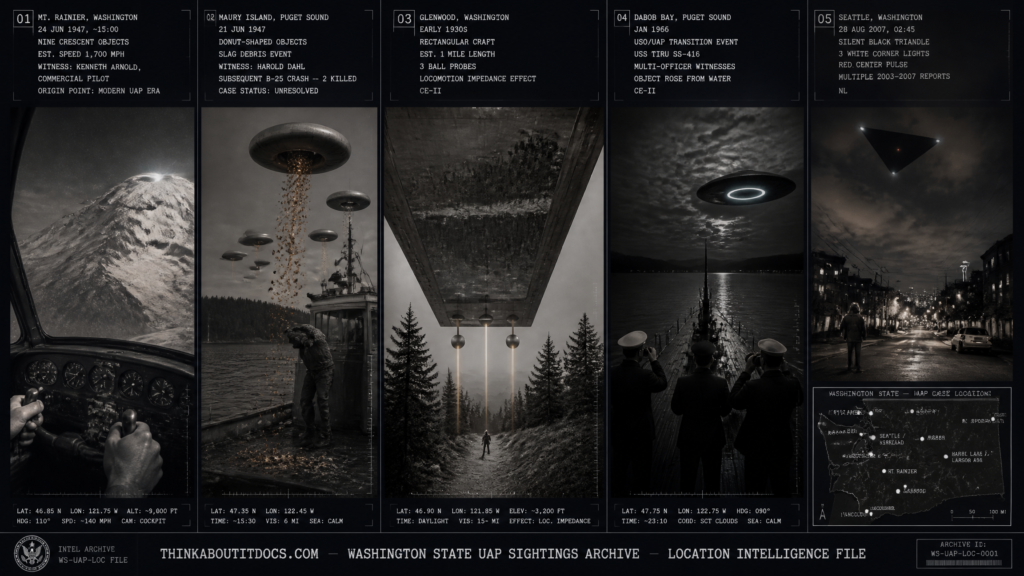
Washington State UAP archive: Kenneth Arnold Mount Rainier 1947 (origin of modern era), Maury Island Puget Sound donut-object slag incident 1947, Glenwood mile-wide rectangular craft with ball probes early 1930s CE-II, USS TIRU Dabob Bay USO-to-UAP naval encounter 1966, and Seattle silent black triangle 2007. 26 documented cases 1930–2014.
Washington UFO|UAP & Alien Sightings Archive
Washington State holds a position in UFO|UAP research that no other U.S. state can claim: it is the geographic origin point of the modern era. On June 24, 1947, civilian pilot Kenneth Arnold, flying a CallAir A-2 on a search mission near Mount Rainier, observed nine crescent-shaped objects moving at an estimated 1,700 miles per hour in a loose formation through the Cascade Mountains. His report to the Civil Aeronautics Authority that afternoon was the spark. Within days, the phrase “flying saucer” had entered the English language. Within weeks, the United States Army Air Forces had begun the institutional response that would evolve into Project Sign, Project Grudge, and ultimately Project Blue Book. Arnold’s sighting did not occur in isolation — three days earlier, Harold Dahl and Fred Crisman had reported a cluster of donut-shaped objects dropping metallic slag onto their boat in Puget Sound near Maury Island, in what would become one of the most tangled and fatality-haunted cases of the early wave. What happened to the Army Air Forces intelligence officers sent to collect evidence from Maury Island — their B-25 crashed on takeoff from McChord Field, killing both — has never been satisfactorily explained. Washington entered the modern UAP record as both its birthplace and its first unresolved fatality.
What followed is a record spanning more than seven decades, from the Cascade ridgelines to the Puget Sound submarine approaches to the streets of Seattle and Kirkland. The state’s geography is significant: the Cascades form a natural corridor running north-south through the interior, and an unusual number of Washington’s most credible sightings cluster along or near that range — from the Glenwood encounter of the early 1930s (a mile-long rectangular craft with probe-ball locomotion impedance) to the 1947 Arnold sighting directly over Rainier to the 1952 Mount Spokane CE-III landing with silver-suited crew to the 1999 Cascade Mountains elk abduction near Mount St. Helens. The naval dimension is equally distinctive: the USS TIRU encounter in Dabob Bay in 1966, in which a submarine crew, a signalman, and multiple officers observed a metallic disc rise from the water, hover, and depart at speed, represents one of the few USO-to-UAP transition events in the documented record with multi-witness military attestation. The archive currently holds 26 individual report pages spanning 1930 to 2014, with the state’s heaviest case density concentrated in two periods: the 1947 foundational cluster and a 2000s urban Seattle triangle-craft wave that produced at least five separate reports between 2003 and 2007.
- 1930: Mile Wide UFO Encountered in Washington
- 1947: Kenneth Arnold Sighting
- 1947: Maury Island Incident
- 1947: Metal Found in ‘Disc’ Probe Reported On Plane
- 1952: Mount Spokane, Washington — The Domed Disc and Silvery Occupants
- 1952 Point Defiance Park, Washington: Two Hours of Missing Time and a White Room
- 1952: Technician watches UFO near Larson AFB
- 1977: Family sees UFO hovering over Camas, Washington
- 1977: Youth reports UFOs with ‘greenish creatures’
- 1979: Elk River UFO Crash?
- 1990: Port Angeles, Washington
- 1993: Close-up Sighting Of A Black Triangle UFO
- 1994: Delta Shaped Craft over LaCrosse, Washington
- 1999: The Washington State Elk Abduction
- 2000: A Large Bright Green Round Shaped Object
- 2003: Large triangle object flying at low altitude
- 2003: Richland, Washington Sighting
- 2003: Silent, triangular craft sighted over West Seattle
- 2004: Triangular craft moves quietly over Seattle
- 2005: Triangular Craft Sighting
- 2006: Object hovers over Seattle, Washington
- 2007: Silent triangular craft seen over Seattle, Washington
- 2014: Unknown lights over Vancouver, Washington
- 1966: USS TIRU Encounters UFO
- 1995: V Shaped UFO spotted over Vancouver Washington
- 2007: Silent triangular craft with lights seen over Seattle, WA
- 1945: The Hanford Intercept — Roland D. Powell
- 1948: The Chehalis Birdman — Bernice Zaikowski
- 1948: The Pacific Beach Formation — Lt. Robert Kunzman’s Radar-Visual Encounter
- 1949: The Longview, Washington Sightings — Moulton B. Taylor
- 1950: Samuel Eaton Thompson’s Venusian Contact — Lewis County, Washington
- 1947: Fred Johnson’s Mount Adams Sighting: Kenneth Arnold’s Independent Corroboration
- 1947: The St. Joe River UFO Landing: Ten Witnesses, Three Days Before Kenneth Arnold
- 1947: The Portland-Area Mass Sighting: Police, Pilots, and Deputies Watch the Sky
- 1947: Frank Ryman’s Photograph: The First Known Picture of a UFO
- 1956: Spokane, Washington: The Radar Target That Ran Away From an F-86D
- 1950: Horse Heaven Hills, Washington – The Saucer Object and the Army Officer From Hanford
- 1950: Fairchild AFB and Spokane, Washington = September 3 and 8, Sparks Over the Car and Three Tumbling Discs
- 1950: Pacific Northwest — The Daylight Fireball and the 1958 Congressional Inquiry
Ground Zero and the Cascade Corridor — Washington State in the UAP Record
Washington State’s anomalous record is unlike any other state’s in one specific respect: it has a documented start date. June 24, 1947 is not the first time something anomalous was observed over Washington — the Glenwood mile-wide craft predates it by at least fifteen years, and Mount Rainier and the Cascades appear in Indigenous accounts long before any European settlement. But June 24, 1947 is the day the modern UAP research framework was formally initiated, and it was initiated by a Washington sighting. Kenneth Arnold was a credible, experienced pilot with no reason to fabricate; his description of the objects’ motion — skipping like saucers across water — was misquoted by press as describing the objects’ shape, producing the term “flying saucer” and permanently distorting public understanding of what Arnold actually reported. The objects he described were crescent-shaped, not disc-shaped. That misquotation metastasized into fifty years of disc-centric cultural iconography and arguably shaped what subsequent witnesses believed they were supposed to see. The Arnold case is thus simultaneously the most important UAP sighting in American history and the most consequentially misreported.
The three days separating Arnold from Maury Island are not coincidental in the research literature. The Maury Island incident — Harold Dahl’s boat, the donut-shaped slag-dropping objects, the Men in Black visitor who arrived within twenty-four hours of the sighting, the deaths of two intelligence officers in a subsequent B-25 crash — has never resolved cleanly into either hoax or genuine encounter. Both Fred Crisman and Harold Dahl changed their stories under pressure. The physical slag samples vanished. The B-25 crashed. The FBI opened and then closed a file. What the archive knows is that the pattern of institutional response to Maury Island — rapid military intelligence contact, evidence collection, followed by deaths and case closure — anticipates every major suppression narrative in the subsequent seventy years of UAP research. Whether that pattern reflects genuine cover-up or cascading human error and bad luck, the record does not resolve. Washington State built the modern UAP era on that unresolved foundation, and the cases that followed — from Mount Spokane’s silver-suited ground crew in 1952 to the USS TIRU’s submarine encounter in Dabob Bay to the decade-long Seattle triangle-craft wave of the 2000s — have been filing reports against that backdrop ever since.