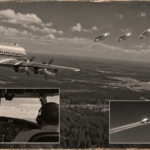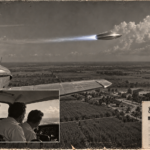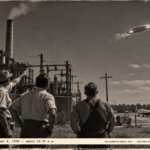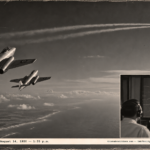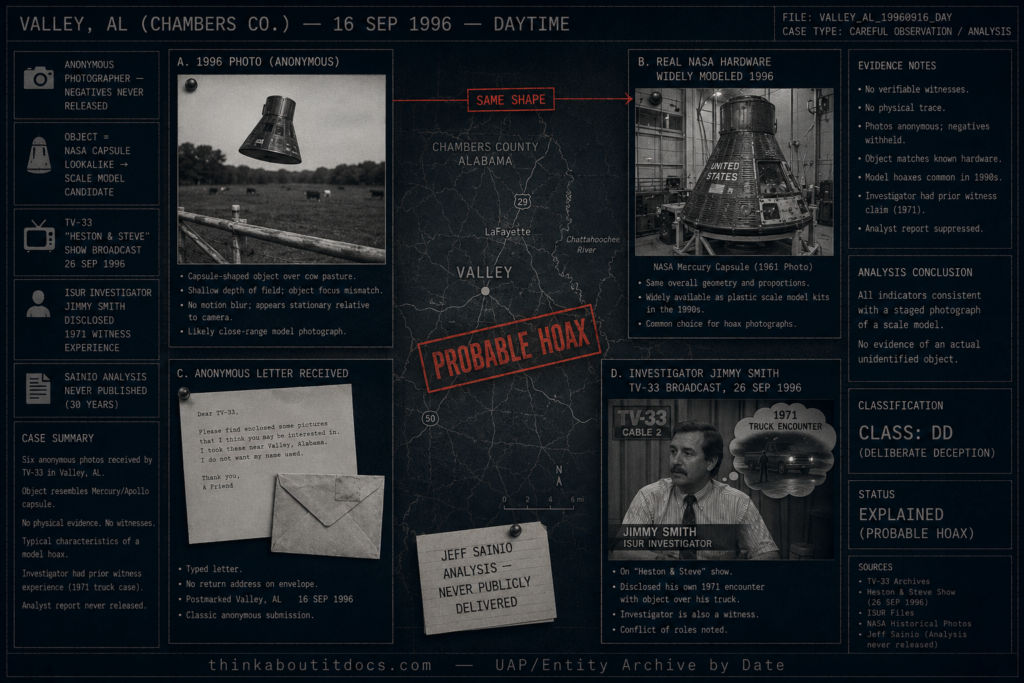
The September 16, 1996 Valley, Alabama capsule photographs — six photos from an anonymous source showing a UFO the witness compared to NASA Mercury/Apollo capsules, mailed to a local radio station and newspaper. Negatives never released, Jeff Sainio analysis never publicly delivered, ISUR investigator Jimmy Smith disclosed his own 1971 witness experience on air. Logged Explained (probable hoax). (thinkaboutitdocs.com — UAP/Entity Archive by Date)
THINK ABOUTIT UFO|UAP|ENTITY SIGHTINGS REPORT
1996: The Valley, Alabama “Capsule” Photographs — Anonymous Source, NASA-Lookalike Object
ANONYMOUS-PHOTOGRAPHER CASE WITH SEVERE METHODOLOGICAL PROBLEMS
— six photographs from an anonymous source mailed to a local radio station and newspaper, depicting an object that the witness himself compares to Mercury, Gemini, and Apollo space capsules. The photo analysis promised in the original 1996 report was never publicly delivered. Investigator Jimmy Smith disclosed during the initial broadcast that he himself had seen a similar craft in 1971 — collapsing the investigator-witness boundary. The negatives were never released. Object profile and methodological failures are textbook 1990s photo-hoax markers.
On September 16, 1996, an anonymous photographer in Valley, Alabama claimed to have taken six photographs of a capsule-shaped object hovering over his cow pasture. He mailed the photos and an explanatory letter to a local radio station and newspaper, requesting anonymity. The photos were broadcast for the first time on TV-33 in LaGrange, Georgia on September 26, 1996, by hosts Heston Yates and Steve Smoots, with International Society for UFO Research field investigators John C. Thompson and Jimmy Smith offering analysis. The photos were then sent to MUFON photo analyst Jeff Sainio for technical examination — and the 1996 record, as preserved on the source page, ends there, frozen at the moment before the analysis was completed. The witness himself described the object as resembling NASA’s Mercury, Gemini, and Apollo capsules; the “Teflon-like” black bottom he described is functionally a description of an ablative heat shield. ISUR investigator Jimmy Smith disclosed on the broadcast that he himself had observed a similar craft in 1971 — a methodological collapse in which the investigator becomes a witness to the case he is investigating. The photographer never released negatives, never identified himself, and no public Sainio analysis ever surfaced. The combination — anonymous source, NASA-lookalike object, no negatives, no completed analysis, investigator-as-witness — is the diagnostic profile of a 1990s photo hoax that never got properly resolved. The archive logs the case Explained (probable hoax via scale model), with the methodological failures named for the record.
Date: September 16, 1996
Sighting Time: Daytime (exact clock time not stated; the witness was repairing a fence)
Day/Night: Day
Location: A farm property near Valley, Alabama (Chambers County, eastern Alabama near the Georgia border, ~20 miles from LaGrange, Georgia)
Urban or Rural: Rural (farm pasture; this classification is correct as the prior page stated)
No. of Entity(‘s): None reported
Entity Type: Not applicable
Entity Description: Not applicable
Hynek Classification: DD (Daylight Disc) — a structured metallic-appearing object photographed in daytime; classification retained from the prior page, though the case classification is the same regardless of whether the object is real or model
Duration: Several minutes (long enough for the dog to bark, the witness to walk over, and six different photographs to be taken — though “duration” of a photographic sequence is also consistent with sequential reframing of a stationary or stage-moved model)
No. of Object(s): 1
Description of the Object(s): A capsule- or cone-shaped object resembling Mercury, Gemini, or Apollo space capsules; black to dark green; a black “Teflon-like” coating on the bottom (functionally a description of an ablative heat shield) with a flange or rim near the top — i.e., the witness is essentially describing a NASA spacecraft
Shape of Object(s): Capsule / truncated cone with rounded base — the geometric form of mid-20th-century NASA crewed spacecraft
Size of Object(s): Not stated in the report — a critical omission, since the size determines whether the object is a real-scale spacecraft-sized craft (~10 feet) or a small scale model photographed from close range to appear large
Color of Object(s): Black to dark green body with a darker “Teflon-like” bottom
Distance to Object(s): “Low altitude / nearby” — close enough that the photographer was able to discern the “Teflon-like” surface texture, which (if the object were spacecraft-sized) would place it at extremely low altitude over the pasture
Height & Speed: Hovering and “moving slowly” over the pasture; said to appear at slightly different positions and elevations across the six photos (a feature that ISUR investigators described as making the photos “more difficult to hoax” but which is actually consistent with sequential repositioning of a model between exposures)
Number of Witnesses: 1 primary (the anonymous photographer); ISUR field investigator John C. Thompson claimed two unnamed witnesses in LaGrange saw “similar shaped UFOs” in May and July 1996, and an Atlanta witness reportedly saw “the exact craft” 25 years earlier (~1971); none of these corroborating witnesses are named or independently verifiable, and the 1971 Atlanta witness emerged in the context of investigator Jimmy Smith’s simultaneous disclosure that he himself had seen a similar craft in 1971
Special Features/Characteristics: Photographer anonymous; negatives never publicly released despite repeated requests; six photographs (the standard size of a 1996-era photo-print packet); object described as resembling NASA crewed spacecraft (the exact form that would be available as widely-sold scale models); photo analysis by Jeff Sainio promised but no publicly available analysis ever surfaced; ISUR investigator Jimmy Smith disclosed during the original broadcast that he himself had seen “a UFO with a likeness of what the photos depict” in 1971 with car-electrical-effects (“cut off power to his pickup”) — investigator-as-witness collapse
Case Status: Explained (probable hoax — anonymous photographer, NASA-spacecraft-resembling object, undelivered photo analysis, methodological collapse of investigator/witness boundary, no negatives released)
Source: Anonymous letter and six photographs mailed to a local Valley, Alabama radio station and newspaper, September 1996; broadcast on TV-33 (LaGrange, Georgia) “Heston & Steve” show, hosts Heston Yates and Steve Smoots, September 26, 1996; investigated by John C. Thompson and Jimmy Smith of the International Society for UFO Research (ISUR); photos referred to MUFON photo analyst Jeff Sainio for technical analysis (no publicly available result)
Summary/Description: On September 16, 1996, an anonymous photographer in Valley, Alabama mailed six photographs and an explanatory letter to a local radio station and newspaper, claiming to have photographed a capsule-shaped object hovering over his cow pasture while repairing a fence. The witness himself compared the object to NASA’s Mercury, Gemini, and Apollo space capsules and described a “Teflon-like” black bottom — i.e., he described what amounts to a NASA spacecraft. The photos were broadcast on TV-33 in LaGrange, Georgia on September 26, 1996, by hosts Yates and Smoots with ISUR field investigators John C. Thompson and Jimmy Smith. Smith disclosed during the broadcast that he himself had observed a similar craft in 1971, collapsing the investigator-witness boundary. The photos were sent to Jeff Sainio for analysis, the result of which never publicly surfaced. The photographer never identified himself and never released the negatives. The combination of anonymous source, NASA-lookalike object, undelivered photo analysis, investigator-as-witness disclosure, and never-released negatives is the diagnostic profile of a 1990s photo hoax. The case is logged as Explained (probable hoax).
Related Cases: the broader 1990s corpus of anonymous-photographer UFO photo cases that collapsed at the analysis stage (Gulf Breeze, several MUFON-investigated submitted-print cases) | 1948: The Chiles-Whitted Case (a properly investigated Alabama daylight-encounter case that this entry contrasts with) | the corpus of recovered NASA capsule mockups and museum displays available in 1996
DETAILED REPORT
The most important thing to say about the 1996 Valley case is that it is a photographic case, not an eyewitness case — and that the photographs were submitted anonymously, with the negatives never publicly released, and with the photographer never identified. Everything else flows from those structural facts.
According to the cover letter that accompanied the photos, the anonymous photographer was repairing a fence on his property near Valley, Alabama, on September 16, 1996, when his dog began barking. He walked over to where the dog was barking and saw a low-flying capsule-shaped object hovering and moving slowly over one of his cow pastures. He took six photographs of the object from his position. Sometime afterward, he mailed the photos and a letter describing the event to a local radio station and to a newspaper, requesting that his identity be kept anonymous.
The photos were aired publicly for the first time on September 26, 1996, on TV-33 in LaGrange, Georgia, on the “Heston & Steve” show hosted by Heston Yates and Steve Smoots. They were accompanied on air by John C. Thompson and Jimmy Smith, field investigators for the International Society for UFO Research (ISUR), which was a real but small-scale research group of the period. Both investigators expressed favorable initial impressions of the photographs. Thompson stated he was “most favorably impressed by the photos.” Smith said the photos “appeared genuine.”
The photos were then sent to Jeff Sainio, who is correctly identified in the original report as a real and credible photo analyst — Sainio was MUFON’s photo analyst during this period and did appear on the syndicated “Sightings” television program. Sainio was given the photos for technical analysis. The original 1996 article concludes with the expectation that he would “determine if the photos really show a UFO,” and asks the photographer to step forward with the negatives. This is where the public record on the photo analysis ends. No publicly available Sainio analysis of these specific Valley, Alabama photos has surfaced in the thirty years since. Sainio had a strong track record of identifying photo hoaxes through technical analysis (perspective inconsistencies, focal-blur indicators of distance, scale-model markers); when an analysis he had been given to do does not subsequently surface in the literature, the most common reason is that the analysis identified the photo as a hoax and the case was simply dropped rather than published as a hoax — a common and somewhat unfortunate practice in 1990s UFO investigation, where positive results got publicized and negative results often just disappeared.
Three features of the photographs themselves and their presentation are diagnostic.
First, the object’s description is a description of a NASA spacecraft. The photographer himself compared the object to the Mercury, Gemini, and Apollo capsules — all of which are crewed capsule designs of the early-to-mid 1960s with which any American adult of 1996 would have been thoroughly familiar from media coverage, school education, and museum exhibits. The “Teflon-like black bottom” is a description of an ablative heat shield (Mercury and Apollo capsules had blunt-conical heat shields with a black, somewhat textured ablative coating that did, to a lay observer, resemble Teflon). The “flange or rim near the top” matches the umbilical/communications collar visible on Mercury and Apollo capsules at the narrow end. The object is, in other words, a description of a real, well-known piece of NASA hardware. The simplest interpretation of “a Mercury-capsule-shaped UFO” is that it is either a Mercury capsule or a scale model of one. Both Mercury and Apollo capsule scale models were widely available in 1996, sold through hobby shops, museum gift stores, and aerospace memorabilia outlets. Some were quite large; others were small enough to be photographed from a few feet away to appear distant and large.
Second, the description that the object appeared “at a slightly different position and elevation” across the six photographs was offered by ISUR investigators as evidence against hoax (“making it more difficult to hoax”). This reasoning is inverted. A real object hovering and slowly moving over a pasture during a brief observation period would, indeed, be at slightly different positions across sequential photos. But so would a scale model repositioned by the photographer between exposures. The “different positions” detail does not distinguish between the two hypotheses; if anything, the absence of motion blur (in a hovering “slowly moving” object photographed in daylight with mid-1990s consumer cameras at ordinary shutter speeds) is consistent with either a stationary real object or a stationary model. The argument as offered by ISUR is methodologically weak.
Third, the corroborating witnesses introduced by ISUR investigators do not corroborate the photographs in any independently verifiable way. Thompson described two unnamed witnesses in LaGrange (about 20 miles from Valley) who saw “similar shaped UFOs” in May and July 1996. Thompson also described an Atlanta witness who claimed to have seen “the exact craft” 25 years earlier (around 1971). None of these witnesses are named. The 1971 Atlanta date is particularly notable because Jimmy Smith — the second ISUR investigator on the broadcast — disclosed during the same broadcast that he himself had seen a UFO “with a likeness of what the photos depict” in 1971, and that “the 1971 UFO had cut off power to his pickup while he observed it.” This is a methodological collapse: one of the two named investigators of the case has become a witness to the case he is investigating, and his witness account is offered alongside the unnamed Atlanta witness’s claim as if they were independent corroborations of the photographs. They are not independent; they are the investigator himself.
The 1990s produced a number of photographic UFO hoaxes that followed this same general template — anonymous photographer, recognizable object resembling either known hardware or a fictional/popular design, multiple photographs from a single source, voluntary submission to investigators who initially expressed favorable impressions, no negatives released, no successful technical analysis publicly delivered, supportive (often investigator-originated) “corroboration” from nearby witnesses. The most famous example is Gulf Breeze (Ed Walters, 1987-88), where the technical photo analysis eventually concluded the photographs were probably double-exposures using a small model. The Valley, Alabama case fits the same structural profile but at a lower-profile, more local scale.
None of this proves the Valley photographs are a hoax in the way that, say, the Frank Scully Aztec case is a documented hoax. What it does is identify the case as fitting the structural template of 1990s photographic hoaxes so cleanly, with no countervailing positive evidence (no negatives, no Sainio analysis result, no independent witness chain, no successful technical authentication), that calling it anything other than “probable hoax — Explained” would extend the case more credibility than the evidence supports.
RESEARCHER’S NOTES
The Valley Capsule — A 1990s Photo Case That Failed at Every Verification Stage
- The structural profile is diagnostic: Six features of this case together constitute the diagnostic profile of a 1990s photographic UFO hoax. (1) The photographer is anonymous and never identified himself. (2) The negatives were never released despite repeated requests on television and radio. (3) The object resembles a real, widely-known piece of NASA hardware — Mercury, Gemini, and Apollo capsules — for which inexpensive scale models were widely available in 1996. (4) The photo analysis by a credible analyst (Jeff Sainio) was promised but no publicly available result ever appeared, in a pattern where negative analyses commonly were not published. (5) An ISUR investigator (Jimmy Smith) disclosed during the original broadcast that he himself had seen a similar craft, becoming a witness to the case he was investigating. (6) The “corroborating” witnesses in LaGrange and Atlanta are unnamed and unverifiable. Each of these by itself would be a methodological concern; together they describe a case that failed verification at every stage.
- The NASA-spacecraft resemblance is the strongest single tell: When a witness describes a UFO that looks like a Mercury, Gemini, or Apollo capsule with a Teflon-like heat shield, the simplest explanation is that the photographed object is a Mercury, Gemini, or Apollo capsule, a scale model of one, or an object made to resemble one. Such models were widely available in 1996 — sold through hobby stores, NASA museum gift shops, science-fair supply outlets, and aerospace memorabilia dealers — in sizes ranging from a few inches to several feet. A small model photographed from close range against a pasture background, with the camera focused at infinity and the model deliberately slightly out of focus, would produce an image consistent with a much larger object at greater distance. This is one of the standard 1990s scale-model UFO hoax techniques. The witness’s own choice of comparison object identifies the candidate.
- The investigator-as-witness collapse should not be passed over lightly: Jimmy Smith’s disclosure during the original broadcast that he had personally seen a similar craft in 1971 with car-electrical effects is a significant methodological failure. An investigator who has had personal experiences he interprets through the UFO frame, and who is investigating a new case whose object he says resembles his own prior experience, has compromised his ability to evaluate the new case objectively. This is not a comment on Smith’s honesty — he was apparently sincere — but on the structural integrity of the ISUR investigation. The “two LaGrange witnesses” Thompson cited and the “Atlanta 1971 witness” are not independent of Smith’s own 1971 experience; they emerge in the same investigative context.
The frozen-at-1996 nature of the page is worth noting: The source page concludes with “the photos have now been sent to Jeff Sainio… will determine if the photos really show a UFO. In the meantime, it is hoped that the person who took these amazing photos will step forward and allow access to the negatives.” This is the language of a contemporaneous report. Thirty years later, the photographer has not stepped forward, the negatives have not been released, and no Sainio analysis confirming the photos has surfaced. The case’s resolution — silence — is itself the answer. A case that fails to produce verification across thirty years has effectively been verified-against.
- Why Explained rather than Insufficient Data: The archive reserves Insufficient Data for cases where the evidence is genuinely thin or ambiguous. This is not such a case. The combination of methodological failures (anonymous source, undelivered analysis, investigator-as-witness, unverifiable corroborators), the diagnostic feature (NASA-spacecraft-resembling object), and the thirty years of silence since 1996 amount to a case that has failed verification thoroughly enough to be honestly labeled. The verdict is Explained (probable hoax via scale model), with the methodological failures named so the case does not lend false weight to harder photographic cases elsewhere in the archive.
The Valley capsule case is a useful entry to keep in the record precisely because it fails at every standard test a photographic UFO case should pass. It is not a flashy hoax — there is no Walters-style multi-year fabrication campaign, no media spectacle, no millionaire’s hoax to expose. It is just a small, local, mid-1990s case in which an anonymous person mailed in six photos of something that looked like a NASA capsule, two local investigators with a sympathetic predisposition gave a favorable on-air response, the analysis chain quietly collapsed, and the case was never resolved. Labeling it for what it most likely is — a scale-model hoax that simply never got publicly debunked — keeps it from borrowing credibility from the documented photographic cases elsewhere in the archive (Trent/McMinnville 1950, Mariana 1950, others) that actually survived technical analysis. Logged Explained.