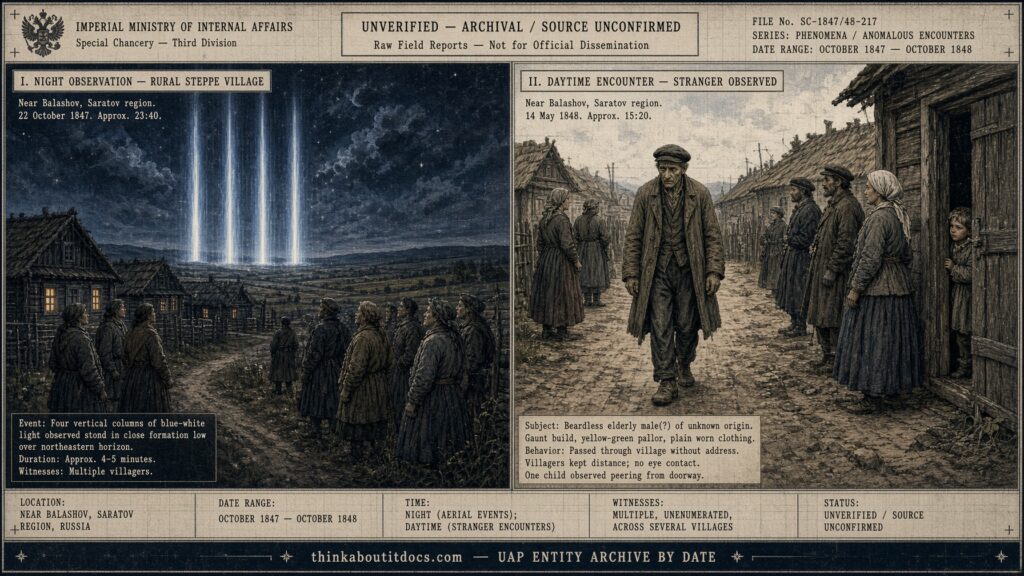
The Saratov region, 1847–1848 — fiery aerial columns preceded a year of unexplained beardless strangers moving between villages, ending with a second aerial event and their disappearance. Sourcing for this case could not be independently verified beyond a 2003 secondary publication.
THINK ABOUTIT UFO|UAP|ENTITY SIGHTINGS REPORT
1847–1848: Saratov, Russia — The Balashov Strangers
In the night sky over the Saratov region of Russia, on October 12–13, 1847, local residents watched four fiery columns of light stand in close proximity to one another in the clear northeastern sky, blue and white in color, for roughly two hours before the sky returned to normal. What followed, according to the account, was stranger still: elderly-looking, beardless men with an unnatural yellow-green cast to their skin began appearing in villages across the region — never begging, never staying the night, moving between settlements faster than anyone could track them, and speaking only in a language no local villager could identify. Nearly a year later, on October 6, 1848, a report reached the Ministry of Internal Affairs from the town of Balashov describing a final aerial event — a blood-red spot that split into dozens of cone-shaped columns and drifted west. After that date, the strangers were never seen again.
Date: October 12–13, 1847 (initial aerial event) through October 6, 1848 (final aerial event and disappearance of the strangers)
Sighting Time: Night (initial event); 9:00–11:00 PM (final event, October 6, 1848)
Day/Night: Night
Location: Near Balashov, Saratov region, Russia
Urban or Rural: Rural — multiple villages across the Saratov region
No. of Entity(‘s): Multiple, unspecified number — described only as “strangers” appearing across several villages over roughly a year
Entity Type: Humanoid — described as aged, beardless men with yellow-greenish faces
Entity Description: Elderly-appearing, beardless men with unusual yellow-green facial coloration; did not beg for alms; spoke only in an unrecognizable language; moved between villages unusually quickly and were never successfully tracked or detained by local authorities; never stayed overnight in any village
Hynek Classification: NL (for the two aerial light events); the entity component is not craft-associated and falls outside the standard Hynek scale
Duration: Initial aerial event: approximately 2 hours. Entity presence: approximately one year (October 1847 to October 1848). Final aerial event: approximately 2 hours (9:00 PM to 11:00 PM, October 6, 1848)
No. of Object(s): Four fiery columns (initial event, Oct. 1847); one aerial phenomenon that divided into “several dozen” cone-shaped columns (final event, Oct. 6, 1848)
Description of the Object(s): Initial event: four fiery columns of light in close proximity, blue and white in color. Final event: bright lightning-like illumination with thunder, followed by a blood-red spot that elongated, turned pinkish, moved northwest, then separated into dozens of cone-shaped columns turning dark red, followed by whitish-red stripes drifting west
Shape of Object(s): Columnar / beam-like (both events); the final event additionally described as an elongating spot before separating into cone shapes
Size of Object(s): Not numerically specified — described as stretching to the horizon in the final event
Color of Object(s): Blue and white (initial event); blood-red, then pinkish, then dark red, then whitish-red (final event)
Distance to Object(s): Not recorded — described as appearing in the northeastern sky (initial event) and center of the sky (final event)
Height & Speed: Final event columns moved toward the northwest before separating and drifting west; specific altitudes and speeds not recorded for either event
Number of Witnesses: Not individually enumerated — described as “local residents” across multiple villages for the aerial events, and unspecified village populations for the entity encounters
Special Features/Characteristics: Coincidence of the entity disappearance with the final aerial event on the same date; entities’ unusual mobility between villages that local and district authorities were reportedly unable to track or intercept; a formal report of the final aerial event was said to have been filed with the Russian Ministry of Internal Affairs
Case Status: Insufficient Data.
Source: “Sekretnye Isslendovaniya v Ukraine” (“Secret Investigations, Ukrainian variant”), issue #6, 2003 — a modern secondary source with no located 19th-century primary corroboration
Summary/Description: On the night of October 12–13, 1847, residents of the Saratov region reportedly observed four fiery, blue-and-white columns of light in close proximity in the northeastern sky for about two hours. Following this, elderly-looking, beardless strangers with yellow-green faces began appearing in villages across the region, speaking an unrecognizable language, never begging, never staying overnight, and moving between settlements too quickly for local or district authorities to track or detain. The strangers reportedly vanished after October 6, 1848, when a report was sent to the Russian Ministry of Internal Affairs from Balashov describing a final aerial event: bright lightning-like illumination with thunder at 9:00 PM, followed at 10:00 PM by a blood-red spot that elongated, changed color, moved northwest, then separated into dozens of cone-shaped columns before the phenomenon faded by 11:00 PM. No 19th-century primary source for this account has been located; the earliest traceable published version dates to a 2003 modern Ukrainian secondary source.
Related Cases: 1845–1849: UFO|UAP & Entity Sightings Archive
Detailed Report
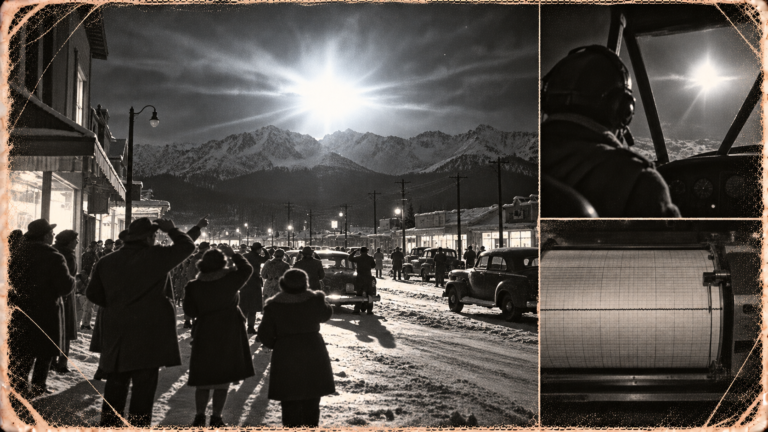
According to the account as it appears in modern secondary sources, on the night of October 12–13, 1847, residents in the vicinity of Balashov, in the Saratov region of Russia, noticed four fiery columns of light standing in close proximity to one another in the clear northeastern sky. The columns showed blue and white shades and remained visible for roughly two hours before the phenomenon ended and the sky returned to its ordinary appearance.
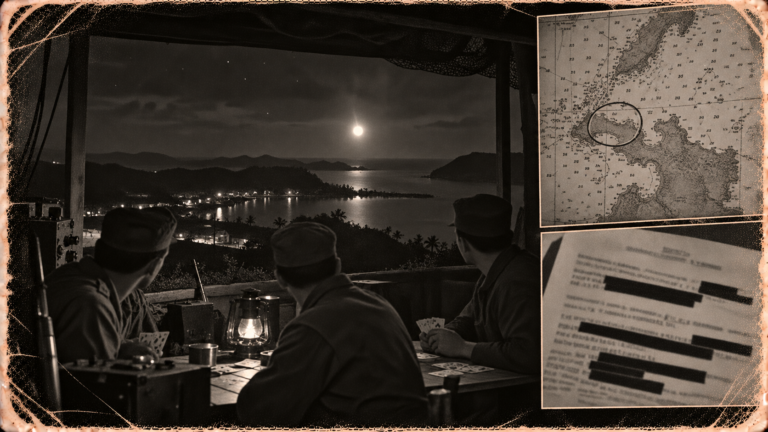
Soon afterward, according to the same account, unusual strangers began to appear in villages throughout the Saratov region. They were described as elderly in appearance, entirely beardless, with an unusual yellow-green cast to their skin. They did not beg for alms, unlike the itinerant poor of the period, which was itself noted as unusual by locals. Attempts by villagers to communicate with the strangers met only with mumbling in a language nobody present could identify, leading many locals to regard them simply as eccentric or mentally disturbed rather than anything more unusual. Neither village elders nor district police detained any of the strangers, despite what the account describes as growing suspicion among local authorities. The strangers were noted for moving unusually quickly between villages and never staying overnight anywhere, making them difficult for authorities to locate consistently.
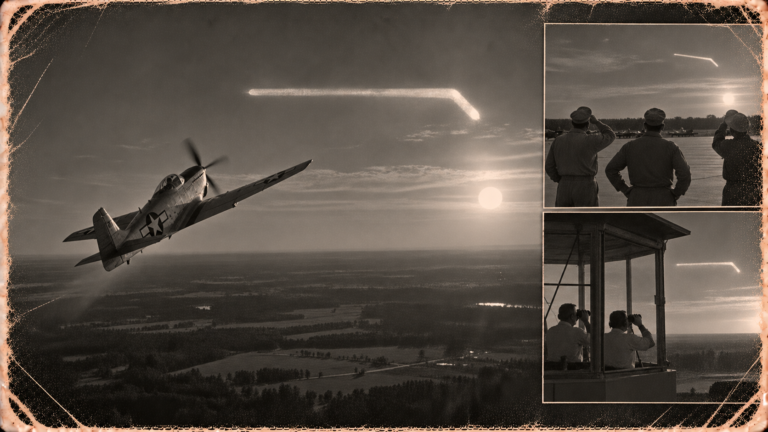
The strangers are said to have vanished from the region entirely following October 6, 1848, the date of a report allegedly sent to the Russian Ministry of Internal Affairs from the town of Balashov. That report described a sequence beginning around 9:00 PM with very bright lightning-like illumination accompanied by rumbling thunder. At approximately 10:00 PM, a blood-red spot appeared in the center of the sky, remained visible for about five minutes, then elongated and turned pinkish, moving toward the northwest. Roughly thirty minutes later, as the sky appeared to clear, the red area moved west and separated into several dozen cone-shaped columns stretching toward the horizon, darkening to a deep red. The northern sky was then reportedly covered with whitish-red stripes that slowly drifted west, with the entire phenomenon fading out by approximately 11:00 PM.
The earliest source located for this account is a 2003 article titled “Sekretnye Isslendovaniya v Ukraine” (“Secret Investigations, Ukrainian variant”), issue #6 — a modern publication, not a contemporaneous 19th-century document. No period Russian newspaper report, Ministry of Internal Affairs archival record, or scientific publication corroborating the account has been located independently. A parallel retelling of the same case, circulating on UFO discussion forums, includes additional narrative elements not present in the version documented above — including a named child witness and a claim that local officials were later imprisoned on sabotage charges — suggesting the story has continued to accumulate embellishment in its retelling rather than deriving consistently from a single fixed source document.
RESEARCHER’S NOTES
The Saratov Strangers — Russia 1847–1848 and the Limits of an Unverified Source
- Classification Issues: The two aerial events are filed as NL given their described columnar and cone-shaped light behavior with no reported structural detail beyond color and shape. The entity component does not fit the standard Hynek scale, as no direct craft-occupant interaction is described — the strangers simply appear in villages, with the aerial events treated in the source material as bracketing but not directly causally linked to their presence and departure.
- Source Chain Assessment: This is the weakest source chain of any case built out to a standalone page in this archive to date. The earliest identified appearance of the account is a 2003 Ukrainian-published article, with no located 19th-century primary document, period newspaper account, or archival Ministry of Internal Affairs record to anchor it to the events it describes as having occurred over 150 years earlier. The genre this account belongs to — modern Russian- and Ukrainian-sourced “secret archive” UFO claims, often built around unverifiable government-document framing — has a documented pattern of unreliability across this archive’s broader Soviet/CIS-era coverage, and that caution is extended here to a 19th-century case carrying the same sourcing profile. The case is retained in the archive because it is a distinctive, frequently cited account, but Case Status is marked Insufficient Data rather than Unexplained specifically because the source itself cannot be verified, independent of whether the underlying events are considered plausible.
- Pattern Context: Setting the sourcing problem aside, the narrative structure — an aerial light event, followed by anomalous humanoid presence, followed by a second aerial event coinciding with the entities’ departure — is a recognizable pattern that recurs in stronger-sourced cases elsewhere in the record. That structural familiarity is not evidence for the Saratov account’s accuracy; it may equally indicate that the account was constructed, consciously or not, along lines familiar from other UFO-genre narratives circulating by 2003.
- Geographic and Historical Context: The Saratov region in the 1840s was a developing agricultural province of the Russian Empire under Tsar Nicholas I, with limited independent press and heavily centralized administrative reporting — a period and place where a genuine anomalous event might plausibly generate exactly this kind of thin, difficult-to-verify documentary trail. That plausibility, however, cuts both ways: it also describes a period and place from which entirely fabricated modern claims could be projected backward with little risk of easy disproof.
The Saratov strangers make for one of this archive’s most narratively complete cases — a year-long entity presence bracketed neatly by two dramatic aerial events, ending on cue with a report to a named government ministry. That completeness is itself worth being suspicious of. Without a 19th-century document to anchor it, this case sits in the record as a story worth preserving and flagging honestly, not as an established fact of the historical UAP archive. If a genuine period source ever surfaces, this page should be rebuilt around it.
“The strangers seemed to move very quickly in between villages, and never stayed one night in any of the villages. But the authorities could never corner or pinpoint the whereabouts of the strangers.”