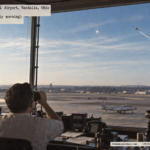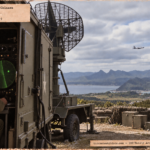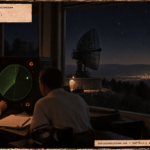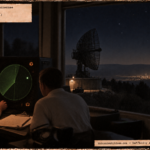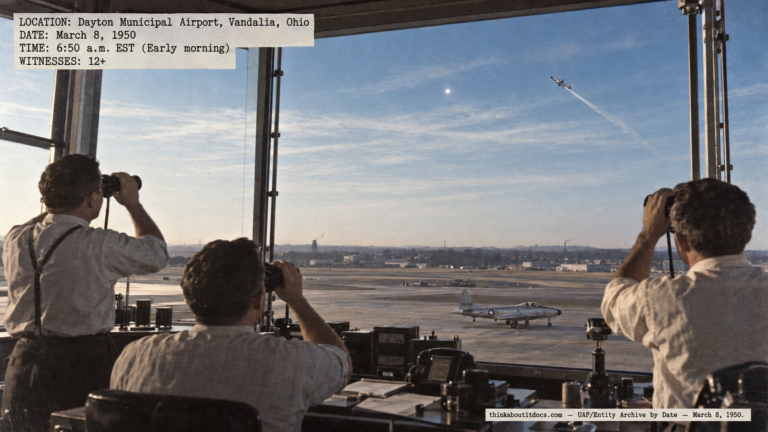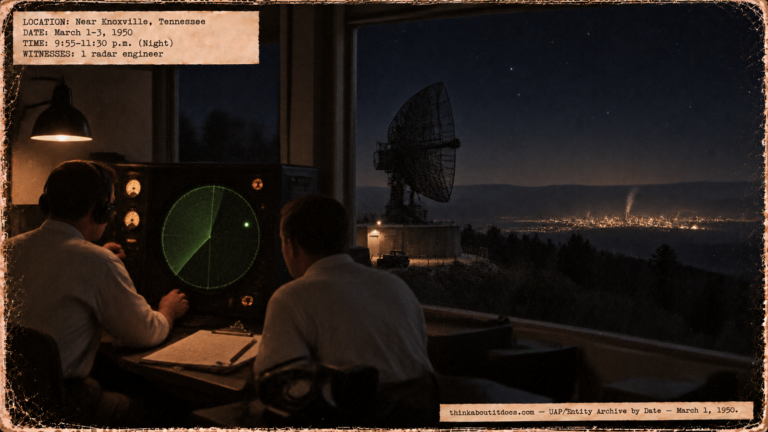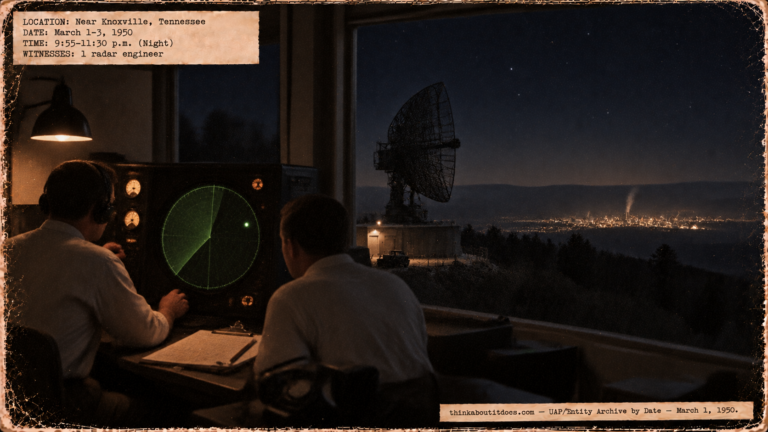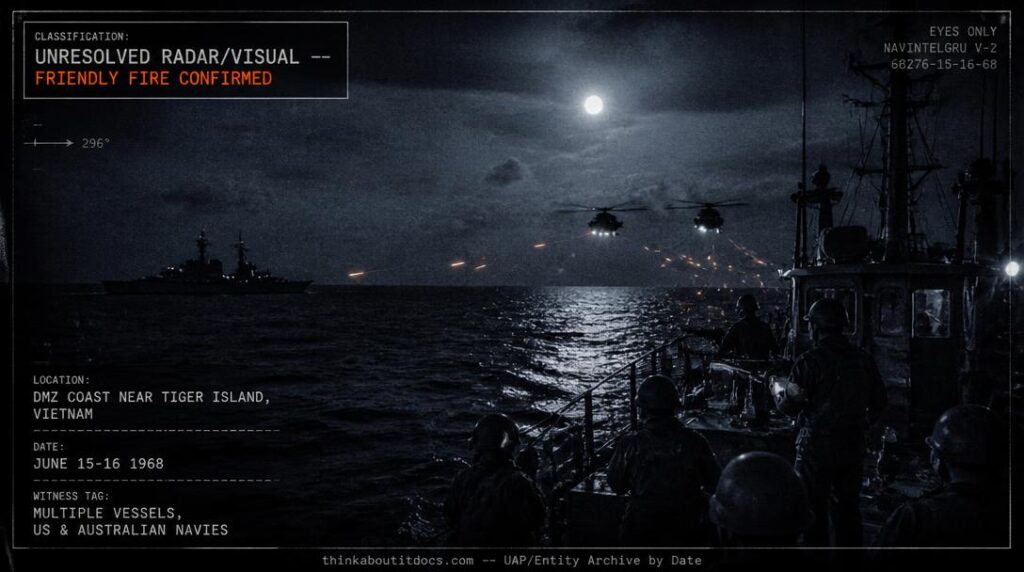
Recreation of the June 1968 DMZ incident, in which unidentified lights over Vietnam's Demilitarized Zone triggered a friendly-fire tragedy that killed Australian and American sailors, including missile strikes on HMAS Hobart.
THINK ABOUTIT UFO|UAP SIGHTINGS REPORT
1968: The HMAS Hobart Incident and the Unexplained DMZ Lights
On the night of June 15-16, 1968, Allied forward spotters along Vietnam’s Demilitarized Zone reported roughly 30 slow-moving lights in the sky, believed at the time to be enemy helicopters — triggering a night of escalating “friendly fire” that left two Australian sailors dead aboard the destroyer HMAS Hobart, sank a US Navy patrol boat, and, according to a patrol boat crewman who was there, involved at least one close-range encounter with something that opened fire back.
Date: June 15, 1968, into the early morning hours of June 16
Sighting Time: The initial “lights” were reported in the evening; the fatal missile strike on HMAS Hobart occurred at approximately 3:30 AM, following several hours of escalating incidents
Day/Night: Night
Location: The Demilitarized Zone (DMZ) between North and South Vietnam, primarily its eastern, coastal portion, extending out to sea near Tiger Island and the mouth of the Cua Viet river, off Vietnam’s central coast
Urban or Rural: Water/coastal — open sea and coastline near the DMZ. Corrected/expanded from the original field’s bare “-Water.”
No. of Entity(‘s): Not Applicable in the alien/UFO sense — no entity is described in connection with the core sighting. A separate, later ghost story associated with the Hobart is addressed in Detailed Report as distinct paranormal folklore, not part of this classification.
Entity Type: Not Applicable
Entity Description: Not Applicable
Hynek Classification: Filed as CE-II (Close Encounter II). This is a genuinely difficult case to classify: the only reported close-range, aggressive encounter with an unidentified object (from patrol boat crewman Jim Steffes) does describe an object opening fire and being fired upon in return, which could support CE-II, but the physical damage central to this case — the missile strikes on HMAS Hobart — was inflicted by friendly aircraft responding to a suspected threat, not by the original “lights” phenomenon directly. This may be better understood as an unresolved Radar/Visual (RV) sighting that precipitated a real, separate friendly-fire tragedy, rather than a clean CE-II case. See Researcher’s Notes.
Duration: The full sequence of events spanned several hours, from the initial evening “lights” reports through the PCF-19 sinking shortly after midnight, a roughly two-and-a-half-hour close encounter reported by the PCF-12 crew, and the Hobart missile strike at approximately 3:30 AM. Similar “lights” reports reportedly continued for several weeks afterward.
No. of Object(s): Filed as “two,” referring specifically to the two objects patrol boat crewman Jim Steffes described hovering near his vessel, PCF-12. The original, broader alert began with an estimated 30 separate lights reported by forward spotters along the DMZ earlier that night — a significantly larger number than the “two” field alone conveys.
Description of the Object(s): Initial reports described roughly 30 strange, slow-moving lights in the night sky, at the time believed to be Soviet-built North Vietnamese Mi-4 “Hound” helicopters. Later that night, Jim Steffes of patrol boat PCF-12 described two objects hovering about 300 yards off his boat’s port and starboard sides, roughly 100 feet above the water; he described one, seen briefly in moonlight, as having a rounded front resembling an observation helicopter with two crew seated side by side, which then fired on his boat with what appeared to be nose-mounted guns before his crew returned fire, apparently striking it into the water, while the second object broke off and left the area.
Shape of Object(s): Described by Steffes as helicopter-like in silhouette, with a rounded front; the broader DMZ “lights” were not otherwise given a resolved shape
Size of Object(s): Undocumented
Distance to Object(s): The objects near PCF-12 were reported at approximately 300 yards’ lateral distance and 100 feet altitude above the water
Height & Speed: The initial DMZ lights were described as slow-moving. The objects near PCF-12 were described as hovering at approximately 100 feet above the water. HMAS Hobart’s radar detected a fast-incoming aircraft shortly before the missile strike that damaged her.
Color/Description of Object(s): Lights, with blinking or tracer-like fire reported in some accounts; no other color detail is given
Number of Witnesses: Multiple, across several vessels and positions: unnamed Allied forward spotters along the DMZ; the crew of patrol boat PCF-12, including Jim Steffes and the boat’s Officer in Charge; the crew of the Coast Guard cutter Point Dume; and the bridge and radar crew of HMAS Hobart. Two US Air Force officers, General George S. Brown (then commander of the 7th Air Force) and intelligence officer George Filer, separately and later corroborated that similar unidentified reports (“enemy helicopters” that were never confirmed to exist) recurred over the DMZ during this period.
Special Features/Characteristics: No wreckage of any “enemy helicopter” was ever recovered despite extensive search, and an official Royal Australian Navy News statement in August 1968 confirmed no physical evidence of destroyed helicopters or of any actual North Vietnamese helicopter activity near the DMZ was found. A US Navy Board of Inquiry attributed the Hobart’s specific missile strike to a radar limitation: a cutoff mechanism meant to prevent large targets from flooding the radarscope could make a ship’s return resemble that of a slow, low-flying helicopter. Separately, unidentified “lights” reports reportedly continued in the area for several weeks afterward, including further sightings logged by radar operators in nearby Quang Tri Province.
Case Status: This case has two distinct parts that should not be conflated. The friendly-fire incident itself — the missile strikes on HMAS Hobart, the sinking of PCF-19, and the resulting casualties — is a confirmed, extensively documented historical event, investigated by an official Australian government Board of Inquiry, which attributed it to a specific radar identification flaw. The original “lights”/objects that triggered the alert, however, remain Insufficient Data: no wreckage, aircraft, or conclusive identification was ever established, despite investigation at the time.
Source: AUFORN (Australian UFO Research Network) Special Report, Issue 34, April 2003; drawing on an original feature article by Melbourne freelance journalist Jon Wyatt, itself sourced from the Sydney Morning Herald and The Australian (June 19, 1968), the Melbourne Sun (June 24, 1968), Royal Australian Navy News (August 16, 1968), the official history “Navy in Vietnam” by Denis Fairfax (Australian Government Publishing Service, 1980), a 1996 interview with Hobart’s commanding officer Ken Shands, a 1973 Department of Defense press conference transcript, a 2001 Philadelphia Inquirer profile of George Filer, a 1989 conference talk by Milton William Cooper, and Jim Steffes’ own published account of the incident.
Summary/Description: On the night of June 15, 1968, Allied forward spotters along the eastern Demilitarized Zone reported approximately 30 slow-moving lights in the night sky, initially believed to be North Vietnamese helicopters ferrying troops and supplies across the border. Fearing a renewed Tet Offensive-style buildup, Allied Command moved additional anti-aircraft guns to the border, placed fighter-bombers on standby at Danang Air Base, and directed available warships, including the Australian guided-missile destroyer HMAS Hobart, to patrol the DMZ coast.
When the lights reappeared later that night, US Air Force Phantom fighter-bombers engaged the suspected intruders with support from ground anti-aircraft fire, driving them, as reported, down the coast and out to sea. A subsequent Australian government Board of Inquiry found that a limitation in the Phantoms’ radar system could cause a ship’s return to resemble that of a slow, low-flying helicopter. Shortly after midnight, the US Navy patrol boat PCF-19 was struck and sunk by air-to-air missiles, killing five of its seven crew. At approximately 3:30 AM, HMAS Hobart, operating blacked-out near Tiger Island, was struck by a missile that its own identification system had read as “friendly”; the strike and two further missile hits killed two sailors and wounded several others before the attacking aircraft withdrew. Several other Allied vessels came under fire that night without further casualties. No wreckage of any enemy aircraft was recovered, and an official Navy statement later confirmed no evidence of North Vietnamese helicopter activity was found in the area.
Separately, patrol boat crewman Jim Steffes, aboard PCF-12, described a close encounter with two hovering, helicopter-like objects near his boat that night, one of which he says opened fire before his crew returned fire and appeared to strike it into the water. He and his crew reportedly continued monitoring similar unexplained lights in the area for several weeks afterward. Years later, General George S. Brown, the Air Force commander in charge of the aircraft involved that night, and USAF intelligence officer George Filer separately stated that similar unidentified reports recurred over the DMZ during that period, without ever being conclusively explained as either enemy activity or anything else.
Related Cases: Undocumented as a separate archive entry
Detailed Report
This is one of the most historically consequential cases in this archive, and it deserves to be read on two separate levels. At the level of confirmed military history, the events of June 15-16, 1968 are extensively documented: unidentified lights reported along the DMZ triggered an Allied air and naval response that, through a combination of radar misidentification and wartime tension, resulted in real friendly-fire tragedy — the sinking of patrol boat PCF-19 with five of seven crew killed, and missile strikes on HMAS Hobart that killed two Australian sailors and wounded several more, making it the costliest single incident for the Royal Australian Navy in the entire war. An official Australian government Board of Inquiry examined the Hobart strike specifically and attributed it to a real, documented radar limitation: a cutoff mechanism intended to prevent large targets from overwhelming the radarscope could make a ship’s return resemble a slow, low-flying helicopter, explaining why “friendly” aircraft fired on Allied vessels that night.
At a second, more speculative level, the underlying cause of the initial alert — the roughly 30 lights reported by forward spotters — was never resolved. No wreckage of any North Vietnamese helicopter was found despite extensive searching, and an official Royal Australian Navy News statement later confirmed no evidence of enemy helicopter operations was found in or near the DMZ at all. Patrol boat crewman Jim Steffes, who was in the area that same night aboard PCF-12, gave the most detailed first-hand account of a direct encounter: two objects hovering roughly 300 yards off his boat, one briefly visible in moonlight with a rounded, helicopter-like front and what looked like two crew seated side by side, which he says opened fire on his boat before his own crew fired back, apparently striking it into the water. Years afterward, two US Air Force officers with direct authority over the operation — General George S. Brown, who later chaired the Joint Chiefs of Staff, and intelligence officer George Filer, later an Eastern regional director for the Mutual UFO Network — separately confirmed that similar unresolved sightings, officially logged as “enemy helicopters,” recurred over the DMZ during this period without any confirmed identification.
The article this page was originally built from also includes commentary from Milton William Cooper, a former patrol-boat officer who spoke at a 1989 UFO conference about extensive alleged UFO activity in Vietnam, though he later shifted his own explanation away from extraterrestrial origin toward a claim that UFOs represent secret human technology descended from WWII-era German research — a claim well outside mainstream historical or scientific consensus and included here only as part of the original journalism’s own account, not as an endorsed explanation. The original article also appends an unrelated ghost story about a Hobart signalman’s later, unnerving experience aboard the decommissioned ship in the 1990s — a separate piece of naval folklore, not connected to the 1968 UFO sighting itself, and not evaluated as part of this case’s classification.
RESEARCHER’S NOTES
The Hobart Incident — Two Stories, and Only One of Them Confirmed
- Classification Assessment: CE-II is a difficult fit here. The clearest close-range, physically consequential encounter (Steffes’ account of an object firing on his boat) supports the category, but the case’s central physical damage — the Hobart’s missile strikes — came from friendly aircraft reacting to a misidentified threat, not from the original phenomenon directly. This may be better understood as an unresolved Radar/Visual sighting that precipitated a genuine, separate friendly-fire tragedy, and readers should not conflate the two when evaluating what “caused” what.
- Source Chain Assessment: The underlying military event is exceptionally well documented for a case in this archive — real, named contemporaneous newspapers, an official government Board of Inquiry, an official Royal Australian Navy history book, and a direct 1996 interview with the ship’s commanding officer. This is a genuinely different tier of sourcing than most entries here. The UFO interpretation itself, however, rests more heavily on later, more speculative commentary — a 1973 press conference remark from a general who by then had other reasons to be circumspect, a 1989 conference talk from a self-described later-recanted witness (Cooper), and one patrol boat crewman’s (Steffes) own detailed but uncorroborated account. These should be weighted differently: the friendly-fire history is confirmed; the “why” behind the original lights is not.
- Evidentiary Weight: No wreckage, photograph, or physical trace of the original “lights” was ever recovered, a fact confirmed in an official 1968 Royal Australian Navy statement. The strongest evidentiary element is institutional, not physical: the fact that two named Air Force officers, with direct wartime authority over the operation, later independently confirmed similar unresolved sightings recurred over the DMZ, without either of them offering a conventional identification for what those sightings actually were.
- Pattern and Comparative Context: Wartime radar and visual misidentification of natural or friendly phenomena as enemy aircraft is a well-documented category of incident across many conflicts, and Australian official naval histories themselves suggest unusual atmospheric conditions, insect swarms, or bird flocks as candidate explanations for the original DMZ sightings — plausible conventional causes that this case’s own official record raises, though none has been conclusively confirmed either.
- Geographic and Historical Context: The Vietnamese DMZ in mid-1968 was one of the most militarily tense and heavily monitored strips of territory in the world, in the aftermath of the Tet Offensive, a context of high alert and rapid escalation that should be weighed heavily alongside any account of misidentification or friendly fire from this specific period and place.
Two Australian sailors and five American patrol boat crewmen died on the night unidentified lights appeared over the Vietnamese DMZ, and that loss is real and confirmed, whatever the lights actually were. The lights themselves were never identified, no wreckage was ever found, and the official record itself raises ordinary explanations — insects, birds, unusual atmospheric conditions — without confirming any of them. The friendly-fire tragedy is Historically Confirmed. The phenomenon that triggered it remains Insufficient Data.
“No physical evidence of helicopters destroyed has been discovered in the area.”