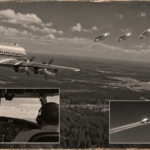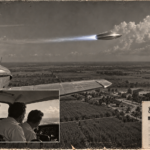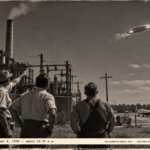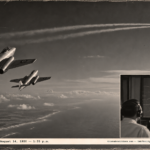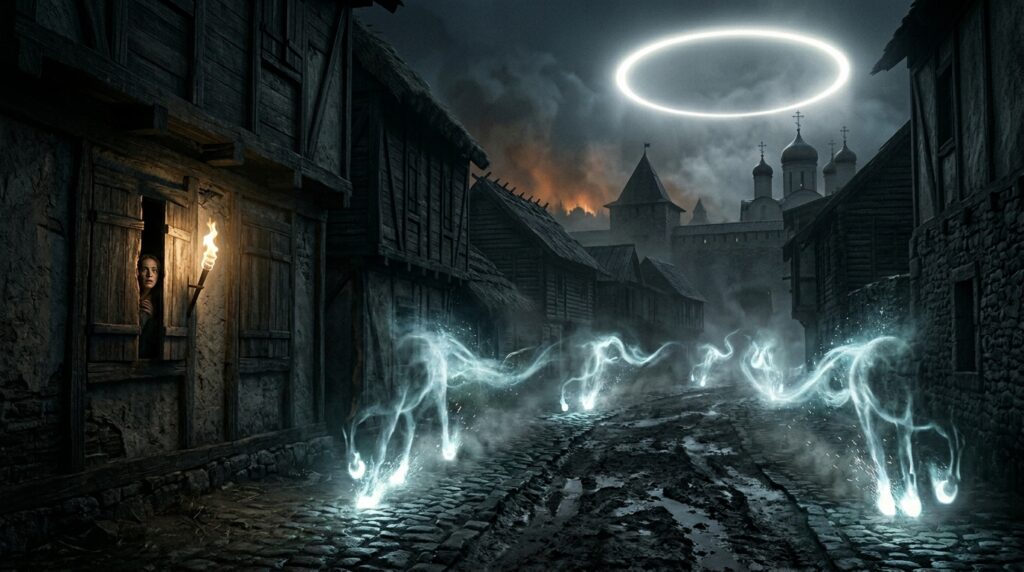
1092 CE — Polotsk and Drutsk, Belarus. Invisible horsemen rode the streets killing citizens while a great circle appeared in the sky above — recorded in the Povest' vremennykh let, the oldest surviving chronicle of Kievan Rus.
THINK ABOUTIT UFO|ENTITY SIGHTING REPORT
1092 CE: Drutsk and Polotsk, Belarus Sightings
In the summer of 1092 CE, something came to the medieval towns of Drutsk and Polotsk in what is now Belarus, and it did not leave quietly. People heard the thunder of unseen horsemen galloping through the streets at night — dozens of them, with dogs and servants, moving at full speed. Those who dared step outside were struck down by invisible forces with wounds that killed. During the day the horses became partially visible — only their hooves, striking the ground — but their riders remained unseen. Above the region a great circle appeared in the middle of the sky. The account is recorded in the Povest’ vremennykh let — the Chronicle of Bygone Years — one of the oldest and most authoritative historical documents of the medieval Slavic world. Whatever came to Polotsk and Drutsk in 1092 CE left bodies behind.
Date: 1092 — Summer
Sighting Time: Both night and day — nocturnal sounds and daytime visual manifestations
Day/Night: Both
Location: Drutsk and Polotsk, Belarus
Urban or Rural: Urban — city streets of Polotsk; town of Drutsk
No. of Entity(‘s): Multiple — described as dozens of men on horseback with dogs and servants
Entity Type: Non-human entities — described in the chronicle as demons; behavior and physical effects consistent with non-human intelligence
Entity Description: Invisible beings riding horses at speed through city streets at night; during daylight only the hooves of their horses were visible; beings caused physical injury and death to anyone encountered outside; described in one version as the dead, in another as demons
Hynek Classification: CE-III (Close Encounter III) Close observation with animate beings associated with the object.
Duration: Extended — the phenomenon persisted over multiple days and nights across two locations
No. of Object(s): 1
Height & Speed: High altitude — stationary or slow moving; speed not recorded
Size of Object(s): Large — described as a great circle visible across the sky
Distance to Object(s): Aerial — observed in the sky above the region
Shape of Object(s): very large circle in sky
Color/Description of Object(s): A great circle seen in the middle of the sky above the region — described as a very large circular sign appearing in the heavens contemporaneously with the entity activity below
Number of Witnesses: Multiple — entire populations of Polotsk and Drutsk; citizens confined to their homes; multiple casualties recorded
Special Features / Characteristics: Physical injury and death caused by invisible entities; partial visibility during daylight — only horse hooves observable; phenomenon originated in Drutsk before spreading to Polotsk; great circular aerial object appeared simultaneously; dry summer with forest fires and many deaths recorded as environmental context; two versions of the chronicle text present — one identifying entities as demons, one as the dead
Case Status: Unexplained
Source: Povest’ vremennykh let (Chronicle of Bygone Years / Nestor’s Chronicle), Laurentian Codex; cited in Claude Lecouteux, Chasses fantastiques et cohortes de la nuit au Moyen Age (Paris: Imago, 1999), pp. 31-32; text extracted by Yannis Deliyannis from the Laurentian Codex
Summary/Description: In the summer of 1092 CE the towns of Drutsk and Polotsk in medieval Belarus were terrorized by invisible entities on horseback that caused physical injury and death to anyone encountered in the streets. During daylight only the hooves of their horses were visible. Simultaneously a great circle appeared in the middle of the sky above the region. The event is recorded in the Povest’ vremennykh let — one of the oldest surviving Slavic historical chronicles — and represents one of the most disturbing and well-sourced medieval entity encounter accounts in the Eastern European record.
Related Cases: 815 CE Lyons France Magonia Sighting | 640 CE Faremoutiers-en-Brie France Entity Sighting | Medieval European Entity Contact Archive

DETAILED REPORT:
The Povest’ vremennykh let — known in English as the Chronicle of Bygone Years or Nestor’s Chronicle — is the primary historical source for medieval Kievan Rus. Compiled in the early 12th century from earlier records and eyewitness accounts, it is the foundational document of Eastern Slavic historiography. When it records an event, it is recording something the chroniclers considered real, significant, and worthy of preservation in the permanent historical record of their civilization.
Under the year 6600 from the creation of the world — corresponding to 1092 CE in the modern calendar — the Laurentian Codex, which contains the oldest surviving version of the chronicle, records the following sequence of events in the towns of Drutsk and Polotsk.
It began in Drutsk. A great sign appeared in the heavens — a very large circle seen in the middle of the sky. That summer the weather was abnormally dry. Forest fires burned across the region. Many people died.
Then the phenomenon moved to Polotsk.
At night, citizens heard great noises in the streets — the sound of dozens of men on horseback riding at full speed, with dogs and servants, thundering through the town. The chronicle’s language is precise and specific. This was not a vague sound. It was recognizable — horsemen, moving fast, in numbers. The terrifying detail was what followed: anyone who stepped outside was struck down immediately by an invisible force. The wounds were deadly. No one dared leave their house.
The chronicle records the community response with the same precision: the citizens of Polotsk stayed inside. The streets were theirs — whoever or whatever was riding through them.
During the day the phenomenon shifted. The horses became partially visible — but only their hooves. The riders remained invisible. In the full light of day, the hooves of unseen horses struck the streets of Polotsk, and the beings astride them remained beyond human perception. The injury and death continued.
The chronicle records the community’s conclusion: the dead are killing the citizens of Polotsk. An alternate version of the text — from Radziwill’s chronicle — frames the same event as demons rather than the dead, suggesting that contemporaries debated the nature of the entities but agreed completely on the physical reality of the events.
Claude Lecouteux, the French medievalist who documented this case in his 1999 study of nocturnal phantom cohorts in medieval folklore, notes that the Polotsk account is part of a broader pattern of medieval European reports describing organized bands of invisible or semi-visible beings causing physical harm to human populations. What makes the 1092 case exceptional is the dual documentation — both the chronicle record and the aerial phenomenon — and the specificity of the physical effects. People died.
The great circle in the sky over Drutsk, appearing at the same time as the entity activity in both towns, is the aerial component of this case. A large circular object observed in the sky simultaneously with ground-level entity encounters is a pattern documented across the entire scope of the ThinkAboutIt archive — from ancient BCE accounts through the modern era. At Drutsk and Polotsk in 1092 CE, both elements were present and documented in one of the most authoritative historical sources of the medieval Slavic world.
RESEARCHER’S NOTES: The Polotsk-Drutsk Incident — Invisible Riders, Aerial Circles, and the Chronicle That Recorded the Deaths
- Primary Source Authority: The Povest’ vremennykh let is one of the most important historical documents of medieval Eastern Europe — the foundational chronicle of Kievan Rus, compiled by monastic scholars from earlier records. Its recording of the Polotsk-Drutsk events gives this case a level of institutional documentation that most medieval UAP accounts cannot match. This is not folklore — it is the official historical record of a civilization.
- Partial Visibility Phenomenon: The daytime manifestation of the horses’ hooves without visible riders is one of the most analytically remarkable details in the entire medieval entity record. Partial visibility — where some physical components of an encounter are perceptible and others are not — appears in modern UAP research as a characteristic of craft and beings operating at the edge of human perceptual range. At Polotsk in 1092 CE this phenomenon was witnessed by an entire city population.
- Physical Harm and Death: Unlike most medieval aerial phenomena accounts which describe only visual observations, the Polotsk case records direct physical injury and death caused by the entities. This places it in a category of encounter reports where non-human intelligences demonstrated both presence and physical effect on human biology — a pattern that appears across CE-III and CE-IV accounts worldwide and across all eras.
- Simultaneous Aerial Object: The great circle in the sky over Drutsk appearing at the same time as the entity activity in both towns is the aerial correlate of the ground-level encounter. The pattern of a large circular aerial object appearing in conjunction with entity contact on the ground is one of the most consistent structural features in the ThinkAboutIt archive — documented from BCE accounts through the present day. At Drutsk in 1092 CE it was recorded in the oldest surviving Slavic chronicle.
The 1092 CE Drutsk and Polotsk incident is preserved in the oldest surviving chronicle of medieval Eastern Europe — recorded not as legend or religious allegory but as a sequence of physical events with physical consequences, including death. Invisible horsemen. Visible hooves. A great circle in the sky. A population confined to their homes. Whatever came to Belarus in the summer of 1092 CE operated with a precision and a physical reality that the chroniclers of Kievan Rus documented faithfully and without embellishment. Nine centuries later the archive holds their testimony. The questions they could not answer remain open.