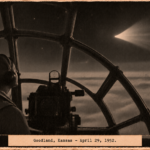
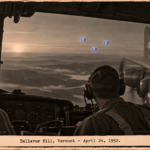
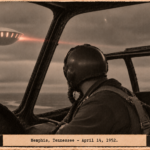
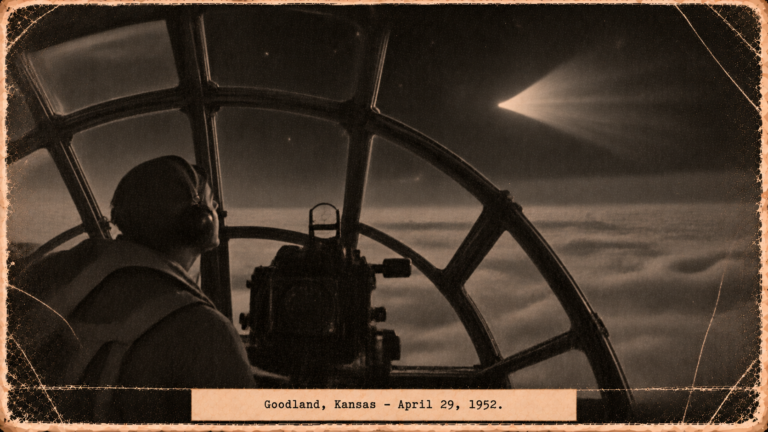
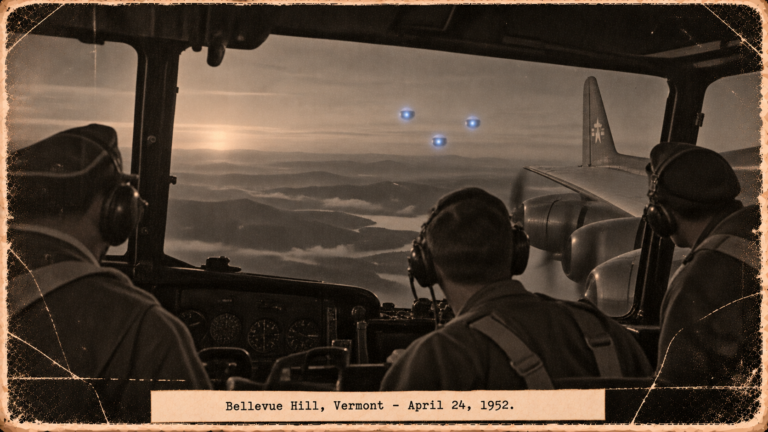
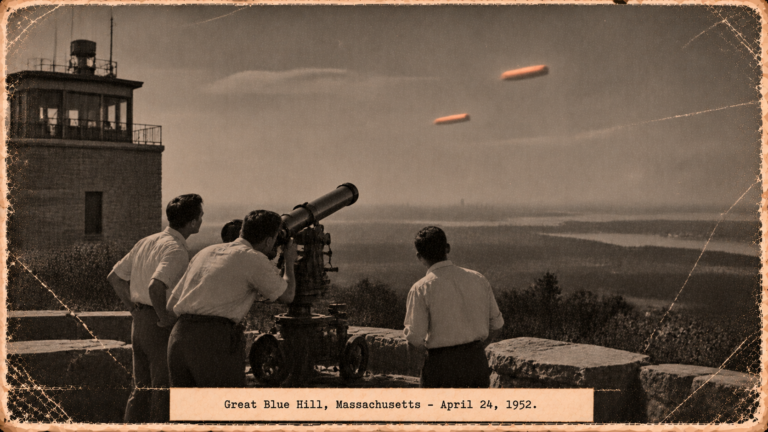
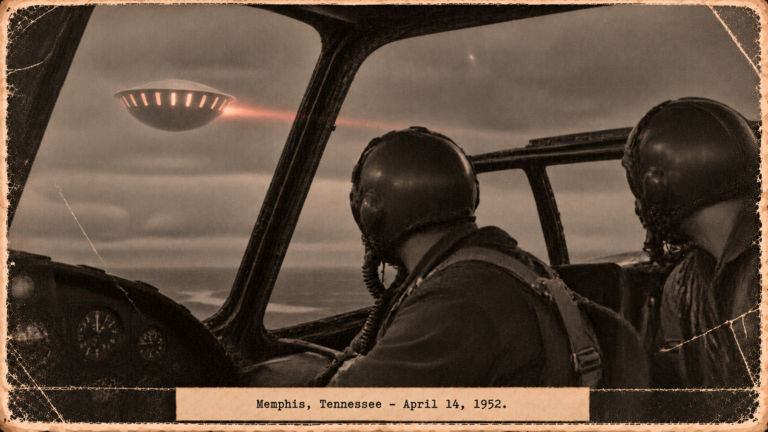
Minneapolis, October 11, 1951: a balloon crew watches glowing objects climb in slow circles.
THINK ABOUTIT UFO|UAP SIGHTINGS REPORT
1951: General Mills Balloon Crew Sees Glowing Objects Climb in Lazy Circles Over Minneapolis, Minnesota
At 6:30 a.m. on October 11, 1951, two men flying at 10,000 feet a few miles north of Minneapolis, Minnesota, to track a high-altitude research balloon saw a brightly glowing object to the southeast of the University of Minnesota airport. It crossed the sky at a high rate, then slowed and began climbing in slow, lazy circles, wobbling like an inverted falling oak leaf, before accelerating rapidly out of sight to the east. A second object followed and crossed the sky without lingering.
The pilot radioed the balloon project’s tracking station at the university airport, and two observers on a theodolite there caught glimpses of several of the objects but could not keep them in the instrument’s field. Air Force intelligence in Washington asked the Air Technical Intelligence Center for an evaluation, ATIC noted that the sources were experienced balloon observers, and Project Blue Book carried the case as Unidentified.
Date: October 11, 1951
Sighting Time: 6:30 a.m. CST (1230Z)
Day/Night: Early morning
Location: A few miles north of Minneapolis, Minnesota, at 10,000 feet, looking southeast toward the University of Minnesota airport; ground observers at the balloon project tracking station at the university airport
Urban or Rural: Urban fringe
No. of Entity(‘s): Not Applicable
Entity Type: Not Applicable
Entity Description: Not Applicable
Hynek Classification: Daylight Disc (DD); the report describes a glowing object with a halo and dark undersurface, not a clear disc
Duration: About 5 minutes for the first object; a second object followed shortly after; the card notes the objects were seen again two hours later
No. of Object(s): Multiple (3 per the card)
Description of the Object(s): A brightly glowing object with what the witness called a halo around it and a dark undersurface. It crossed rapidly, slowed down and climbed in slow lazy circles, in a pattern like an inverted falling oak leaf, for a couple of minutes, then accelerated rapidly to the east. A second object approached from the west and disappeared to the east. No vapor trails.
Shape/Size/Color of Object(s): Glowing, with a halo and dark undersurface; smoke-gray in color per the card, with no reflection; size not estimated because the balloon was not in sight for comparison
Distance to Object(s): Not stated; the object was seen to the southeast of the university airport from an aircraft a few miles north of Minneapolis
Height & Speed: High altitude; the first object crossed the observer’s windshield reference point at about 50 degrees per second (the card reads 5 degrees per second), then slowed to climb in lazy circles and finally accelerated rapidly
Number of Witnesses: 4 (two men in the aircraft and two observers on the ground; the aircrew names are redacted in the file)
Special Features/Characteristics: Observed by experienced high-altitude research balloon observers; seen both from the air and the ground; theodolite tracking failed because the objects moved too fast; no vapor trails; objects reportedly seen again about two hours later
Case Status: Unidentified (Project Blue Book record card: Other, “Unidentified”; Unknown box also marked)
Source: Project Blue Book record card; Air Force teletype TT-281 (November 9, 1951) and ATIC follow-up TT-284 (November 15, 1951); Brad Sparks, Blue Book Unknowns Catalogue; Richard Hall, The UFO Evidence; NICAP
Summary/Description: A General Mills balloon crew and two ground observers saw glowing objects with halos cross the sky and climb in lazy circles near Minneapolis; the theodolite could not keep up, and Blue Book carried the case as Unidentified.
Related Cases: The St. Croix Falls, Wisconsin sighting of October 10, 1951 by the same project (Blue Book card: Was Aircraft); the Terre Haute and Paris, Illinois sightings of October 9, 1951
Detailed Report
The Letter
The case reached Air Force intelligence in November 1951 through a personal letter from a member of the balloon project, which Air Force intelligence passed to the Air Technical Intelligence Center on November 9 and asked it to comment or evaluate. The writer gave the time as 0630 on October 11, 1951. He and a copilot were flying at 10,000 feet, observing “the Grab Bag balloon,” a research balloon launched from Minneapolis, when he saw a brightly glowing object to the southeast of the University of Minnesota airport. They were a few miles north of the city, heading east.
In his words, the object moved from east to west at a high rate and very high. He and his copilot tried to hold the aircraft on a constant course and use a windshield post as a fixed reference. The object moved past the post at about 50 degrees per second. It looked peculiar because it had what could be described as a halo around it, with a dark undersurface. It crossed rapidly, slowed, and began to climb in lazy circles in a pattern like a falling oak leaf inverted. After a couple of minutes of this, with very rapid acceleration, it disappeared to the east. They watched it for about five minutes. He could not describe its size because the balloon was not in sight for comparison.
The Second Object and the Ground Observers
Shortly afterward, they saw another one. This one did not hang around: it approached from the west and disappeared to the east, and neither object left any vapor trail. When he saw the second object, the pilot called the balloon project’s tracking station at the university airport. The two observers there on a theodolite, according to the letter, “managed to get glimpses of a number of them” but could not turn the instrument fast enough to keep them in its field. Both men caught glimpses of the objects after the pilot warned them by radio.
The Blue Book card adds that the observers tried to track the objects with the theodolite when they contacted the airport, that the objects were seen again about two hours later, and that they were smoke-gray with no reflection and no vapor trails. It records the number of objects as multiple (three).
ATIC Follow-Up
On November 15, 1951, a follow-up message to Air Force intelligence referred back to the first teletype and noted that the sources of the report “were checked and are experienced observers with high altitude research balloon project,” and that the Air Technical Intelligence Center was investigating further. The card lists the case as Unidentified.
The Day Before
The same project reported another sighting on October 10, 1951, at about 10:10 a.m., near St. Croix Falls, Wisconsin. The card describes an object crossing from east to west at an altitude much greater than that of the 20,000-foot balloon and about a quarter of its apparent size, with a peculiar glow, that went into a rapid shallow dive, leveled off, turned sharply left and climbed at 50 to 60 degrees to the southeast with what the witness called terrific acceleration. The card for that sighting says “Object characteristic of a/c” and marks it Was Aircraft, although later catalogs list it among the Unknowns. The St. Croix Falls file also contains the Minneapolis letter, so the Air Force evidently treated the two as one series.
RESEARCHER’S NOTES
Why the Minneapolis Sightings Still Matter
- Trained observers: The witnesses were balloon-tracking specialists who spent their days watching high objects through instruments. ATIC itself noted their experience.
- Instrumented attempt: A theodolite is built to follow a slow balloon. The ground team could not follow the objects, which fits the pilot’s description of high angular speeds but gives no measurement.
- The motion: The slow, wobbling, climbing circles followed by a sudden acceleration is a behavior pattern that a balloon, aircraft or meteor does not match, and it is the main reason the case stayed Unidentified.
- Skeptical angles: Blue Book carried the case as Unidentified and offered no conventional explanation. The report rests on four witnesses and no measurements, which is the point a skeptic would press.
- Figures that differ: The letter says the object moved east to west at about 50 degrees per second; the card reads 5 degrees per second and notes a first observation time of 0630. A published catalog gives the direction as west to east. The file’s letter and card agree on east to west for the first object.
The file shows a credible, specialist crew reporting a behavior pattern that no one at the time could assign to a known object, and an Air Force that took the report seriously enough to ask for further investigation. It does not show what the objects were. The Minneapolis and St. Croix Falls reports are best read together as a short series from a single project, one of the October reports that Blue Book left Unidentified.
“A halo around it with a dark undersurface.”
— Balloon project pilot, letter forwarded to ATIC, November 9, 1951