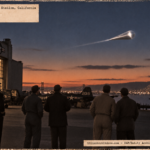
Michigan UAP archive: Kinross AFB November 1953 F-89 radar merger with unknown target over Lake Superior — aircraft and crew never recovered, Dexter-Hillsdale March 1966 mass sighting with Hynek swamp gas attribution and subsequent congressional hearings, and Lake St. Clair January 1967 domed object photographed by the Jaroslaw brothers. 7+ documented cases 1953–2004.
Michigan UFO|UAP & Alien Sightings Archive
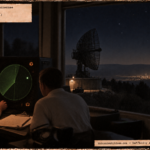
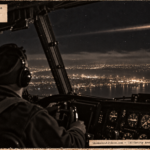
Michigan’s UAP record is defined by two cases that each generated national institutional responses within days of the events — one of which was a deliberate institutional obfuscation that backfired spectacularly, and one of which was a military fatality that remains officially unexplained. On November 23, 1953, an Air Defense Command radar controller at Kinross Air Force Base tracked an unidentified target over Lake Superior and scrambled an F-89C Scorpion with pilot Lieutenant Felix Moncla and radar operator Lieutenant Robert Wilson. On radar, the F-89 closed on the target over the lake at high speed. Then the two radar blips — the F-89 and the unidentified target — merged into one. The one remaining blip moved off and disappeared. The aircraft and both crew members were never found. No wreckage was ever recovered from Lake Superior. The Air Force officially stated the F-89 experienced a mechanical malfunction. No one has ever explained why a mechanical malfunction would produce two radar returns merging into one. The Kinross incident is one of a small number of documented cases in which a military aircraft apparently disappeared in direct radar contact with an unidentified target, making it the most consequential event in the Michigan UAP record and one of the most analytically significant in the national record.
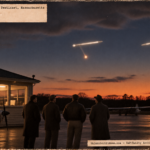
Thirteen years later, in March 1966, southwestern Michigan produced the most publicly embarrassing official UAP attribution in American history. Over several nights centered on March 20, dozens of witnesses across Dexter, Hillsdale, and Milan observed structured craft at low altitude — farmers, police officers, college students, and more than 80 people at Hillsdale College reported a glowing object in a swampy area for four hours. J. Allen Hynek was dispatched by Project Blue Book to investigate. Under what he would later acknowledge was intense pressure to provide a quick explanation, he told a packed press conference that the Dexter sighting was likely swamp gas — luminescent methane from decaying vegetation. The national press reacted with derision. Michigan Congressman Gerald Ford demanded congressional hearings, which were held. The swamp gas explanation became a cultural shorthand for official UAP dismissal, and Hynek’s own discomfort with what he had said publicly contributed to his eventual founding of CUFOS. Michigan’s cases span from 1953 to 2004 across the Upper Peninsula, the Lower Peninsula’s southwest, and the eastern Great Lakes corridor.
- 1952: Several groups of UFOs fly over witnesses — Flint, Michigan
- 1953: The Kinross Air Force Base Incident — Felix Moncla & Robert Wilson
- 1966: Disc-shaped object hovering few feet above road
- 1966: The Michigan Sightings / ‘Swamp Gas’ Case
- 1967: Michigan landed UFO and little people on ground
- 1967: Two Brothers Photograph Object in Michigan
- 1978: Metallic, saucer seen over Michigan farm
- 1981: TWA airline pilot sees round metallic object
- 1988: Coast Guard Encounter with Giant Ellipse
- 1998: Brighton Michigan Sighting
- 2001: Triangle seen near Michigan Interstate
- 2003: Frisbee-Shaped object over Bennet Lake, Michigan
- 2004: Triangle shaped object seen flying over-head
- 2006: Iron River, Michigan Sighting
- 2008: Holly, Michigan Encounter
- 2021: Muskegon, Michigan Sighting
- 1970: Good Hart, Michigan Close Encounter
- 2001: Large rectangular object hovers over golf course in Traverse City, Michigan
- 1950: The Selfridge AFB Radar Case
- 1954: The Kensington Lake Encounter — Detroit, Michigan
- 1956: Wurtsmith AFB, Michigan: The Light That Broke an F-89D Radar Lock
- 1956: Grand Ledge, Michigan: The Sphere That Stopped Ten Feet Away
Executive Summary
Kinross and Swamp Gas — Michigan’s Institutional Record
Michigan’s UAP archive is defined by two institutional responses to UAP events that are opposite in character and equal in analytical significance. The Kinross F-89 disappearance generated a military institutional response — the standard “mechanical malfunction” attribution applied to a case where the radar record shows no malfunction but does show a merger of returns — that has never been credibly challenged on its own terms because the challenge would require explaining what the merging return was. The 1966 swamp gas press conference generated a civilian institutional response that was so obviously inadequate to the scale of the witnessed events that it produced a congressional investigation and contributed to the career trajectory of the one scientist who had the integrity to publicly revisit his own explanation years later. Both cases illustrate the pattern that Michigan’s record exemplifies: UAP events of sufficient scale or institutional consequence that they generate documented official responses, and official responses inadequate enough that they become part of the evidentiary record in their own right.