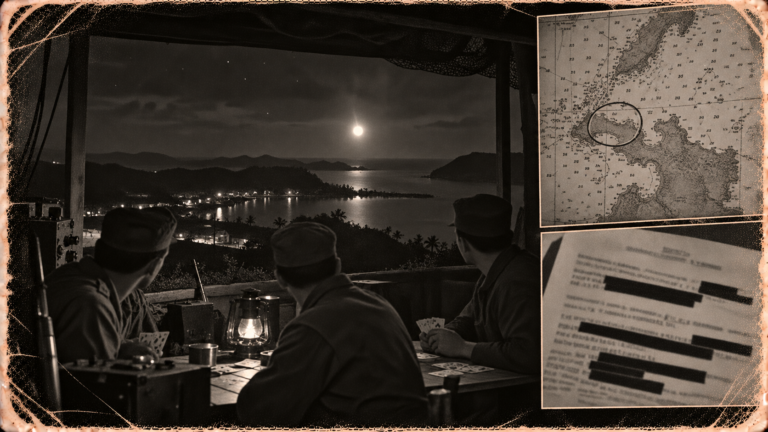
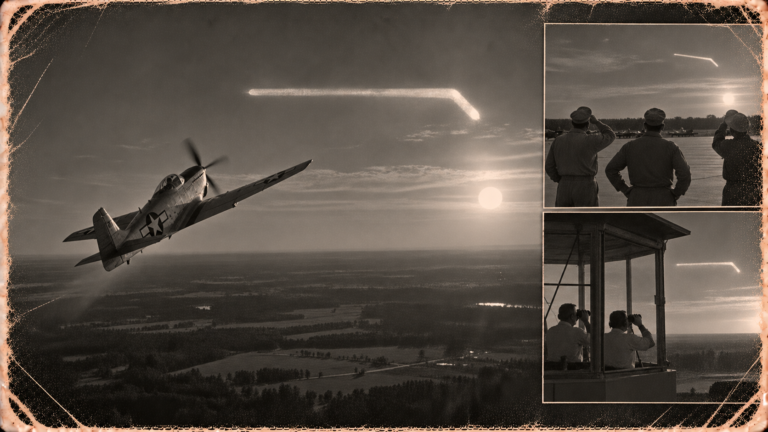
Dossier reconstruction of the "Space Monster" object reported over Walvis Bay, Namibia, August 16, 1976.
THINK ABOUTIT UFO|UAP ENCOUNTER REPORT
1976: Walvis Bay, Namibia UFO Sighting | Namib Times “Space Monster” Archive
Just after 6:30 on the morning of August 16, 1976, something hung in the sky over the wilderness outside Walvis Bay, Namibia, for the better part of an hour — a brilliant shining shape with a round ball beneath it and two light-emitting extensions that threw off what witnesses described as sparks. Several townspeople called it in to the Namib Times before it finally faded with the rising sun and vanished around 7:30. Some called it a “Space Monster.”
The Namib Times’ own report noted this wasn’t the first time: fishermen at sea had reported the same or a similar object about a month earlier. Three decades later, in 2008, a strikingly similar coastal Namibian sighting made the news again — and that later coverage cited this very 1976 case as its historical precedent.
Date: August 16, 1976
Sighting Time: Approximately 6:30 AM to 7:30 AM
Day/Night: Morning
Location: Over the wilderness outside Walvis Bay, Namibia
Urban or Rural: Rural — the source itself describes the sighting as occurring “over the wilderness” near the town
Hynek Classification: DD (Daylight Disc) — metallic or whitish object seen in daylight. The source describes a composite structure rather than a classic disc shape; see Shape of Object(s) below
Duration: Approximately 1 hour
No. of Object(s): 1
Description of the Object(s): A brilliantly shining upper section (“top”) with a round ball beneath it, and two separately shining light extensions that threw off bursts resembling sparks; faded and disappeared as the sun rose higher
Shape of Object(s): Undocumented as a single defined shape — described instead as a composite structure (a shining top, a round ball underneath, and two light-emitting extensions), not explicitly characterized as disc-shaped despite the DD classification
Size of Object(s): Undocumented
Color of Object(s): Brilliantly shining/reflective; the two light extensions produced spark-like bursts of light
Distance to Object(s): Undocumented — a witness who attempted photographs judged the distance too great for a usable result
Height & Speed: Undocumented — object remained visible and apparently stationary or slow-moving for approximately one hour
Number of Witnesses: Multiple; named witness Mr. Dieter Krauer, plus several other townspeople who contacted the Namib Times, including two witnesses the original article identifies as “non-white” (see Researcher’s Notes)
Special Features/Characteristics: The same or a similar object reportedly puzzled fishermen at sea roughly one month earlier; Mr. Krauer attempted to photograph the object but believed the distance was too great for a usable image; the object was illustrated in an accompanying sketch published by the Namib Times; some observers referred to it as a “Space Monster,” and it was said to fade as the sun rose before disappearing entirely
Case Status: Unexplained
Source: Namib Times (Namibia), August 17, 1976
Summary/Description: On the morning of August 16, 1976, several residents of Walvis Bay, Namibia, reported a brilliant, structured object hovering over the nearby wilderness for about an hour, described as having a shining top with a round ball beneath it and two light-emitting extensions producing spark-like bursts. A similar object had reportedly puzzled fishermen at sea about a month earlier. The case was covered the next day by the Namib Times.
Related Cases: A strikingly similar coastal Namibian “UFO” sighting occurred in May 2008, reported by The Namibian and corroborated by multiple named witnesses; that 2008 coverage explicitly cited this 1976 Namib Times case as historical precedent. Not separately indexed in this archive.
Detailed Report
Shortly after 6:30 on the morning of August 16, 1976, residents of the Namibian coastal town of Walvis Bay began noticing an unusual, brilliantly lit shape in the sky over the nearby wilderness. Several of them contacted the local newspaper, the Namib Times, which ran a report the following day describing the object’s structure in some detail: a shining upper section, or “top,” with a round ball positioned beneath it, and two separate light extensions that were themselves shining and threw off bursts resembling sparks. The object remained visible for roughly an hour before it faded, along with the rising sun, and disappeared entirely around 7:30 AM.
The newspaper noted this was not an isolated event. About a month earlier, fishermen working at sea off the coast had reportedly been puzzled by the same object, or one very much like it. Among the witnesses to the August 16 sighting, one reader, Dieter Krauer, was able to observe the object clearly enough to attempt photographing it, though he judged afterward that the distance had been too great to produce a usable image. Several other townspeople corroborated the sighting with descriptions matching an illustrated sketch the Namib Times published alongside its report; the original article notes that among these additional witnesses were two people it identifies, using the racial terminology common to Namibian press of the period, as “non-white” (see Researcher’s Notes). Some in the town referred to the object informally as a “Space Monster,” a nickname that stuck in local telling of the story.
The case resurfaced decades later in an unexpected way. In May 2008, a new “UFO” sighting was reported along the Namibian coast, with witnesses including a Mr. and Mrs. Schmidt and corroborating observers Thomas Ismael and Sabina Naruses describing a fast-moving, low-flying luminous object. Covering that story, The Namibian newspaper looked back into its own archives and found the 1976 Walvis Bay case, quoting the original Namib Times account of the “strange phenomenon” and its “Space Monster” nickname as a documented historical precedent for what residents were reporting anew.
RESEARCHER’S NOTES
The Walvis Bay “Space Monster” — Namibia 1976 and a Case With a 2008 Echo
- Classification Notes: DD is a reasonable general fit for a metallic/whitish object seen in daylight, but the source describes a specific composite structure — a shining top, a round ball beneath it, and two light-emitting extensions — rather than a classic disc. Shape of Object(s) is left Undocumented rather than assuming “disc” from the DD label alone.
- Source Chain Assessment: This case is unusually well-anchored for a 1970s report — a same-week regional newspaper account (Namib Times, August 17, 1976), a named witness (Dieter Krauer) who attempted his own photographs, and a published illustrative sketch. That combination is stronger contemporary sourcing than most single-witness archive cases.
- Recurrence: The Namib Times article itself notes that the same or a similar object had puzzled fishermen at sea roughly a month before the August 16 sighting, indicating this was treated as a recurring local phenomenon even within its own contemporary coverage, not a single isolated report.
- Historical Language Note: The original article’s reference to “two non-whites” among the witnesses reflects period racial classification terminology common in the press of South African-administered Namibia in 1976 (Namibia remained under South African apartheid-era administration until 1990). It is preserved here as original historical wording rather than edited or removed, since altering primary-source newspaper language would misrepresent the historical record.
- 2008 Echo: A strikingly similar coastal Namibian sighting in May 2008 — reported by The Namibian and corroborated by multiple named witnesses — explicitly cited this 1976 Namib Times case as historical precedent, giving this report a documented, independently sourced connection to a later sighting three decades on.
The Walvis Bay case holds up well against the passage of fifty years: a same-week newspaper account, a named witness who tried to document it, corroborating townspeople, and — most unusually for a report this old — an independent echo in the press three decades later, when a new coastal Namibian sighting sent a different generation of reporters back to this same 1976 story. It remains Unexplained, on the strength of that documentation rather than in spite of it.
Some people referred to the phenomena as a “Space Monster.”