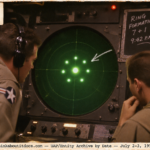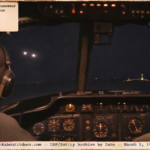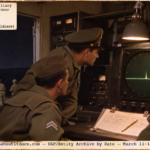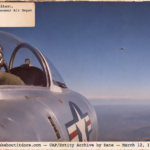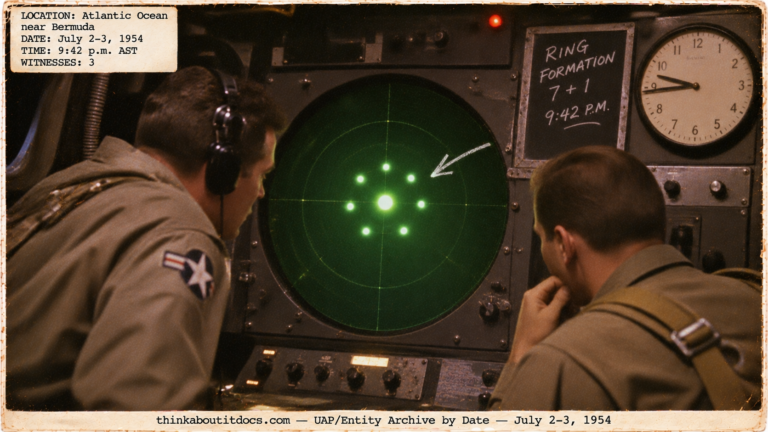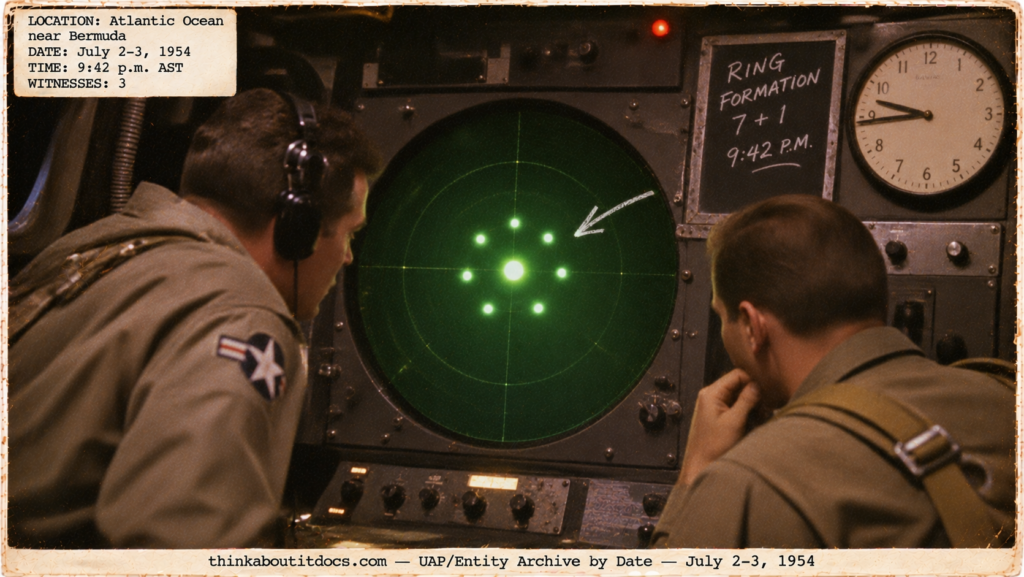
July 1954: the Bermuda B-36 radar formation that the Navy identified as a fleet.
THINK ABOUTIT UFO|UAP SIGHTINGS REPORT
1954: The Bermuda B-36 Radar Formation — Seven Returns and a Navy Answer
A B-36 radar observer monitoring thunderstorms at 14,000 ft over the Atlantic near Bermuda picked up a perfect ring of seven stationary returns, a larger one at the center and six around it, and held them on the scope for 19 minutes while the scope camera ran. He had been tracking a ship earlier that night and said these were not ships. They were: a Navy check identified a carrier group with six destroyers and a submarine.
Date: July 3, 1954 (evening of July 2 local)
Sighting Time: About 9:42 p.m. AST on July 2 (card: GMT 03/0142Z); a typed note in the file reads “Nite 2000 hrs”
Day/Night: Night
Location: Atlantic Ocean near Bermuda (B-36H at 14,000 ft)
Urban or Rural: Not Applicable (open ocean)
No. of Entity(‘s): 0
Entity Type: Not Applicable
Entity Description: Not Applicable
Hynek Classification: Not Applicable (radar only; no visual sighting)
Duration: 19 minutes
No. of Object(s): 7, at times 8, radar returns
Description of the Object(s): A clear, well-defined circular formation on the radar scope: one central return surrounded by six smaller ones
Shape/Size/Color of Object(s): Radar returns only; the outside diameter of the ring was about five nautical miles by the 10 NM range markers, and Maj. Nelson judged that a metallic object of 20 to 200 ft would give a return of that size
Distance to Object(s): Not stated in the card
Height & Speed: B-36 at 14,000 ft; returns stationary, near the ocean surface
Number of Witnesses: 1 radar observer (Capt. Charles C. Spahn); the navigator and aircraft commander were called to look; the scope camera recorded the returns
Special Features/Characteristics: The returns were photographed on the radar-scope camera (32 frames in the file set; six prints enclosed with Maj. Robert F. Nelson’s report); the observer said he had been tracking a ship before the formation appeared; a five-aircraft B-36 cell had passed within 40 NM about three hours earlier and saw nothing; no air or naval activity was reported by the aircraft
Case Status: Explained: Blue Book concluded Other: Ships, with the comment “Objects definitely identified as being U.S. Navy ships. Confirmed by Navy.”
Source: Project Blue Book record card (Other: Ships); ATIC Bermuda file with Air Intelligence Evaluation Record by Maj. Robert F. Nelson, 11th Bomb Wing, Carswell AFB, July 9, 1954; Berliner; Sparks; Wilson
Summary/Description: On the night of July 2, 1954 local, a B-36 of the 11th Bomb Wing near Bermuda picked up seven stationary returns in a ring on its radar. The observer photographed them and called the navigator and aircraft commander. The Navy later identified them as a carrier group with six destroyers and a submarine returning from the Mediterranean. Blue Book concluded Ships.
Related Cases: None known
Detailed Report
The B-36, flying at 14,000 ft near Bermuda on the night of July 2-3, 1954, was monitoring thunderstorm activity when its radar observer saw the returns: one circular object surrounded by six smaller ones, near the surface of the ocean. The returns held a stable pattern while the aircraft changed azimuth. The observer made adjustments to check for equipment malfunction, then called the navigator and the aircraft commander to look, and the radar-scope camera was turned on before the returns went out of range.
The observer, Capt. Charles C. Spahn, had about ten or eleven years of service (the file gives both), roughly 3,500 flying hours and about 1,500 hours as a radar observer. He said he had seen ships on the scope before, that he had been tracking one before these returns appeared, and that this was not radar interference and not a cloud return. A check indicated no air or naval activity in the area, and a handwritten note on the file asks whether it could have been Soviet aircraft.
Maj. Robert F. Nelson, the 11th Bomb Wing radar-photo interpreter, evaluated the scope prints on July 9. He judged that the returns resembled those from a radar reflector target such as the Eglin range target, that the symmetry and stability of the pattern ruled out a saturated cloud, and that the shape of the individual returns was not common to ships, although the pattern resembled a World War II convoy. He noted that applying beamwidth, spot size and pulse length corrections could give more accurate data on size, shape and separation.
The Navy then answered the Air Force inquiry: the returns were a carrier group with six destroyers and one submarine en route from the Mediterranean to the United States. The file’s typed answer names the carrier as “USS Mindora,” which may be a misspelling and is not confirmed here. Blue Book recorded the conclusion Other: Ships and noted that the identification was confirmed by the Navy.
RESEARCHER’S NOTES
Bermuda — 1954 and a Radar Case the Navy Explained
- The ship check came after the report: The observer and the interpreter both doubted a ship identification, and the Navy answer, not the radar analysis, settled it. The case shows how a clean geometric pattern on a 1954 radar can look unlike ordinary ship returns to experienced operators.
- Experienced observers, still an explained case: Both the observer and the evaluating interpreter were experienced, and both thought the returns unusual. Their experience did not change the outcome; the Navy’s position report did.
- The earlier listing called this BBU: Berliner, Sparks and Wilson are the earlier sources; the Blue Book card concludes Ships, so the case is not carried as an unknown here.
- Time of the sighting: Earlier listings gave 1:45-1:55 a.m. The card’s 0142Z is about 9:42 p.m. AST on July 2, and a typed note says “Nite 2000 hrs,” so the earlier time looks like a GMT group read as local.
- The photographs are in the file: The scope photographs, with the aircraft and range data chalked on a plaque beside each frame, are in the Blue Book file and would allow a more exact reconstruction of the formation than the card gives.
The Bermuda formation is a well-documented radar case that Blue Book and the Navy resolved as a surface fleet. It is kept here because the observer and the interpreter were both experienced and both thought the returns unusual, and because the scope photographs survive.
“Objects definitely identified as being U.S. Navy ships. Confirmed by Navy.”
— Project Blue Book record card, Bermuda, July 3, 1954